From busy high school organizer to ward alderman at 26, Nashua native ‘Joe’ Grandmaison was barely 30 when he hit the national political scene
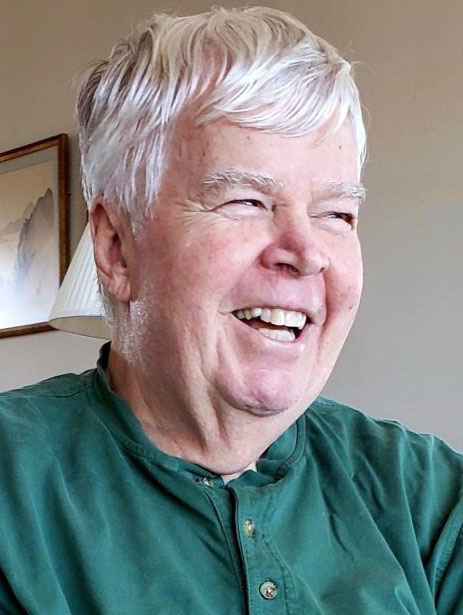
(Courtesy photo) J. Joseph Grandmaison
PORTSMOUTH — J. Joseph Grandmaison, “Joe” to pretty much everyone on all sides of the local and national political scene, was just two years out of high school when he was bitten by the proverbial political bug.
Although he’d dabbled in the world of politics since his high school days, which his fellow 1960 Nashua High graduates recognized in his thumbnail bio in the Tusitala yearbook, Grandmaison, the middle of three sons born to staunch Democrats and lifelong Crown Hill residents Oscar and Irene Grandmaison, was about to embark, with his father, on a mission to put a Democrat in the governor’s office for the first time in nearly 40 years.
Grandmaison was just 21 when his candidate, John W. King, was elected governor, becoming just the second Democrat to hold the office since 1915.
“Joe’s passion for politics began at a pretty young age,” his brother, Phil Grandmaison, said this week. “He was only 25, maybe 26 when he first ran for Ward 7 alderman — and won.
“I can tell you this: he approached the voters of Ward 7 very methodically,” Phil Grandmaison added with a chuckle.
J. Joseph Grandmaison, who would go on to a 50-year career in state and national politics, serving as a senior governmental appointee under three presidents, died last week from the effects of Parkinson’s disease at Wentworth Senior Living, his home for the past three years. He previously lived in Washington, D.C., and Rye Beach for many years.
The dates and times of calling hours and a gathering of remembrance are in the planning stages, and will be announced when they’re finalized.
Grandmaison is predeceased by his parents, Oscar and Irene Grandmaison, and his older brother, Peter Grandmaison.
He is survived by his brother Philip and wife Ann Grandmaison; his nephew Adam and fiance Lena Nersesian and their daughter Parker Ann Grandmaison; his niece Sarah Manheim, her husband Josh and their sons Henry Joseph and Theodore Philip Manheim.
Meanwhile, Grandmaison’s successful run for that Ward 7 seat on the Board of Aldermen came in the 1969 municipal election. He was, by a good margin, the youngest of the five candidates, an unusually large field for a ward alderman race. (He defeated Charles Theroux, Wolfgang Eschholz, Ronald Simoneau and Wilfred Boisvert).
Late in his two-year term, Grandmaison got a call that would open the next set of doors in his career.
“In ’71, McGovern came calling,” Phil Grandmaison said, referring to the late U.S. Sen. George McGovern, a South Dakota Democrat, who asked Grandmaison to join his campaign for the 1972 presidential primary — which he won, but was then roundly defeated in the general election by Republican Richard M. Nixon.
That McGovern lost in a landslide — he won only one state, Massachusetts — evidently had no negative effect on Grandmaison’s abilities because, his brother said, he soon heard from another rising star on the national Democratic scene.
“Mike Dukakis heard of him in 1973, and he wanted Joe to run his (campaign) for him,” Phil Grandmaison said, referring to Dukakis’s first bid for Massachusetts governor in the 1974 election.
Dukakis was “considered a (political) outsider at the time,” he said, recalling his brother’s role in Dukakis’s upset victory in the Democratic primary over Robert Quinn, a one-time state representative and, later, Massachusetts attorney general, and Dukakis’s subsequent triumph over the Republican incumbent, Gov. Francis Sargent, in the general election.
By then, Grandmaison had become “quite the commodity” in Democratic circles, his brother said.
His deep knowledge and reputation as a “people-person” served Grandmaison well in 1975, when he led the upset rematch senate campaign of John Durkin against Republican Congressman Louis Wyman. In addition, Grandmaison served as an advisor to former New York Governor Mario Cuomo and led the successful US Senate election of Frank Lautenberg of New Jersey.
A couple of years later, Grandmaison launched his own candidacy for national office, taking on longtime U.S. Rep. James Cleveland, one of the more popular representatives in state history. That popularity carried Cleveland to victory in 1976.
In 1990, his brother said, Grandmaison ran for governor against Republican Gov. Judd Gregg, but voters returned a fairly popular Gregg to office.
Looking at the big picture, Phil Grandmaison called his brother “a rough competitor in campaigns and elections, but when he assumed a governmental position, he firmly believed his approach would be thoroughly non-partisan, and each issue would be judged on its merits.”
Dean Shalhoup may be reached at 594-1256 or dshalhoup@nashuatelegraph.com.