Remembering the forgotten war
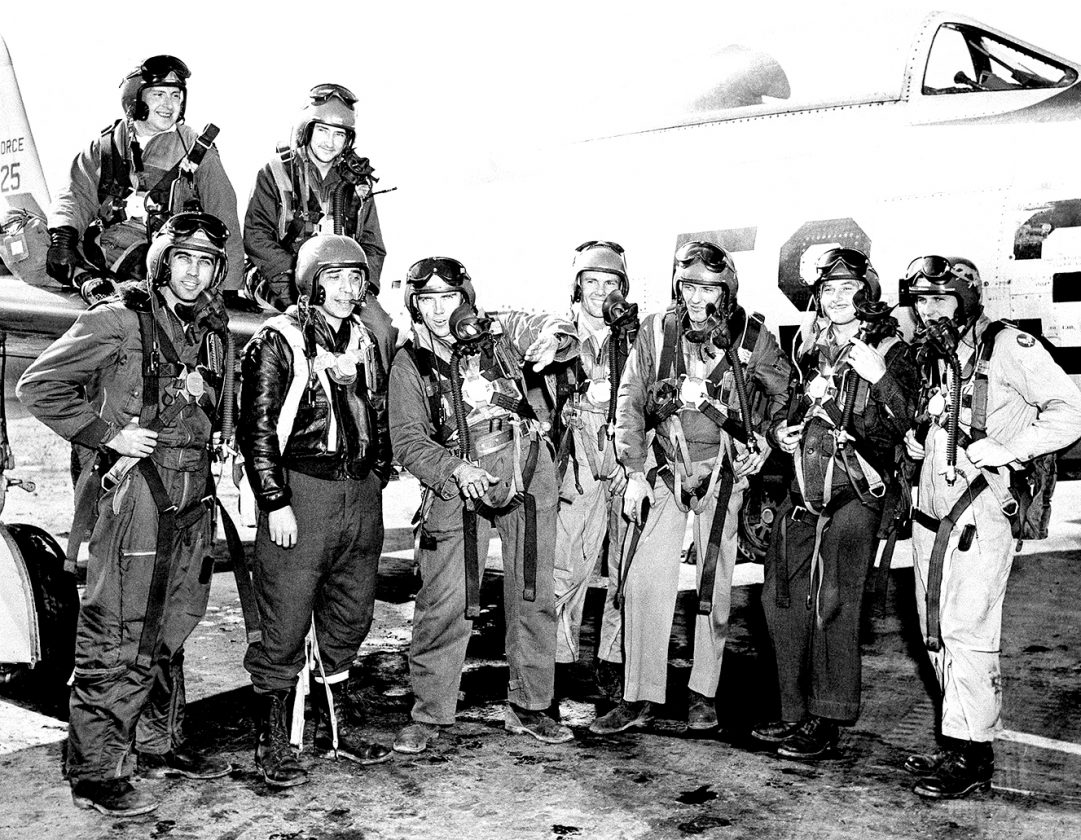
These F-84 thunderjet pilots are jubilant after returning to base of 27th fighter escort group in Japan on April 16, 1951, after mission over Korea in which more than 30 enemy planes were hit. From left (won wing) are: Lt. Alton A. Pendleton, Hamilton, Tex.; and Harry B. Monsell, 1421 Coty, Shreveport, Va.; and (standing): Lt. Guy B. Razetto, 4157 Landis St., San Diego, Calif.; Capt. Floyd A. Murdock, 102 E. George Mason Rd., Falls Church, Va.; Capt. Wendal D. Oldham, Poala, Kas.; Capt. Claude D. Phillips, Sudan, Texas; Lt. Eldon R. Mathis, Rule, Texas; Capt. James I. Gillam, 1523 sixth St., Santa Monica, Calif.; and Capt. Lloyd C. Edwards, 6000 Woodview Rd., Austin, Texas. (AP Photo)
In 1951, as he closed out his farewell address to congress and the nation, the legendary Gen. Douglas MacArthur quoted an old Army ballad in characterizing himself, and his retirement: “Old soldiers never die. They just fade away.” I’ve always felt that one way to begin to understand a war is to take pause and look at those veterans who fought as well as the tone of the times in which they fought. World War I was “the war to end all wars,” World War II spawned America’s “Greatest Generation,” while Vietnam was the unwanted war, and the first one that America lost.
At this point in time, history has not yet decided how it will remember the wars in Iraq and Afghanistan. However, sandwiched in between World War II and Vietnam was the Korean War; America’s forgotten war. It has been labeled the Forgotten War because, in the grand scheme of things, it is seen by so many Americans as being a minor sideshow to World War II and Vietnam. Compared to what the United States went through in World War II, the Korean War seemed little more than a minor dalliance.
A fair statement might be that, in addition to being a hellish nightmare, every war is uniquely complicated. Looking back at Korea, it was a civil war based on a bitter struggle between two radically different ideologies, and the control of the South Asian peninsula that metastasized into a full-blown international war that claimed the lives of over 33,000 Americans in battle. It was an event that plucked away the flower of American youth forever. And yet, to this day, many people still refer to it as the Korean Conflict. Even President Harry Truman, who presided over the United States involvement in the three year engagement, labeled it a “police action.” In my mind, and with the crystal clarity that hindsight brings to all things, Korea was definitely never a police action.
The Korean War started on June 25, 1950, when the forces of North Korea backed by China and the Soviet Union, attacked South Korea across the 38th parallel. Trying to understand why, as a nation, we seemed to have forgotten this war remains a mystery to this day. Americans have always disliked any kind of a stalemate. Sports has always been part of the bedrock of American society. In baseball, we will play extra innings deep into the night to ensure that a tie is broken, and go into sudden death overtime to have a winner in football and hockey. When all is said and done, Korea was, and still is today, a stalemate. In 1953 there was an armistice signed ending the war with no declared winner or loser, and 72 years after that signing, the United States still has a large battle-ready force permanently on guard along the 38th parallel ready to defend against any action against South Korea.
As is the case with the veterans of World War II, those brave soldiers who, only a few short years after the “Greatest Generation” saved the world, and who fought just as bravely in Korea, are now fading away. Soon they will all be gone. They are at that point where their next heart beat will grow further from their first and ever closer to their last. To see those few who are still with us today is to gaze upon fading old soldiers with balding baby fine hair of white, faded and filmy eyes, deeply wrinkled faces and calloused hands that often tremble, and who, if they can still walk, now shuffle along with the assistance of caregivers or grandchildren. And yet, somewhere deep inside of them, they still remember what they went through so many years ago. Maybe, in the middle of the night, they remember the young men they were such a very long time ago. Lonely, frightened men who were so far away from home with the rain falling down the back of their necks, kneeling in the snow, feeling permanently damp and cold, and their comrades who died before they ever really got the chance to live. It was 72 years ago this month the Korean War started. For many of those old and faded soldiers who were there, and who now totter around slowly on walkers, or are prisoners in their wheelchairs, it may never have ended.
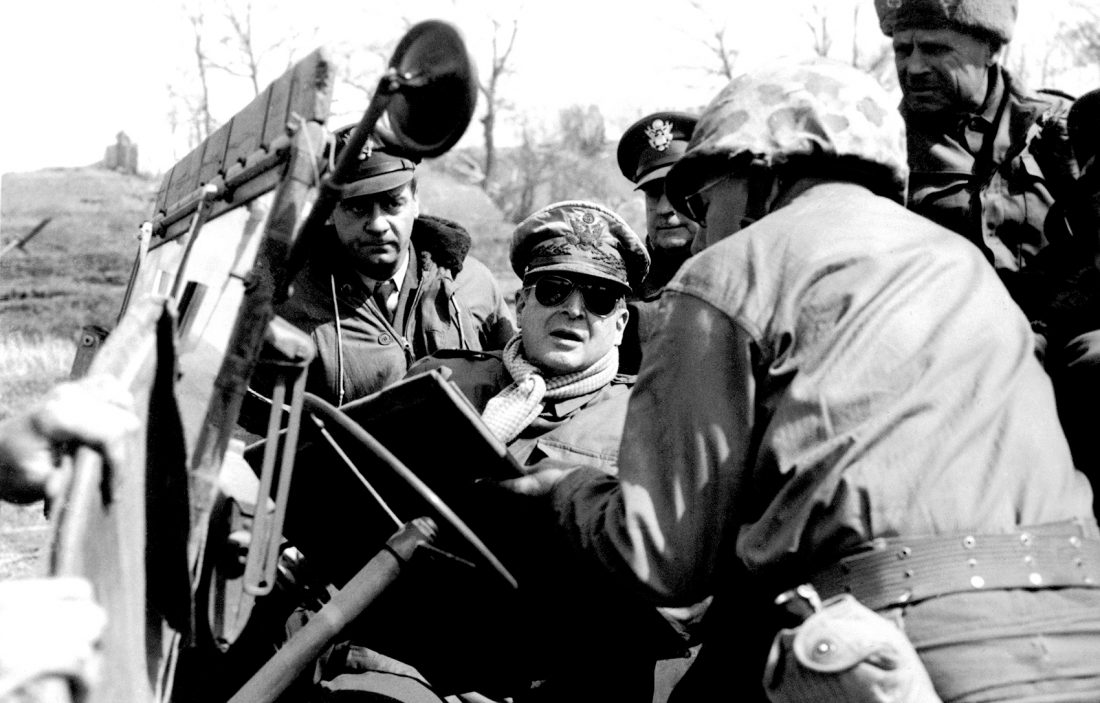
U.S. Marine Col. Homer Litzenbuerg (right, back to camera) of Washington, D.C., briefs Gen. Douglas MacArthur on the situation in a leatherneck’s area on the central front in Korea March 21, 1951. Gen. MacArthur was making his 13th visit to the Korean war front. (AP Photo)
As a nation, we must remember those people and the war that they fought and died in. For if we fail to remember, the sacrifice of those 33,000 lives will be meaningless. That war touched the lives of Americans across all social classes, races and ages. Fathers, sons, mothers, wives, and sweethearts were killed in a war a half a world away. Thousands were wounded, and thousands more came home bearing the psychological scars of war that would haunt them for the rest of their lives.
During times of war, acts of heroism take place on a frequent and ongoing basis. The sobering reality is found in the fact that only a handful of them are ever recorded, and fewer still that receive official recognition. In the face of this reality, when we remember all those who served, we collectively recognize and honor their willingness to endure the enormous hardships and gnawing fears that may have lived inside them across their entire lives. If as a society we remember them, then perhaps one day Korea will break free from the shackles of being seen as the forgotten war.
Paul Collins is a freelance writer from Southborough, Massachusetts.
-
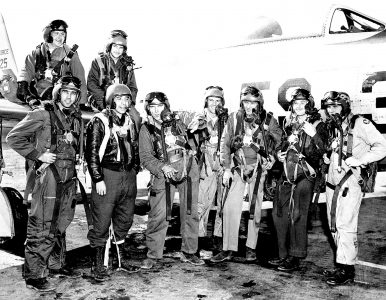
- These F-84 thunderjet pilots are jubilant after returning to base of 27th fighter escort group in Japan on April 16, 1951, after mission over Korea in which more than 30 enemy planes were hit. From left (won wing) are: Lt. Alton A. Pendleton, Hamilton, Tex.; and Harry B. Monsell, 1421 Coty, Shreveport, Va.; and (standing): Lt. Guy B. Razetto, 4157 Landis St., San Diego, Calif.; Capt. Floyd A. Murdock, 102 E. George Mason Rd., Falls Church, Va.; Capt. Wendal D. Oldham, Poala, Kas.; Capt. Claude D. Phillips, Sudan, Texas; Lt. Eldon R. Mathis, Rule, Texas; Capt. James I. Gillam, 1523 sixth St., Santa Monica, Calif.; and Capt. Lloyd C. Edwards, 6000 Woodview Rd., Austin, Texas. (AP Photo)
-
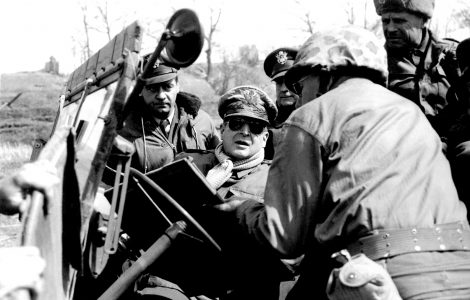
- U.S. Marine Col. Homer Litzenbuerg (right, back to camera) of Washington, D.C., briefs Gen. Douglas MacArthur on the situation in a leatherneck’s area on the central front in Korea March 21, 1951. Gen. MacArthur was making his 13th visit to the Korean war front. (AP Photo)