Amid rising drug costs, Medicine World fights to remain independent
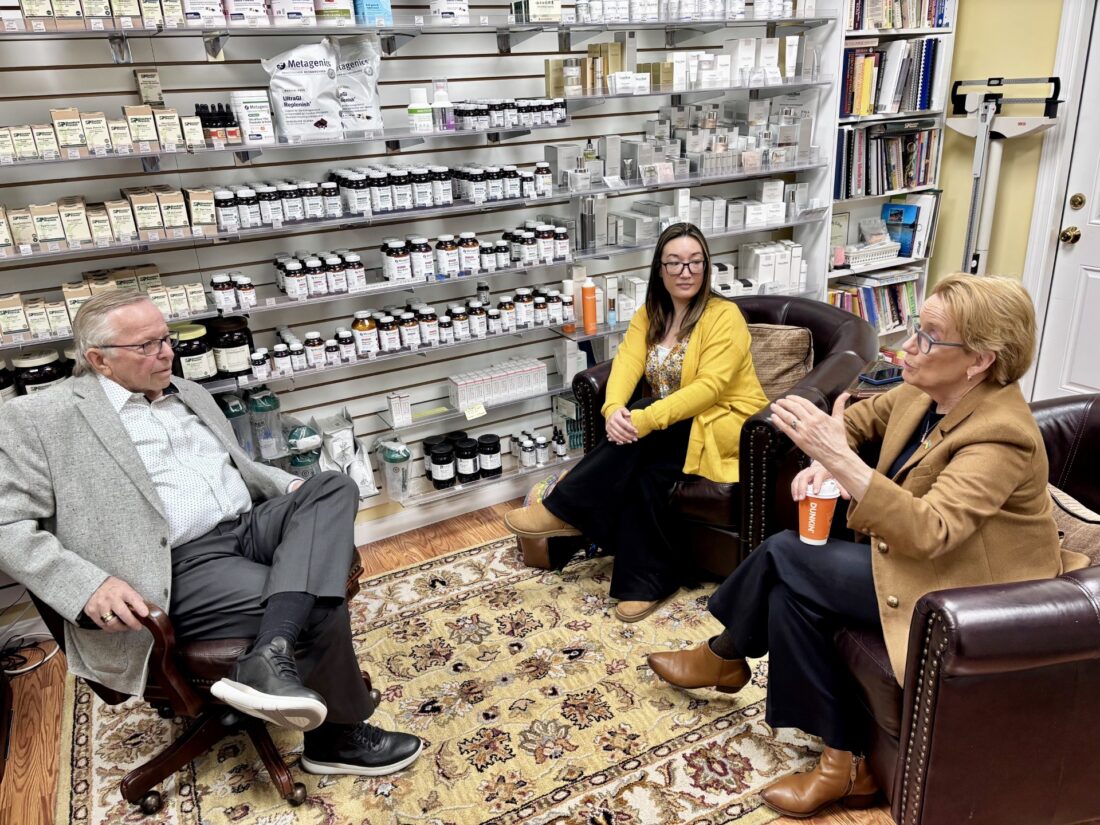
U.S. Sen. Maggie Hassan (right), recently met with Robert Lolley, owner of Medicine World Pharmacy, and Nancy Glynn of MomsRising to discuss the rising cost of prescription drugs. Telegraph photo by CHRISTOPHER ROBERSON
NASHUA – When Robert Lolley opened Medicine World Pharmacy in 1982, there were 26 other independent pharmacies in the city — 44 years later, Medicine World is the only one left.
As the cost of prescription drugs continues to climb, Lolley is doing everything he can to avoid being bought out by drug store giants like CVS and Walgreens or even worse, being forced to close his doors.
During his April 6 meeting with U.S. Maggie Hassan (D-NH), Lolley said his business continues to be plagued by spread pricing.
According to the National Community Pharmacists Association, “spread pricing is detrimental to independent pharmacies because pharmacy benefit managers reimburse pharmacies less than the amount they charge health plans, creating a ‘spread’ they keep as profit. This practice often leads to pharmacies being reimbursed below their acquisition cost for medications, severely compressing margins and forcing some small pharmacies to close.”
Lolley also said health insurance companies do not cover labor costs of pharmacy employees.
“It’s a problem,” he said.
Speaking about competition, Lolley said it takes Medicine World a week to fill the number of prescriptions that CVS and Walgreens can fill in a day.
“I always say they’re 10 steps ahead of us,” he said.
Lolley said there are also problems with the automatic refill system.
“Fifty percent (of prescriptions) get returned and credited,” he said.
Lolley said that if he is even a day late in returning a drug to the manufacturer, he will be fined $1,000.
In order to avoid paying for a refill, Lolley has customers who will share medication and split pills in half.
As an example, Lolley said his customers are only allowed to have one EpiPen for their child.
“It’s nice to have one at home and one at school,” said Lolley.
Nancy Glynn of MomsRising said she knows mothers who carry expired EpiPens hoping they still work.
In response, Hassan said bipartisan efforts are underway to ban spread pricing. She is currently co-sponsoring the Patients Before Middlemen Act which would “delink the compensation of pharmacy benefit managers from drug price and utilization.”
“The predatory pricing of life-saving drugs is something we should all be knowledgeable about,” said Hassan.
Also, from a cost standpoint, Hassan spoke about the Increasing Transparency in Generic Drug Applications Act. The objective of that legislation is to streamline the Food and Drug Administration’s approval process to get generic drugs on the market faster.
“For the vast majority of people, they work and they work well,” Hassan said of generic drugs.
Hassan and her colleagues have also reached out to the larger pharmacies to inquire about their reimbursement practices. She said there can still be a benefit even if the company does not respond.
“Sometimes we can learn a lot from what they won’t tell us,” she said, adding that federal officials have the authority to force the matter if necessary. “You can pull people in for hearings, they can be prosecuted for lying to Congress.”