Solar eclipse to happen June 10
AP photo
NASHUA – Set your eyes on the sky on Thursday morning, just after sunrise, to take a peek of an annular solar eclipse.
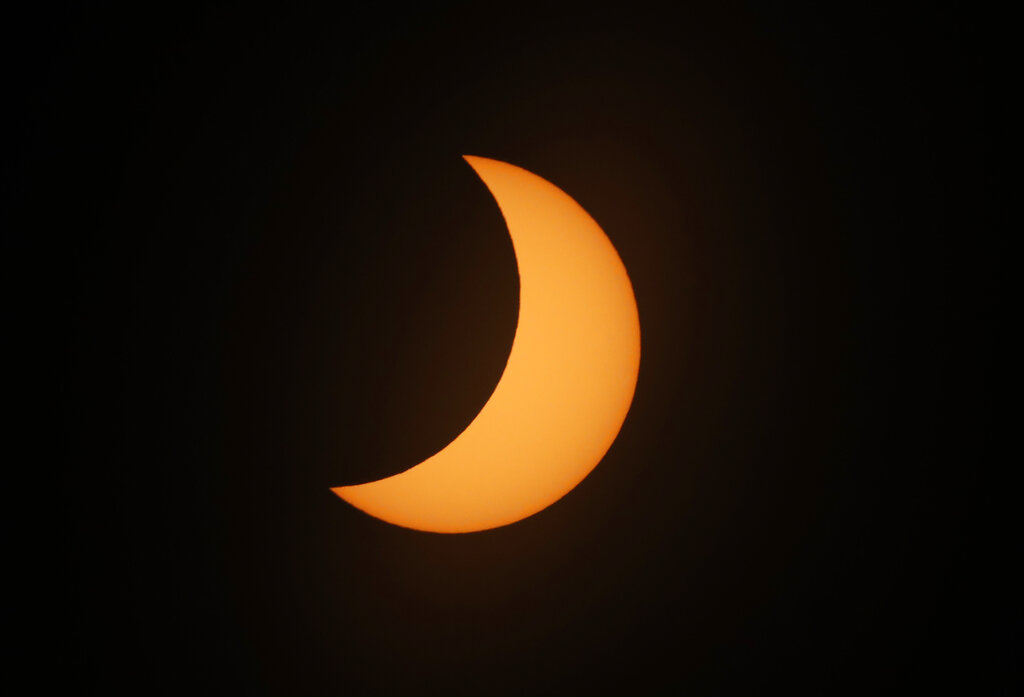
During an annular, the moon is a bit farther away from the earth which results in the moon almost totally covering the sun, except for a very thin ring. But watchers in New Hampshire will not see a full ring of the sun, because the eclipse won’t reach that extent here. Instead, a thin crescent of the sun will remain visible.
The best viewing? The coastline, where the eye meets the horizon. Next to the coast, experts suggest getting to a higher elevation.
Sunrise Thursday morning begins at 5:06 a.m. and the eclipse will start a minute or two after sunrise, increasing for roughly 30 minutes with the moon covering 75 percent of the sun.
Experts also strongly stress the importance of using eye protection. Because part of the sun will remain visible, it will not be safe at any point to look at the eclipse without protection.
If you have eclipse glasses from the 2017 solar eclipse, it’s possible that they would be safe to use for this week’s eclipse, but you should check to make sure they are undamaged. If the lens doesn’t look perfect in any way, like if it’s scratched or crinkled, they might not be safe and should be disposed of.
The June 2021 eclipse is just a preview of a total solar eclipse that Granite Staters are already gearing up for in April 2024, which will happen in the afternoon. Experts say the upcoming eclipse will be at 100 percenty over Coos County and 95 percent over the rest of New Hampshire. The last total solar eclipse we had in New Hampshire was back in 1959. The next one will not happen until 2079.