Former combat pilot to recount being shot down over Serbia
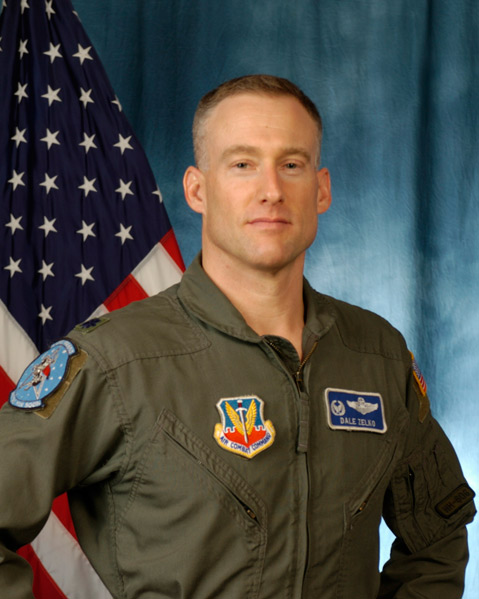
Former U.S. Air Force Lt. Col. Darrell Zelko was the pilot of an F-117 that was shot down over Serbia in 1999. Courtesy photo/U.S. AIR FORCE
LONDONDERRY — On March 27, 1999, U.S. Air Force Lt. Col. Darrell Zelko felt uneasy about setting out on his mission, which would be without the protective escort of Grumman Prowler electronic jamming planes or anti-radar missiles.
“I’d never felt so strongly–if there was ever a night, a mission for an F-117 to get shot down, it would be this one. I wasn’t surprised when it happened,” Zelko said in an interview with BBC.
By “it,” Zelko was referring to a S-125 Neva/Pechora surface-to-air missile that hit his F-117 and caused it to crash, making it the first ever stealth aircraft to be shot down in combat.
As the pilot of F-117 callsign Vega 31, Zelko ejected safely. He was rescued eight hours later behind enemy lines.
Zelko will recount the Vega 31 incident and provide an overview of the F-117 weapons system on May 14 at 7 p.m. at the Aviation Museum of N.H., 27 Navigator Rd. The presentation, which is open to the public, is part of the Aviation Museum’s Exploring Aviation lecture series.
Back on that night in 1999, Zelko was part of the North Atlantic Treaty Organization bombing of Serbia. The NATO offensive was a response to a new wave of ethnic cleansing launched by Serbian forces against the Kosovar Albanians on March 20. After falling to Earth, Zelko landed in a plowed Serbian field. He hid in an irrigation ditch and narrowly avoided capture.
In 2011, Zelko had the chance to meet the man on the other side of the surface-to-air missile that hit Vega 31: Lt. Col. Zoltán Dani of the 3rd Battalion of the 250th Air Defense Missile Brigade of the Army of Yugoslavia.
Dani now operates a bakery and the onetime adversaries have developed an unlikely friendship. The two became the subject of a documentary titled The Second Meeting in 2013.
Zelko has 3,000 hours in fighters/fighter trainers and more than 100 combat hours between Operation Desert Storm and Operation Allied Force, plus 1,000 missions over Northwest Oklahoma in the T-37 and a “hardship” tour in the A-10 out of Myrtle Beach Air Force Base.