
Conservative populist Laura Fernández wins Costa Rican presidency, preliminary results show
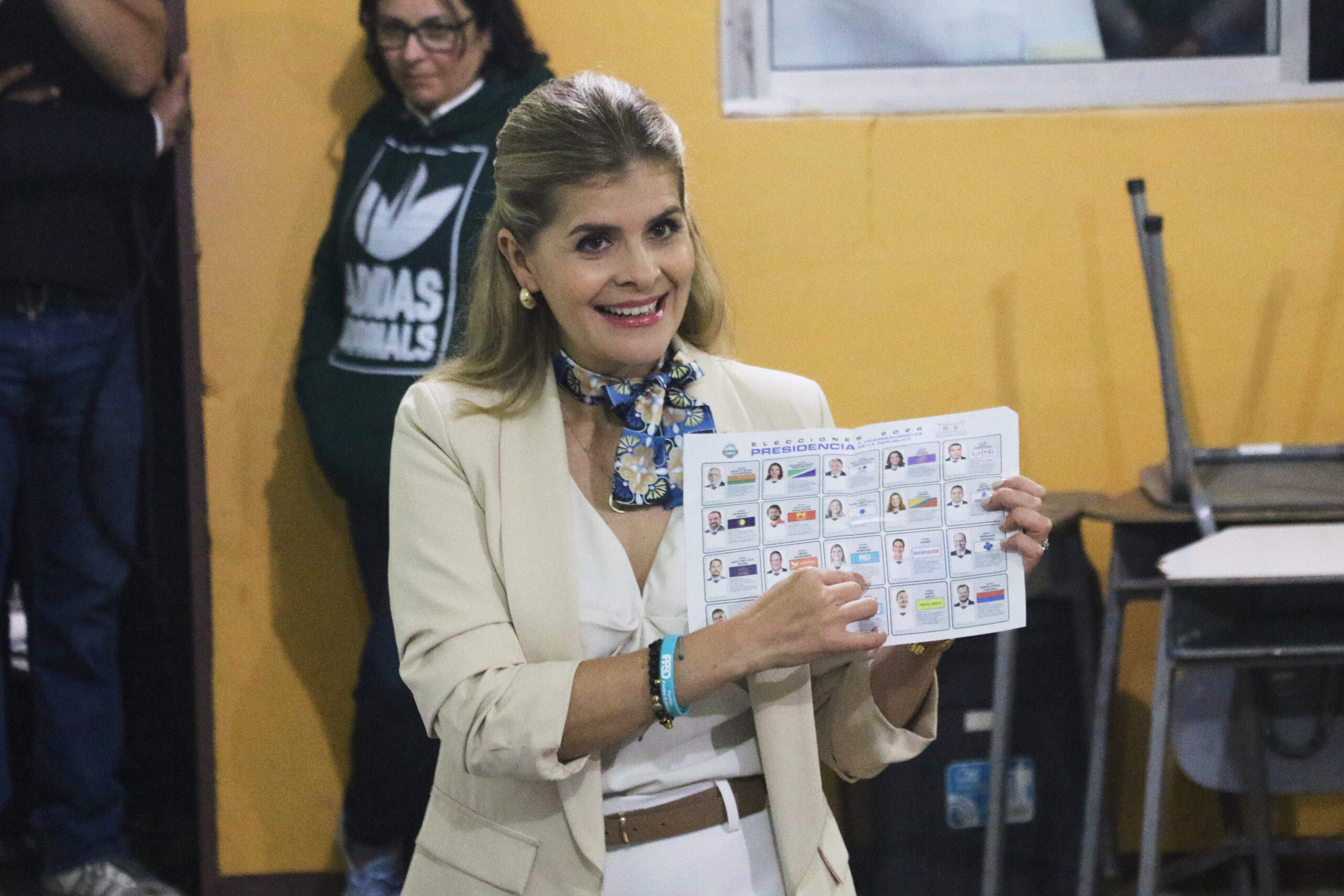
Costa Rica's presidential candidate Laura Fernandez prepares to cast her vote at a polling station in Cartago, Costa Rica, Sunday, Feb. 1, 2026. (AP Photo/Carlos Borbon)
By JAVIER CÔRDOBA ASSOCIATED PRESS
SAN JOSE, Costa Rica (AP) — Conservative populist Laura Fernández won Costa Rica’s presidency, promising to continue the aggressive reorienting of the Central American nation’s politics started by her political sponsor, outgoing President Rodrigo Chaves.
Preliminary and partial results showed the Costa Rican president’s handpicked successor captured the win with a resounding first-round victory, eliminating the need for a runoff in a crowded field after Sunday’s election.
The Supreme Electoral Tribunal reported that with votes from 93.7% of polling places tallied, Fernández of the Sovereign People’s Party had 48.3% of the vote. Her closest challenger was economist Álvaro Ramos of the National Liberation Party with 33.4%.
Ramos conceded Sunday night and pledged to lead a “constructive opposition,” but one that would not let those in power get away with anything. Fernández will not be formally declared the winner until electoral officials complete a manual count scheduled to begin Tuesday.
“In democracy dissent is allowed, criticizing is allowed,” he said.
Fernández spoke to her supporters after Ramos conceded Sunday night and President Rodrigo Chaves congratulated her.
“Costa Rica has voted and it has voted to continue the change, a change that only seeks to rescue and perfect our democratic institutions and return them to you, to the sovereign people, to create more well-being and prosperity for our people,” Fernández said.
“The mandate the sovereign people give me is clear: the change will be deep and irreversible,” she said. Fernández was scheduled to give a news conference Monday.
At least 40% of the total vote is required to win the presidential election in the first round. Otherwise, the top two candidates will go to a runoff on April 5.
Fernández campaigned on continuing the policies of the term-limited Chaves.
The historically peaceful Central American nation’s crime surge in recent years was a major issue in the campaign. Some voters faulted Chaves’ presidency for failing to bring those rates down, but many see a continuation of his confrontational style as the best chance for Costa Rica to tame the violence.
Fernández was previously Chaves’ minister of national planning and economic policy and, more recently, his minister of the presidency.
She was considered the frontrunner headed into Sunday’s election.
Costa Ricans also voted for the 57-seat National Assembly. Chaves’ party was expected to make gains, but perhaps not achieve the supermajority he and Fernández called for, which would allow their party to choose Supreme Court magistrates, for example.
Twenty contenders were seeking the presidency, but no candidate other than Fernández and Ramos reached 5% in the preliminary and partial results.
Some 3.7 million Costa Ricans were eligible to vote.
Four years ago, Chaves ran an outsider campaign that carried him to victory over the country’s traditional parties, despite the fact that he had briefly served as economy minister in a previous administration. His framing of traditional parties as corrupt and self-interested resonated in a country with high unemployment and a soaring budget deficit.