
Angels in scrubs: Why nurses are the heart of the medical profession
-

- Courtesy photo Ellen Cardin is a pediatric nurse at Dartmouth-Hitchcock Medical Center in Lebanon.
-

- Courtesy photo Brendan Tedstone, a former professional hockey player, runs a dementia unit in the Mary Ann Morse Healthcare Center in Natick, Mass., specializing in short-term rehabilitation and memory and long-term care.
-

- Courtesy photo Tedstone is shown here in his hockey days with a cut on his head. Something he would know a lot about treating now in his work in the medical field.
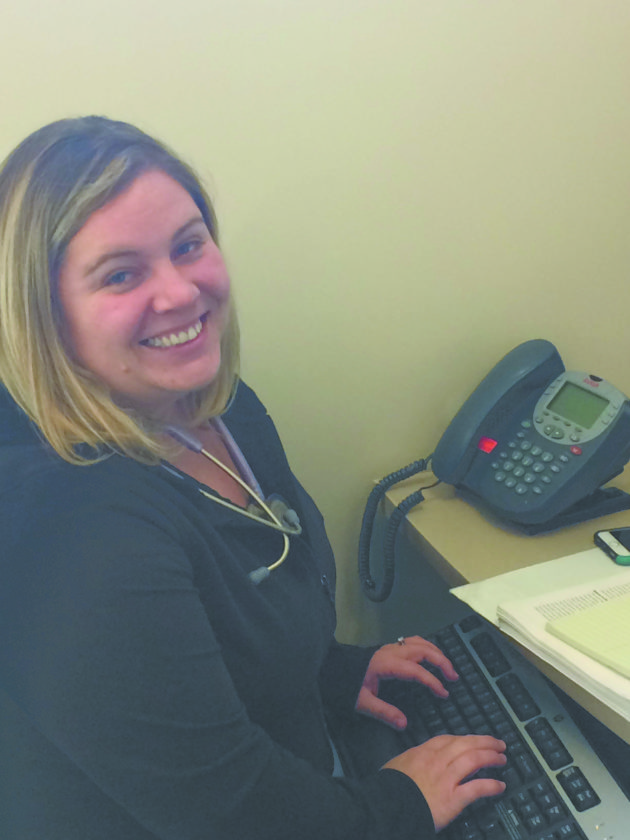
Courtesy photo Ellen Cardin is a pediatric nurse at Dartmouth-Hitchcock Medical Center in Lebanon.
When all is said and done, it is often compassion and caring that unite all of us during those times when we, or our loved ones, are facing a medical crisis. These key elements are what form the foundation that build the human relationships that can, and do, promote both physical and emotional health and healing in people the world over.
At the heart of the medical profession are the nurses. They are the front line soldiers who fight the battle at ground zero, and who are often the engine the drives the patient care train. They are also the ones who toil in the trenches, and who too often get lost in the long shadows that are cast by the doctors with whom they work side-by-side.
As seen through my eyes, nurses are angels of mercy who are forced to wear many different hats as they navigate through stormy seas of our complex health care system to ensure that patients receive the best care possible.
In my mind, nurses are the unsung heroes who spend much of their time simply listening quietly to their patients, and their families. In their way, they provide some measure of comfort while helping people to gain a clearer understanding of their maladies, and to garner a better understanding of their wants and needs as well.
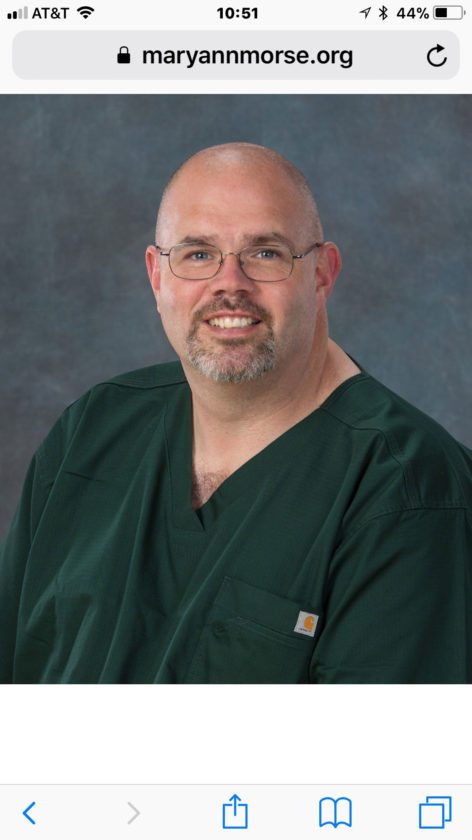
Courtesy photo Brendan Tedstone, a former professional hockey player, runs a dementia unit in the Mary Ann Morse Healthcare Center in Natick, Mass., specializing in short-term rehabilitation and memory and long-term care.
Think about those times when you’ve seen a distraught person sitting in a hospital waiting room, or perhaps standing in a hallway talking in hushed tones to a nurse with tears in their eyes and an emotional lump in their throat. Or picture that distraught person being you. Picture yourself desperately needing warm smile and a reassurance that says to you that your loved one is being cared for and that he or she will be all right. Or worse yet, the sick and frightened patient who is searching for a kind and understanding caregiver. It simply doesn’t get any more real than that.
So be it at 3 in the afternoon, or in the silence of 3 a.m., that is very often where you’ll find a caring nurse. I know, because, in my own life, I’ve walked in the shoes of that distraught person. I was that frightened guy who was looking for kindness, understanding and reassurance.
I believe that a fair statement is that, unless one is incredibly lucky, at some point along our journey along life’s highway, as I say, nearly all of us will take that heart-pounding roller coaster ride down an avalanche of emotion-engulfing angst that is born of being seriously ill, or having to watch a loved one face a health crisis. It’s a gut-wrenching experience for the strongest of people, and many times it is a nurse who is there to provide the comfort and support that is so desperately needed by “laypeople” who are simply not equipped or prepared to understand the mysteries of medicine. For all of us laypeople, nurses do indeed have a very powerful presence in medicine.
We live in a world that sees dramatic shifts and changes across all aspects of society at an increasingly rapid pace. In the grand scheme of things, the image of nursing is changing with the world. The old stereotypical image of women in starched white skirts and snowy colored caps who stand-by eagerly awaiting guidance from physicians have faded into the foggy mists a bygone era. Today, they have been replaced by updated images of competent independent women and men from diverse backgrounds. That’s right, I said men, as increasingly, men are now choosing to follow a career path into the realm of a demanding arena that has traditionally been the domain of women. This is indeed, a brave new world.
As a case in point, male nurse Brendan Tedstone is a physically imposing, leather-tough former professional hockey player who runs a dementia unit in the Mary Ann Morse Healthcare Center in Natick, Mass., specializing in short-term rehabilitation and memory and long-term care. In his day, Tedstone was a brawling on-ice enforcer. Today, he is a kind and gentle giant of man who dispenses care, comfort and compassion in a tender and committed way. I know, because having had a loved one in his unit, I was afforded to opportunity to get an up-close and personal look at this once-feared hockey player who has dropped his stick and gloves and become an angel in scrubs.
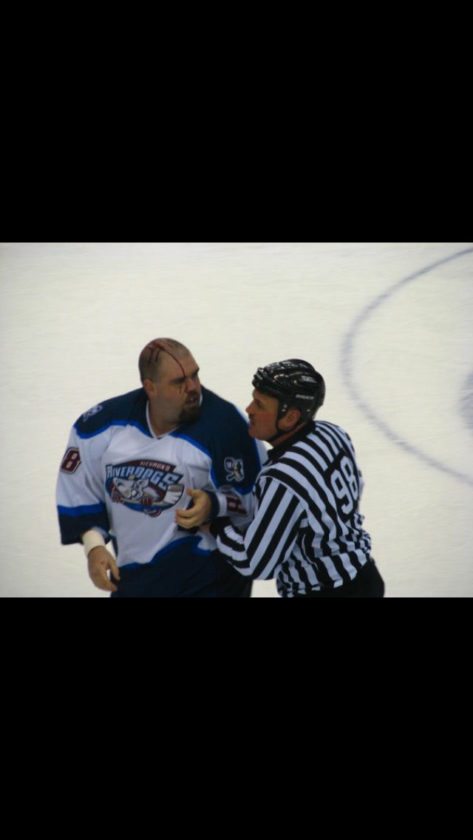
Courtesy photo Tedstone is shown here in his hockey days with a cut on his head. Something he would know a lot about treating now in his work in the medical field.
Asked about what drew him to become a nurse, it seems that it may have been a calling of sorts.
“My mother was a nurse, so I was rather well-versed as to what a nurse did, and the good and bad points of nursing,” said Tedstone. “I tried my hand at a few other fields, but it was always in my head to be a nurse.”
With respect to what actually made him want to do the job, he is thoughtful in asking, “How do you NOT want to do this job? The majority of my work life is solely to be kind and caring to a population that has been through so much for so long. I get paid to listen to a World War II vet tell me some of his stories, or a woman who had to drop out of school at age 10 to take care of her 10 brothers and sisters because her mother died young.” He adds, “Their back stories are amazing and truly interesting. “
Another case in point is that of Ellen Cardin, a pediatric nurse at Lebanon-based Dartmouth-Hitchcock Medical Center. There is that same calling, and palpable sense of purpose and urgency in her when she speaks of her profession and what nursing means to her. Cardin started her nursing career with Dartmouth-Hitchcock Pediatrics in their Nashua facility.
“I wanted to do something in my career that is both challenging and that makes a difference in people’s lives,” she said.
Across her career, she has been immersed with hands-on patients, having worked with many families of children who have complex medical needs that are very frightening.
“Being in a position to provide these parents with support, and to help them to obtain the services they need to become ‘the expert’ in their child, is incredibly rewarding,” said Cardin.
Asked about what alternative career path she might have taken, Cardin says, “I love my profession, and cannot imagine doing anything else. It gives me purpose, and allows me to use my expertise to help others.”
As I say, the common thread that runs through the fabric of nurses is that inner calling. That need and desire to help, and to make a positive difference in the lives of others. It is that unique way in which they feel for people who need help, and how they invest themselves in the caring for their patients. It’s their humanness.
To this end, Tedstone, shares a poignant memory of an Amyotrophic Lateral Sclerosis (ALS or Lou Gehrig’s disease) patient who was in his care, and who fought a long, slow and losing battle with the disease.
“I remember vividly the phone call that I got from his wife telling me that he had passed and how sad and relieved she was. That night I was called by the daughter asking if I would be a pall bearer at the funeral,” he said. “When I look back at the meaningful times associated with being a nurse, this is one that will always stand out.”
Perhaps a comment from Dartmouth-Hitchcock president and chief executive, Dr. Joanne M. Conroys, captures best the value and worth of nurses in the medical arena.
“Nurses are the backbone of our system of care,” she said. “They attend to patients and their families 24/7 with skill, caring and kindness. We could not do what we do without them.”
So, if you believe that if there are angels who walk among us, they might just been here in the guise of nurses … angels in scrubs.
Paul Collins is a Freelance Writer from Southboro, Mass.