HISTORY ON ICE: NH Legends to honor Nashua’s Club National
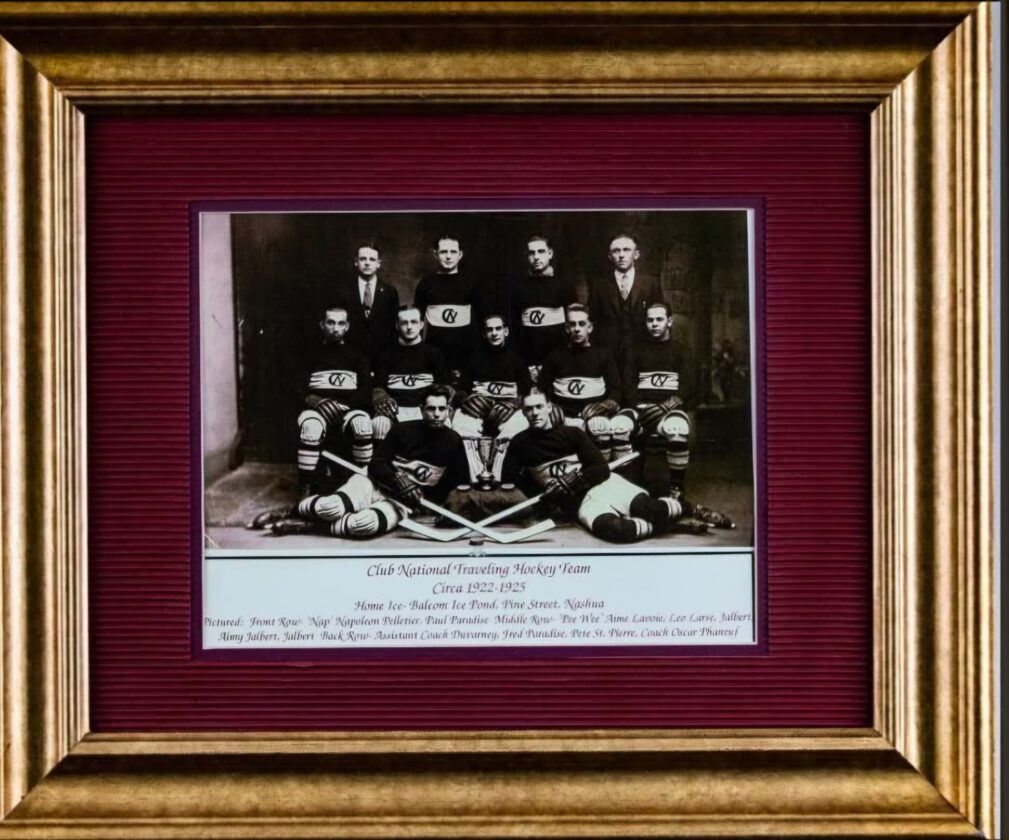
This is a team photo from one of the years of the Club National hockey team that played in the mid to late 1920s. The private club still exists today but the hockey team played for only a few years. (Courtesy photo)
NASHUA – There is something that always goes together with fame: History.
The New Hampshire Legends of Hockey will honor both next weekend with its Hall of Fame induction ceremony in Concord, and a piece of Nashua and New Hampshire’s hockey history will be honored.
Club National, which still exists today and will have significant representation at next weekend’s induction ceremony, was founded here in 1921 as a private club. But its place in hockey history came in 1922 when the private club formed a team that lasted a few years and played games at a pond at Nashua Country Club. That Club National team will be inducted next weekend by the Legends.
The team played Massachusetts clubs from Boston, Lowell, Fitchburg, Cambridge, Worcester, Fitchburg, Wakefield as well as New Hampshire teams from Concord, Manchester and Berlin
“In the 1920s, they were something else,” said Legends director Jim Hayes, who had his former New England College roommate and teammate Ian Holt research Club National and write a history that is depicted on the Legends website. “There weren’t very many teams that were playing back then, they traveled all over in northern New England. That couldn’t have been easy with the weather.
“What I’m amazed are the locations they played in Nashua.”
Those were what was known then as the Pine Street Rink or Balcom Ice Pond (known today as Sandy Pond), Nashua Country Club, and its final home, a rink constructed at South Common – which was later the sight of Nashua High School from 1937-1975.
What amazed Holt was the number of French-Canadian immigrants who came to work in the mill towns of New Hampshire back then, and half of the Club National team was comprised of people who made the move.
“When you start looking at the names it’s unbelievable how many of them were Franco-Americans or French Canadien who came down to play for Gus Bourque,” Holt, who hails from St. Catherine, Ontario, about 30 miles from Buffalo N.Y. said. “It was a sociological story as much as it is a sports story.”
Hayes referred to the Club National team’s home locations. According to Holt’s research, the Telegraph reported in the mid-1920s that Club President Alfred Dionne announced the construction of a new outdoor rink on South Common that “would allow Nashua fans to see the best hockey in this part of the country” at a cost of $5,000. The rink was equipped with flood lights and bleachers to accommodate a larger crowd than was possible at Club National’s former home at Nashua Country Club, and a crowd of 3,000 showed up on Jan. 2, 2025, the Telegraph reported to see Club National beat Lowell 7-1.
Club National Hockey hit its height in from 1926 through 1928 with nearly two complete seasons in a league formed by the work of three Nashua businessmen: Jewler Augustus Burque, auto dealer Eddie Labine, and funeral director William Robichaud. According to Holt, “Their goal was to establish a more select group of teams that would feature Nashua’s Club National.” The three promoted the team.
Burque arranged a meeting with teams from Berlin, Lewiston (Me.) and Waterville to form the New England Hockey League. The previous year Club National played in a less formal circuit that had Nashua, Lowell, Manchester, Fitchburg, Worcester and Lawrence, but Worcester and Lawrence later dropped out.
Burque’s new NEHL played 36 games, and it included a Christmas Day road game at Berlin, plus Berlin returning the favor in Nashua on New Year’s Day.
Burque was aggressive in his management of the team. According to Holt’s findings, he would regularly go to Quebec to scout players and hopefully sign them, as well as get come Canadian teams to come to Nashua to play in order to elevate Club National’s level of play.
Controversy arose when Waterville (Me.) signed away star player Aime Jalbert from Nashua. Holt found that a record crowd – perhaps as many as 5,000 – were on hand to see Jalbert play with Waterville vs. Nashua.
“They were treated,” he wrote, “to what might have been the best hockey game ever played in Nashua.”
To give one an example of the level of play, Nashua had a former NHL and Stanley Cup champion on the team, Ted Stackhouse, Holt reports. He helped beat Waterville as did a player named Fred Paradis for a 3-1 Club National win.
Holt’s research found that there was further controversy in the NEHL’s first season, in which 36 games were scheduled but not all played. For example, Holt reported that Berlin failed to come to Nashua to play in a playoff game. A late winter thaw kept games from being played at the Nashua’s outdoor rink. Waterville was in first place after 30 games, but their season was ended due to an ineligible player.
Lewiston and Club National played for the title with Nashua winning 1-0 and 2-1, Holt reported, the NEHL had its first champion.
It would turn out to be its only champion. Berlin had financial issues and folded on Feb. 8, 1928. Lewiston also dropped out, and with just two teams left – Club National, which was in first place at the time, and Waterville – the league collapsed and ceased operations with no champion declared for its second year.
The irony was this may have been Club National’s most talented team. According to Holt, Nashua fans were treated to the play of Fall River, Mass. native Art Lesier, who played 23 games for Club National. But he then moved on to a professional career that saw him play on two Calder Cup champions and in Rhode Island, three Fontaine Cup champions as a player, and player/coach. But the height of his career came with five NHL seasons with Chicago and Montreal and bcoming the first American-born player to have his name engraved on the Stanley Cup. That occurred in 1931 with the Canadiens winning the Cup championship.
The population of Nashua, according to Holt’s research, was 28,000, and with Club National drawing as many as 5,000 fans for some games, that would be one in five, a testament to its popularity.
“You can’t put a price on pride, community and the thrill of watching your team leave it all on the ice,” Holt wrote. “Club National hockey brought and left these intangibles behind in Nashua. … Two Stanley Cup players had skated in Club National jerseys, not to mention the years of excitement created by Aime Jalbert, ‘The French Flash.'”
According to Holt’s findings, Club National made “no effort” to form a team in December of 1928 and the fence boards at the rink were sold to the city.
“The Club National hockey era,” Holt wrote, “was over.”
But its impact on hockey history was evident.
“You had this little dinky outdoor rink in Nashua that had two guys with Stanley Cups,” Holt said this week. “That’s just crazy. … When you think there are two guys who would win Stanley Cups skating up and down in South Common in Nashua, that’s just wild.”
That and the attendance for these games was what impressed Holt.
“It was post-war (World War I) America,” Holt said. “And then they had the mill strikes in 1922. This (Club National hockey) was a huge distraction and a community builder. That piece appealed to me. Those people said ‘We’ve got these guys that are putting on the Nashua uniform, we’re going out and cheering for them. It was the impact they had on the city for one thing.
“And just the tenacity. We’re talking about an eight-man squad here. We’re not talking like a whole bench.
“And how do you go from Nashua to Waterville in the winter time to go play hockey? That’s no small feat in itself. Just the fact these guys were willing to get out there and play hockey for the city, it was a big deal.
“And there was one year when they went down to the rink, it wasn’t frozen and had rained for a few days, and it was ‘pack up your stuff and we’ll see you next year.’ Crazy.”
SCHALLER ALSO BEING INDUCTED
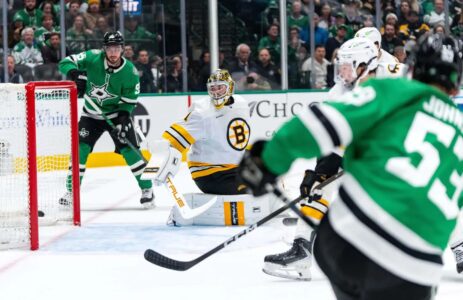
Another local being inducted next weekend will be Merrimack’s Tim Schaller, the former Boston Bruin who played two seasons with the Bruins after beginning his career with the Buffalo Sabres. Schaller, who spent last year as an assistant coach at Rivier University, went on to play for Vancouver and Los Angeles before playing in the AHL with affiliates for the Penguins, Oilers and Predators.
The keynote speaker will be NESN’s Sophia Jurksztowicz.
For ticket information to the event being held at the Grappone Center in Concord, go to https://nhlegendsofhockey.com.