Nashua’s Zapenas not a fan of abbreviated MLB Draft
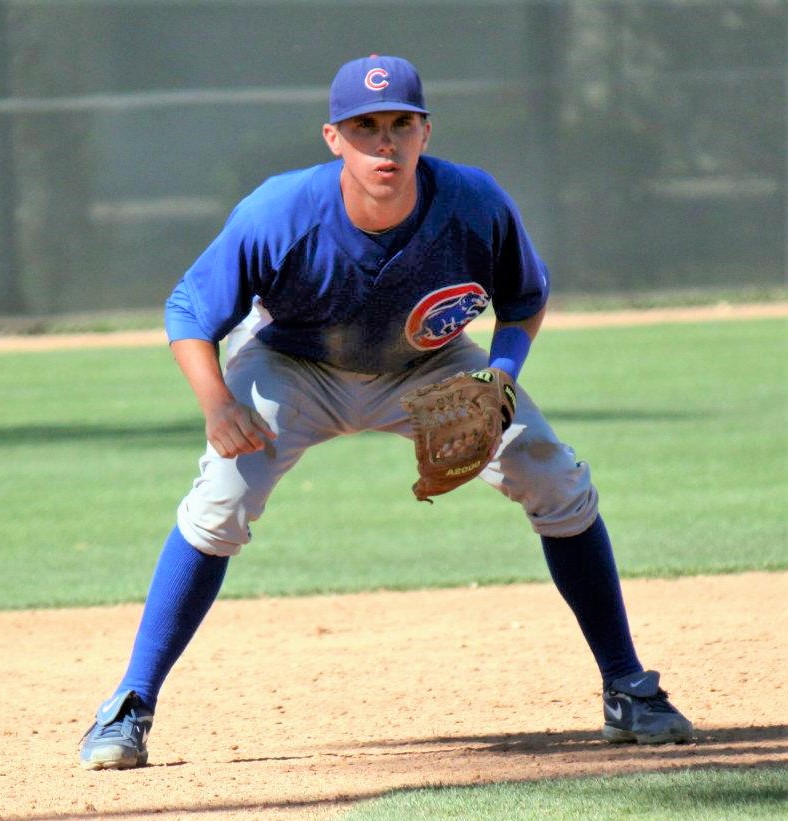
Courtesy photo Nashua's Brad Zapenas, who was dfrafted by the Cubs in 2011, likely wouldn't have an opportunity to be drafted in the current ongoing five round MLB draft.
NASHUA – Brad Zapenas recently was part of a Zoom meeting – a reunion of sorts – with members of the 2009 Boston College baseball team he was a key component of.
“You look at that team, go up and down the lineup, every player was drafted, every single pitcher was drafted, it was quite the team,” said Zapenas, the former Nashua High School North and BC standout said who spent three years in the Chicago Cubs minor league system.
But Zapenas knows that in this week’s severely limited five round MLB Amateur Draft that began with the first round Wednesday night and concludes today with rounds two through five, many of those players wouldn’t have been selected with the draft normally being 40 rounds (42 in 2009).
Plus in Zapenas’ case, he was drafted in the 42nd round by the Cubs in 2011 after his junior season at Boston College. So he would’ve been out of luck as well.
“Yes, true,” Zapenas said. “But with everything, you just have to take a positive attitude with it. It’s affected everyone. You say ‘If I have to go back to school and player college baseball for another year, there’s definitely worse things that could be happening.”
Zapenas, who is set to be inducted in the fall in the Nashua Athletics Hall of Fame, was the 1,269th pick overall.
He hit .243 over three seasons in the Cubs system, mainly at the Class A level, before injuries forced his retirement in 2013.
The draft was reduced in late March mainly due to the pandemic after an agreement between MLB and the Players Association. The total number of players drafted will be 160 in the five rounds, and MLB is getting considerable savings – nearly $30 million in bonus pool savings, the Associated Press reported.
“I felt bad,” Zapenas said his reaction to the historic small draft. “I think in general everyone looks forward to it. I think the kids that can go back to college next year , it doesn’t hurt them.
“The kids who get recruited to college, who were in high school and hoping to get obviously drafted, it hurts them the most not having a season. And I was surprised that (the draft) was so small. It hurts the college kids who are overall more polished players, and can contribute more right away and have more of chance to move faster through the system. It puts them at a little bit of disadvantage.”
There’s no limited on any number of signings of players as free agents who normally would have been draft eligible, but per agreement with the players union, the signing bonuses have to be no more than $20,000.
But how can they be signed with no tryout camps, or a season,etc.?
“It’s difficult,” Zapenas said. “If kids are still eligible to go back to college, they’re going to have to go back to college for a senior season. They’ll still have an opportunity to get drafted and play.
“There’s definitely benefits to it.”
And remember, the draft was reduced to 40 rounds the year after Zapenas was drafted.
According to an Associated Press report, among 1,082 players who were in a big league game last year after coming through the draft, 180 were first-round picks and 589 were selected during the first five rounds, according to numbers provided by the commissioner’s office. There were 204 from rounds six to 10, 102 from rounds 11-15 and 63 from rounds 16-20. Just 74 were from rounds 21-30 and only 50 from rounds 31-50.
Teams drafted 1,217 players over 40 rounds last year and have signed 960 at a total bonus cost of $316,560,984. In addition, 159 players passed over in the draft signed for $1,514,700.
Meanwhile, there are other issues that Zapenas cringes about – teams currently releasing minor league players, the basic understanding there likely won’t be any minor league baseball this year, and MLB’s attempt to eliminate some minor league teams, especially short season clubs.
“It’s sad,” Zapenas said. “I put myself thinking what if I was playing in the minor leagues when this happened. It’s obviously (due to money), but paying their minor league players is the right thing to do in general, don’t just say they’re going to cut them totally and just release players because of this. It’s difficult.
“I think there’s ways to improve the minor leagues. There’s a lot of levels, there’s probably dead weight they can get rid of at some levels, but overall you’ve got to take care of your players.
“MLB is very top heavy. You have players going early in the draft making a lot of money that just don’t pan out; you have players that are barely making it that overall are very good but just don’t get an opportunity. It’s top heavy and I think it’s led to what is happening now (in the MLB-owners negotiations.)”
Zapenas said he’s always wished for a system that will pay draftees across the board and “the ones that are good enough will obviously get their money as they progress.”
Zapenas was on a Zoom call talking to some students along with former Nashua Silver Knights and Lowell Spinners president Tim Bawmann, and the talk was about all the work that goes into a minor league franchise. And those people aren’t working now.
“It’s a lot of work for these people,” Zapenas said. “I always look at the game day people as well.”
Zapenas said he’s still paying attention to the draft, as abbreviated as it is. “I’ll look at local guys and see how the BC kids do,” he said.
But they probably won’t do as well as he and others did in the last decade.