
Looking back at the week in news
‘Star Trek’ technology comes to city’s police department
Every time we see a character in a TV show or movie touch or taste an unidentified substance, it’s a cringeworthy moment.
Don’t touch that! Don’t you know it’s poisonous or infected or will cause you to transform into a lizard?
Sherlock Holmes on "Elementary" is a prime example of a guy who touches or tastes everything he comes across at a crime scene, because he always knows what the substance is – he’s just confirming it. Um, hey, Sherlock, your first theory about who committed the crime is always wrong, and you have to figure it out at the end of the episode.
While this is all fiction and it’s done for dramatic effect, there are real-life consequences to those who keep us safe when they come across such things as illegal drugs. Fentanyl poses a serious risk to police investigators because it’s toxic to the touch and officers can be exposed through their pores, according to Nashua Police Sgt. Brian Kenney.
That’s why we applaud the partnership city police haves with Southern New Hampshire Medical Center to provide NPD with a device to help investigators identify certain substances without touching them.
While the technology has been around for decades, it’s encouraging that "Star Trek"-like devices such as these are being made available to help protect those who protect us.
Speaking of work from the Nashua Police Department …
With all the national discussion about bad cops over the past year, it’s nice to see our local law enforcement portray police in a positive light.
This week, the Nashua Police Department held an event to present 14-year-old Aaliyah Davis, a Nashua High School South student, and her mother, Sonya, with a donation from Cops for Kids with Cancer. Aaliyah has osteosarcoma and recently discovered she now has cancer in her lungs, requiring chemotherapy treatment and further surgery.
On Wednesday, police officers stood next to her and presented the family with a check for $5,000. NPD became aware of the family’s struggle during the summer when a lemonade stand was been set up through Girls Inc. to raise money for her. Officers would stop by the stand and pay far more for lemonade than the price per glass.
Eventually, Nashua’s police applied for financial help through Cops for Kids with Cancer, and have helped inspire Aaliyah to want to become a police officer in the future.
Protecting state’s children is a bipartisan issue
Amanda Grady Sexton of the Commission to Review Child Abuse Fatalities raised an interesting point this week when she asked why the Department of Health & Human Services has not asked lawmakers for an increase in staffing levels for the past five budget cycles.
It has been a decade since DHHS has pushed for more social workers in the Division of Children Youth & Families during a period when the agency has experienced high levels of turnover and fatigue among its current staff members.
This news comes shortly after an interim report showed DCYF needs to double its social workers handling cases just in order to keep up. It also found DCYF has not completed assessment reports within its own 60-day limit, meaning the unfinished reports could keep children in abusive situations from getting proper attention.
Keeping New Hampshire’s children safe is a bipartisan issue and certainly one that the next governor will need to immediately address.
Editorials
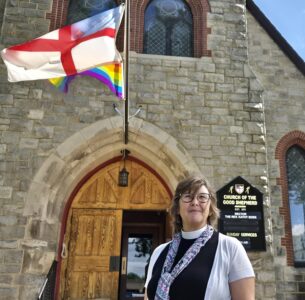
Church members speak out on Aug. 10 theft

Executive Council should reaffirm Commissioner Taylor Caswell
Remember why you are free
It’s the end of a school year; perhaps it is the opening weekend for swimming pools; it’s a three-day break — ...