
A judgment call on holding info
When a 16- or 17-year-old is charged with a criminal offense, most people never know about it. The law in the state of New Hampshire keeps juvenile judicial proceedings out of the public eye, the reasoning being that people ought to given a fresh start once they turn 18, without their youthful indiscretions following them into adulthood.
In serious cases, the state has the option to petition a court to bring charges against a teenager as an adult, in which case the matter becomes public.
But when it comes to operating a motor vehicle, the state has long treated 16- and 17-year-olds like adults, subject to the same rules of the road as older drivers, plus a few more.
That includes publishing the names of teenage drivers who are involved in accidents or commit traffic violations. In those instances, police for years have released the names of drivers under the age of 18, just as they do for older drivers.
When a 16-year-old driver got caught speeding in excess of 100 mph in Holderness last year, New Hampshire State Police released his name and the charges against him.
When a 17-year-old driver got hung up on the guardrail of the Sagamore Bridge between Nashua and Hudson last year and nearly dumped the car he was operating into the Merrimack River, police released his name and the fact that he was given a traffic citation.
But when a 17-year-old girl in Lyndeborough struck a pedestrian in the early morning hours of July 15 and the pedestrian died, police declined to release her name.
Initially, police cited the age of the motorist.
"The New Hampshire State Police cannot release the information regarding the operator of the motor vehicle as that individual is a juvenile," State Police Capt. Paul T. Hardcastle wrote in an email to Kathy Cleveland, a reporter for The Telegraph and Milford Cabinet.
Actually, they can. They just choose not to.
When The Telegraph asked Hardcastle to reconsider that decision in light of the fact that police have released the names of other juveniles involved in motor vehicle cases in the past, the matter was referred to the state attorney general’s office. (Wouldn’t it be nice if the state had an office where the public could make such referrals?)
Senior Assistant Attorney General Karen Schlitzer was prompt in her response. She sent an email last Tuesday to let us know that although the state could release the name of the driver ("whether to release the name is at the discretion of the Commissioner") the state is withholding the driver’s name because no decision has been made on whether to bring charges. She called the release of the name at this time "premature."
Part of the state’s concern, Schlitzer said, lies in the possibility that if the driver is charged as a juvenile, having her name out in the public would be a problem.
"We feel it’s best to treat it confidentially now, to prevent that possibility from happening," Schlitzer added. Once the driver’s name is released, she said, "we can’t unring that bell."
Except that, if the charge were brought in juvenile court, the public wouldn’t hear that particular bell ring anyway and wouldn’t be able to connect one with the other.
We don’t know the identity of the driver, but we feel for her and her family, as we do for the family and loved ones of the victim, 60-year-old Debess Rogers. We’re sure they are all struggling mightily to come to terms with what happened. We don’t mean to add to anyone’s anguish.
At the same time, the public has an interest in knowing the identity of the driver. Consistent transparency is one way of assuring the public that the children of ordinary taxpayers are treated the same as the children of the politically connected.
Editorials
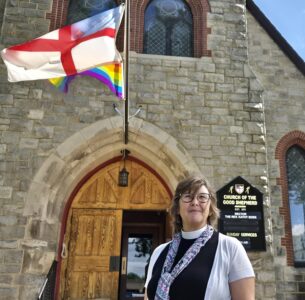
Church members speak out on Aug. 10 theft

Executive Council should reaffirm Commissioner Taylor Caswell
Remember why you are free
It’s the end of a school year; perhaps it is the opening weekend for swimming pools; it’s a three-day break — ...