
Armstrong’s ‘one small step’ still a giant feat
Shutdown.
At 4:17 p.m. on July 20, 1969, only a handful of people in the world understood the historical significance of that word.
It was the first word from Apollo 11 commander Neil Armstrong confirming that “Eagle,” the low-on-fuel lunar module he had just piloted over the boulder-strewn “Sea of Tranquility,” had safely touched down on the moon.
“We copy you down, Eagle,” came the response from mission control.
A few static-filled seconds of nervous anticipation followed. Then came this euphoric exchange between Armstrong and mission control: “Houston, Tranquility Base here. The Eagle has landed.”
“Tranquility, we copy you on the ground. You got a bunch of guys about to turn blue. We’re breathing again. Thanks a lot.”
Six hours later, Armstrong stepped out of the fragile lander and gingerly descend its skinny ladder to become the first inhabitant of Earth to set foot on an extraterrestrial body.
“That’s one small step for man, one giant leap for mankind,” Armstrong said, as he sank his boots in the moon’s dusty surface.
He meant to say “one small step for a man,” which makes more sense, but the flub is understandable. He was probably a little nervous at the time.
In all the well-deserved tributes to Armstrong, who died Saturday at the age of 82, a couple of important notions are getting short shrift.
Foremost, tens of thousands of people were responsible for America’s pedal-to-the-metal race to beat the Soviet Union to the moon.
From the single-astronaut Mercury program and the two-astronaut Gemini program to the three-astronaut Apollo program, the quest to land men on the moon was a huge effort that couldn’t have been accomplished if not for a long list of heros, such as the crew of Apollo
1.
The haste to fulfill President John F. Kennedy’s 1961 challenge to put a man on the moon by the end of the decade no doubt contributed to the deaths of the three astronauts assigned to that first Apollo mission.
Gus Grissom, Ed White and Roger Chaffee burned to death when something ignited the 100 percent oxygen atmosphere of the command module. Any one of the three could have been the first man on the moon.
For anyone who didn’t live during the 1960s, it’s impossible to
comprehend the emotional investment of Americans in seeing the moon mission succeed.
The Cold War was at its height. Proving America’s technological superiority over the Soviets wasn’t just the pursuit of a propaganda victory. It also offered security the United States wouldn’t be annihilated.
At the same time American astronauts were circling the moon, American children were being taught to dive under their school desks and cover their heads if they saw a bright flash of light – an atomic bomb.
It was also a time when the nation’s cities were on fire, as the last vestiges of
the Civil War played out during the civil rights movement. The Rev. Martin Luther King Jr. was assassinated April 4, 1968; Bobby Kennedy a month later. The space program offered Americans something to feel good about.
It will be many decades before humans venture into space again. For now, it’s the purview of robots.
When they do, it’s difficult to imagine they will generate more excitement and adulation as Neil Armstrong did when he uttered the first human words from the moon.
Editorials
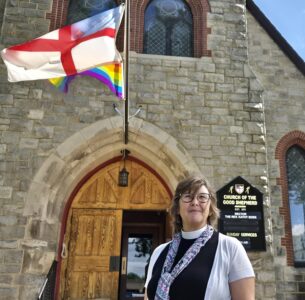
Church members speak out on Aug. 10 theft

Executive Council should reaffirm Commissioner Taylor Caswell
Remember why you are free
It’s the end of a school year; perhaps it is the opening weekend for swimming pools; it’s a three-day break — ...