Nashua’s Donchess among eight NH mayors asking for assistance dealing with homelessness issues
-

- (Photo by JEFFREY HASTINGS) A path leads through various items strewn about the campsite where Alexandra Eckersley, 26, gave birth the day after Christmas. She was later arrested on various charges.
-
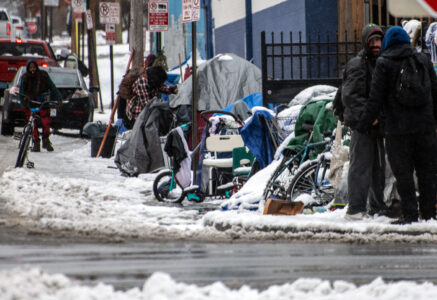
- (Photo by JEFFREY HASTINGS) A layer of snow covers tents, bicycles and various other items in one of Manchester’s homeless encampments a week before Christmas. City officials later came in and removed the items.

(Photo by JEFFREY HASTINGS) A path leads through various items strewn about the campsite where Alexandra Eckersley, 26, gave birth the day after Christmas. She was later arrested on various charges.
CONCORD — Nashua Mayor Jim Donchess on Tuesday joined seven other New Hampshire mayors in issuing a written appeal to Gov. Chris Sununu for the state’s help in dealing with their respective cities’ homeless populations.
In signing the letter, the eight mayors reiterated an earlier appeal to state officials in the wake of a particularly tragic period during which two homeless individuals died, an unhoused woman gave birth in a tent in 18-degree temperatures and a large fight broke out near a homeless encampment in Manchester.
In addition to Donchess, the letter was signed by mayors Joyce Craig of Manchester, Paul Grenier of Berlin, Jo Brown of Franklin, Bob Carrier of Dover, Dana Hilliard of Somersworth, Dale Girard of Claremont and Andrew Hosmer of Laconia.
It was addressed to Sununu, Health and Human Services Commissioner Lori Weaver and Associate Commissioner Christine Santaniello.
“The state of New Hampshire’s systems of care for individuals experiencing, or at-risk of, homelessness are not meeting the needs of communities across the state and are contributing to a statewide homelessness crisis,” the mayors wrote.
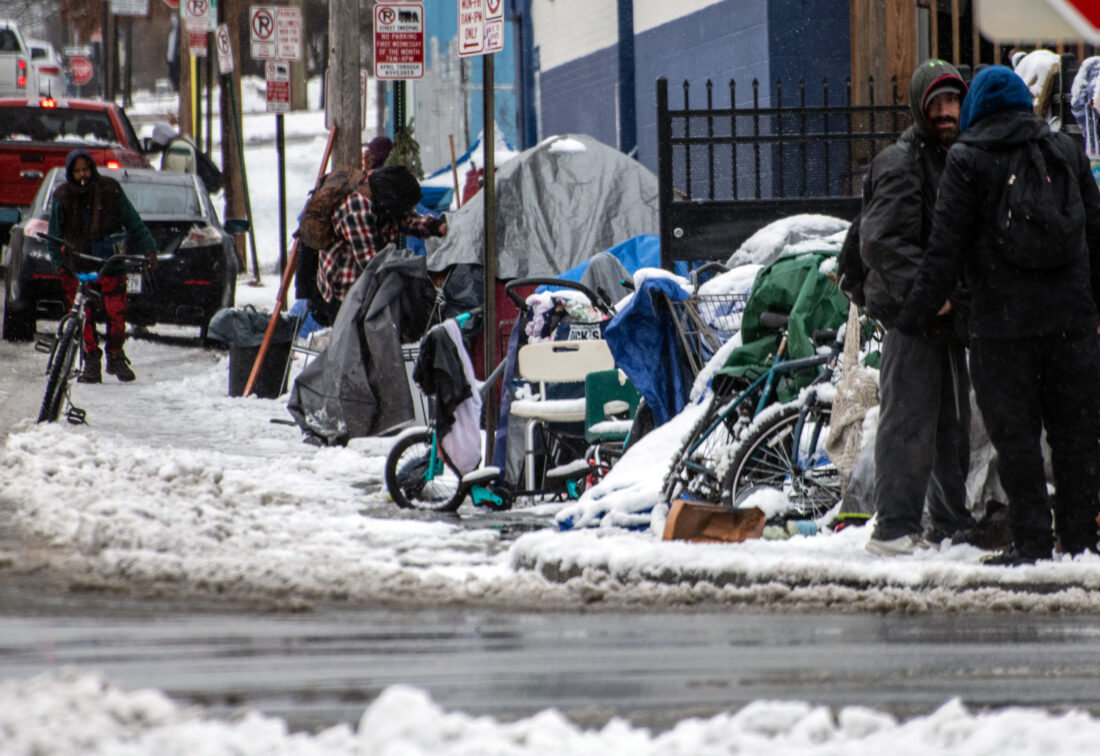
(Photo by JEFFREY HASTINGS) A layer of snow covers tents, bicycles and various other items in one of Manchester's homeless encampments a week before Christmas. City officials later came in and removed the items.
The mayors pointed to inadequate state services for individuals experiencing substance use disorder, mental illness, chronic health conditions, histories of trauma, and incarceration as all substantial factors contributing to homelessness in New Hampshire.
But Sununu, in a lengthy response he issued later Tuesday, took issue with many of the mayors’ assertions. The state “has made unprecedented investments to address this issue, and continues to identify additional pathways working through the Continuum of Care model,” Sununu wrote, referring to the state’s three COC agencies which, he said, are responsible to promote community-wide planning and strategic use of resources to address homelessness.
In Nashua, the so-called “collaborative applicant” is Harbor Care, which serves residents of Nashua and nine Greater Nashua towns.
Families in Transition is the applicant in Manchester, he added.
Sununu pointed out that the “majority of money for services cannot cross COC boundaries … therefore, each COC has to provide its own services and resources as outlined” in the plan filed with the Housing and Urban Development.
Sununu went on to cite several “unprecedented investments” in affordable housing, emergency assistance for families in crisis, funding for emergency and winter shelters, among others.
He also called “disappointing” the “tone and misleading content” of the mayors’ letter, given that a “team approach is so important on an issue as critical as this.”
Meanwhile, among those critical of the available services in New Hampshire is the family of Alexandra Eckersley, 26, who gave birth in a tent in Manchester Dec. 26 at about 12:30 a.m. recently criticized services in New Hampshire.
She is the adoptive daughter of Major League Baseball Hall of Famer and retired Red Sox broadcaster Dennis Eckersley.
“As in many states, the mental health system in New Hampshire is broken. The state hospital used to have 2,500 psychiatric beds,” the Eckersley family said is a public statement last week. “Now there are less than 200 for more than 1.2 million citizens and the state was forced to eliminate another 48 beds this fall because of staff shortages. Without adequate inpatient beds for crisis, treatment and stabilization, a state mental health system fails.”
As for the mayors, they made four immediate requests of the state to help mitigate harm and loss of life during this winter in New Hampshire:
* Immediately increase the number of emergency shelter beds statewide
* Request New Hampshire National Guard staff facilities, if nonprofit partners are unable to adequately assist
* Make additional shelter for women available. For this purpose, the City of Manchester is requesting the temporary use of the state-owned Tirrell House located at 15 Brook St. * Provide medical respite care to individuals experiencing homelessness when released from hospital
* Provide additional shelter and resources for homeless youth.
In addition to the requests for direct assistance to local communities dealing with a surge of homelessness, the mayors are calling for increased collaboration, transparency, and accountability for state programs dealing with homelessness and associated issues including:
* Provide a public statewide emergency operations plan for the winter
* Make information about statewide warming stations public and shareable
* Provide regular updates to municipalities on outcomes provided by Emergency Shelter Service Providers and Certified Recovery Houses that are registered through the NH Coalition of Recovery Residences.
The mayors said the ongoing opioid epidemic is also exacerbating homelessness in the state.
“Recent data from American Medical Response (AMR) shows that 35% of individuals involved in suspected opioid overdoses in Manchester and Nashua were unhoused,” the mayors wrote.
Although the recent publicized Christmas time tragedies occurred in Manchester, homelessness is a statewide issue as more than 4,500 New Hampshire residents will experience homelessness at some point this year, according to the mayors.
Since the beginning of the pandemic, the number of individuals statewide who have experienced unsheltered homelessness has almost tripled, and in 2022, 95 unsheltered individuals have died.
The mayors reminded Sununu that in November 2020, all 13 New Hampshire mayors wrote a letter to him stating that “homelessness is a crisis experienced by each of our communities that needs to be a top priority addressed at the state level.”
“Two years have passed since this letter was received, and there has been no improvement in collaboration with local communities in addressing homelessness in New Hampshire,” the mayors wrote.
They said Sununu declined a meeting with New Hampshire’s mayors last month to discuss the impacts of the end of the Emergency Rental Assistance Program, which ran the risk of sending hundreds of low-income Granite Staters into homelessness.
“Evidence shows the best way to address homelessness is through the ‘Housing First’ model that prioritizes providing individuals experiencing homelessness with permanent, supportive housing, regardless of their sobriety, mental health or other factors that contribute to housing insecurity.
“Everyone needs safe and stable housing, and New Hampshire communities are unable to provide adequate support without active assistance from the State.”
The InvestNH program, which requires developers to make units affordable for those at 80% of AMI, and only requires affordability for five years is a start.
“However, the state must also invest in permanent supportive housing that incorporates treatment for trauma, mental illness, and substance use disorder.”
Telegraph Senior Staff Writer Dean Shalhoup contributed material to this story.