Kristen’s Adult Drug Court journey: A story of determination, perseverance, doing ‘the next right thing’

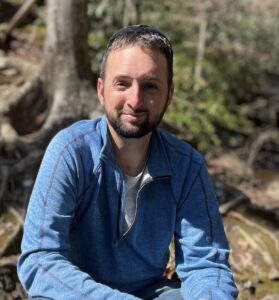
(Telegraph photo by DEAN SHALHOUP) Superior Court Judge Jacalyn Colburn, who led the effort a decade ago to establish the Nashua Adult Drug Court, addresses those who attended the recent ADC graduation in her courtroom. The ceremony featured a moving keynote speech by a 2018 graduate named Kristen, who asked that her last name and photo not be used.
Kristen talks fast.
She has to; she has a lot to say.
Indeed, packing seven years worth of highs and lows, twists and turns and ups and downs into a reasonable 20 or so minutes of speaking time had to be quite a challenge for Kristen.
But that challenge – which, by the way, Kristen met and conquered the afternoon of St. Patrick’s Day as she stood before a few dozen people in a Nashua courtroom – isn’t even in the same league as the challenge that was the topic of the message Kristen came to share that day.
Kristen – who lives locally and prefers that only her first name be used – returned that afternoon to Superior Court Judge Jacalyn Colburn’s courtroom, having been invited to deliver the keynote address at a Nashua Adult Drug Court graduation.
The four graduates – Corey Lake, Kim Tello, Kyle Hamel and Lewis Clark – were celebrated for satisfactorally completing the five phases on which the judicially-supervised program is based.
When Donna Collins, coordinator of development and communications at Greater Nashua Mental Health, the services provider for ADC, emailed me about the upcoming graduatation, she made sure to mention that the keynote speaker is a “successful former graduate” and an “intelligent, enlightened young woman who has made incredible strides … .”
That would be Kristen. And by the time she wrapped up to a standing ovation, that description seemed like quite an understatement.
Kristen graduated ADC in 2018, roughly three years after she entered the program having no idea what to expect, harboring little hope for the future and even less hope she’d one day kick her addiction and turn her life around.
So impressive was Kristen’s frankness, honesty, her from-the-heart approach and eloquent delivery that held her audience spellbound in a pin-drop quiet room, I decided to share the highlights – actually, her entire speech was one big highlight – of her presentation.
“I was addicted to everything. Drugs, socializing, money, hotels, the wild adventures. It was just a great time.
“Even though (my life) was crumbling, I was having a good time. Realistically, though, I was falling into a soul-sucking abyss … it involved a sick form of Russian roulette that my brain tricked me into playing with a loaded syringe and some substance I always assumed I’d be able to obtain … all to escape to a sense of inner peace.”
“This is my experience with heavy addiction, institutionalization and near death, and why I feel there is hope to help other people evolve… that’s what this program (Adult Drug Court) does.
“I entered this program in 2015 after my arrest for possession with the intent to distribute heroin. The police had no reason to question what (information) they obtained from their confidential informant.
“(Police) rushed my parents’ house around 1 a.m. and found me with drugs pre-bagged out (packaged for sale), scales, paraphernalia … and my son was sleeping in the next room.
“Those first few days in (jail) I was kicking and screaming and literally suffering inside my skin. It crawled.
“Inside my mind, it knawed.
“A nefarious demon was intertwined within.
“Everything was surfacing. And I was breaking.
“Going from a twisted version of freedom to being bum-rushed by a faction of the (police), thrown to the floor, handcuffed, then thrown behind bars without any end in sight did a number on my mental state, let me tell you.
“I was surrounded by so many people, yet nobody, really, inside a concrete bunker, a place where peace rarely exists.
“I was a prisoner of my own accord.
“In my cell, second by second, day by day, for eight months, I waited for help. And I waited. And I waited, for uplifting words from my family … because all but one brother wanted me to learn some sort of lesson the hard way.
“Mostly they just let me sit. I was alone.
“My option was rehab, either that or I serve my sentence upstate.” (Kristen’s sentence was a minimum of 7 years in state prison).
“For perspective, this August, my sentence would be up.
“Lucky for me, my probation/parole officer Nellie Chancey took a chance on me.
“She said she saw something in me. She said she would let me out (of jail) into rehab under the condition I did this program (ADC).
“When I got out of jail my parents had me under lock and key, and rightfully so, because even after having eight months clean time from being in jail my mind went right to getting high.
(Kristen shared her experiences at the Farnum Center, the recovery program she entered while participating in Adult Drug Court. She said she came away having learned a lot about the physicological aspects of addiction, the importance of developing positive thought processes and focusing on a “big-picture” view of reality).
“The (police) prosecutor told me, ‘I just want to let you know that they (state prosecutors) want you to do your prison sentence, but I saw something in you … I know you’re a smart girl.’
“He said that every Tuesday (ADC meeting day), and it drove me crazy,” Kristen said to laughs.
“But I’m so grateful, and I have so much respect for him for doing that for me.
Turning to the courtroom jury box, where members of the ADC team sat, Kristen grew slightly emotional.
“You guys help people fight their demons. That’s what you guys do. This program literally turned me from a junkie into a loving and compassionate wife, mother, sister, daughter, aunt.
“With your guidance I was able to realign and rebalance myself in every aspect of mind, body, spirit. You gave me the gift of being able to continue to learn all there is to learn.
“Drug Court gave me the tools to manage everyday life, how to focus on myself. This program reprogrammed how I function, restored my power to perceive things in a more functional way more conducive to healthier and more practical habits.
“Adult Drug Court works. It does just what it says it does, if participants are willing to put in the hard work. To you guys graduating today, you put in the hard work. Maybe it took time, doing hard time, maybe you were lucky and figured it out quickly, but I’m willing to bet this journey has been, to this point, both for the graduates and the (current) participants, a very uniquely-challenging experience.
“Getting sober and staying sober is a huge accomplishment. They (ADC team) guide you, as they did for me, and to give you a way to handle your life and accept it for what it is, or not. The choice is up to you.
“Today I stand before you as I am because of these generous people invested their own time. This network of caring people in this room today, their work restoring people to a place of love and compassion speaks to them.
“There are many ways to cope with life’s struggles … doing the next right thing every single time is what it takes.
“Know that there are always people who have your back. May you all reach your full potential, and remember, (the ADC team) has your back and wants nothing more than your success.
“Let me be an example.”
Kristen smiled as everyone present rose to their feet and broke into robust applause. Colburn, clearly impressed by what she and everyone else just heard, walked up and embraced Kristen.
“Wow,” Colburn managed. “Holy smokes,” she said over the applause.
Kristen glanced over to the first row of the gallery where her husband and three of their four children sat, and broke a wide grin, which each of them returned.
Dean Shalhoup’s column appears weekly in The Sunday Telegraph. He may be reached at 594-1256 or dshalhoup@nashuatelegraph.com.