Cyanobacteria blooms discovered on more New Hampshire ponds and lakes
-
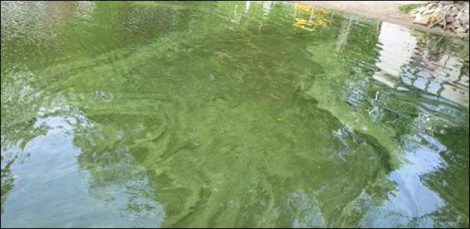
- Photo by NH DES Cyanobacteria discovered recently on the surface of Swains Lake in Barrington appears greenish in color. The bloom is one of several found on lakes and ponds statewide in recent days, officials said. (Photo by NH DES)
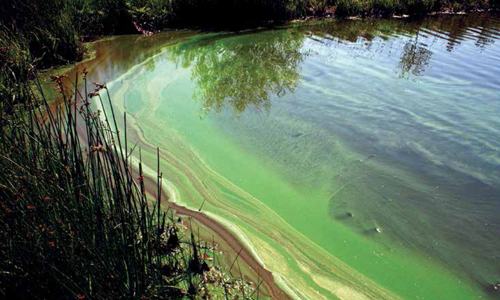
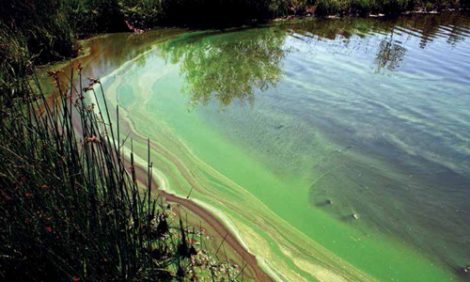
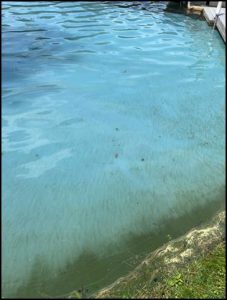
CONCORD — Just days after they issued a cyanobacteria advisory for Robinson Pond in Hudson, state Department of Environmental Services officials have observed, or received reports of, similar blooms on several other lakes and ponds.
Among them are Swains Lake in Barrington, Webster Lake in Franklin, Bow Lake in Strafford, Island Pond and Highland Lake in Stoddard, Province Lake in Effingham, Tucker Pond in Salisbury and Clough Pond in Loudon, according to DES spokeswoman Amanda McQuaid.
The blooms on Island Pond and Province Lake have begun to dissipate, McQuaid added.
While cyanobacteria are “natural components of water bodies worldwide,” the blooms and “surface scums” that may form when excess nutrients become available can turn toxic, thereby posing health risks to people and pets.
The toxins, McQuaid said, can cause both acute and chronic health effects that range in severity. “Acute health effects include irritation of skin and mucous membranes, tingling, numbness, nausea, vomiting, seizures and diarrhea,” she said, while chronic effects may include liver and central nervous system damage.
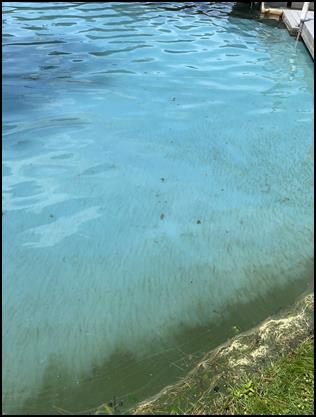
She advises people to “be cautious of lake water that has a surface scum, changes colors, or appears to have green streaks or blue-green flecks aggregating along the shore.”
Blooms, McQuaid said, are “very common” this time of year. Heavy rain, such as the prolonged rainy period that occurred over Memorial Day weekend, can introduce nutrients that spark the growth of a bloom.
Because the surface blooms can rapidly change and accumulate in various locations in a water body, McQuaid said officials urge water users to monitor their shorelines for changing conditions.
Officials “advise lake users to avoid contact with the water in areas experiencing elevated cyanobacteria cell conditions,” the condition that causes the blooms.
Pet owners are likewise advised to keep their pets out of any waters that have a cyanobacteria bloom.
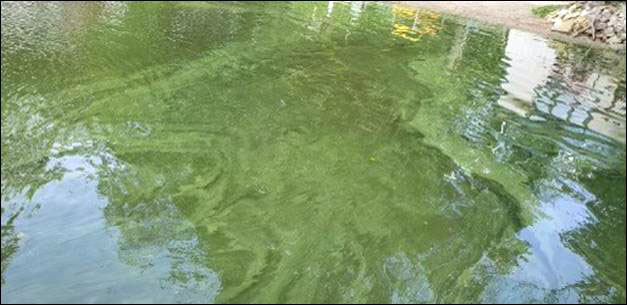
Photo by NH DES Cyanobacteria discovered recently on the surface of Swains Lake in Barrington appears greenish in color. The bloom is one of several found on lakes and ponds statewide in recent days, officials said. (Photo by NH DES)
State officials have shared the cyanobacteria alerts with local cities and towns, and have been collecting samples that will be tested. Updates will be issued as they become available.
In the meantime, officials urge anyone who notices anything resembling cyanobacteria to refrain from wading, swimming, or drinking the water, keep all pets out of the water, and promptly contact NHDES at 848-8094 or hab@des.nh.gov.
Updates on cyanobacteria advisories can be found at http://www4.des.state.nh.us/WaterShed_BeachMaps/WaterShed_BeachMaps.aspx.
For more information about cyanobacteria and to view photos of a bloom, go to the NHDES Beach Program website and search “harmful algal blooms.”
Dean Shalhoup may be reached at 594-1256 or dshalhoup@nashuatelegraph.com.