Tille looks to end veteran homelessness

David Tille
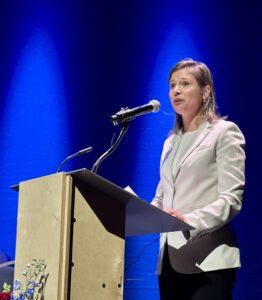
NASHUA – David Tille, the former U.S. Department of Housing and Urban Development (HUD) regional administrator for the six New England states, has joined Harbor Care of Nashua, 45 High St., which operates facilities throughout the state of New Hampshire.
Tille was born at Griffith’s Air Force Base in Rome, New York but has been a Granite Stater for decades.
“I focused a lot of key HUD issues, but one of them was around homelessness and affordable housing,” he said. “But in particular, veterans’ homelessness.”
As an Army veteran, Tille served in the N.H. Guard as well as active-duty Army. And his father is a retired Air Force Vietnam veteran.
“He’s 89 years-young and he’s out working in my yard,” Tille said of his father. “I got my interest in service from his 21+ years of service. In 2019, he sold 750 poppies that the retired veterans were selling through VFW. He was late for lunch but proud that he did that.”
This past year, New Hampshire’s thirteen mayors supported the Mayor’s Challenge to End Veterans’ Homelessness. Tille said that the mayors involvement can help with getting landlords onboard as well.
“In many cases, we have vouchers,” he said. “HUD has those vouchers, and then Harbor Care and our partners need landlords to accept those vouchers, not just for homeless veterans but in all categories of homelessness. And of course, the southern tier and the seacoast is most pronounced on needs.”
Tille and Harbor Care’s partners have been working on education and awareness with landlords. The numbers have moved in a positive direction since HUD and the V.A. have been working together with housing authorities and non-profit partners. Homelessness among veterans has decreased nationally in half since 2008.
“Harbor Care has been leading the way, first in Nashua and now working on the problem, statewide,” he said. “That’s why for me, it seemed natural to be part of the Harbor Care team after my service at HUD, because we had been working so much.”
Harbor Care has also recently partnered with the VFW and legions, getting their help with making veterans aware of the 211 phone number that offers a plethora of different assistance.
“A lot of times veterans are unaware of the services available to them,” Tille said. “And veteran-to-veteran, we’re getting that word out so they’ve been helping on the 211 line, 211 posters and volunteering and making donations and helping getting their elected officials on board.”
Tille said that New Hampshire is close to eliminating veteran homelessness and Nashua is moving the needle even quicker.
“If a veteran is homeless or at risk of being homeless, that they’re quickly into shelter and within 90 days, they’re into permanent housing with the rap-around supportive services that they need for it to be non-recurring,” he stated. “So whatever issue that veteran is facing, or a multitude of issues, which could be vocational, health, or an addiction issue or a combination of mental health issues and post-traumatic stress, that we’re working on addressing it and getting them into permanent housing.”
There have been bumps in the road, caused by the COVID-19 pandemic, Tille said. The HUD numbers from a few weeks ago showed a 20 percent increase in homelessness in New Hampshire, which was expected due to the winter months and the coronavirus.
“We still feel that we’re on top of this,” he said. “And the number for homeless veterans increased by just 2.6 percent. We feel that we can accomplish our mission.”
Greater Nashua is close to ending chronic homelessness, according to Tille, possibly within months.
“There are less than 20 individuals in Greater Nashua in the chronic homelessness category,” he said. “That number has gone down and we’ve helped over 57 people in that category in 2020.”
Tille was asked if there will always be a small percentage of homelessness who will be unable to reach or educate as to what an organization like Harbor Care can do for them.
“There always is,” he said. “We saw this through HUD, too. But with our outreach people at Harbor Care, they just keep reaching out. That means meeting the veterans where they are at and just continue the conversation with them.”
Statewide, all of HUD’s partners know where the homeless are and what needs they require. Tille said keeping that constant connection is vital.
“Even those Nashua numbers are impressive,” he said. “This is about relationship-building and building that trust. That speaks a lot to that. But yes, there are challenges and reasons why it may be difficult to get someone in.”
During COVID, Harbor Care’s goal was to act early in reaching out to the homeless community including a small fraction of homeless veterans.
Throughout COVID, Harbor Care has continued all operations, whether it was health care, homelessness or veteran supportive services.
“It was not without challenges,” Tille said. “They had to adapt and innovate but they never closed.”
In brief, Tille said that if someone knows of a veteran in need, potentially experiencing homelessness or simply needing assistance, the best way to get help is to dial 211.
“That gets that veteran to the resources and supportive services that they need,” he said. “That’s the most important thing we can get out there. And for readers that want to help, donations are certainly encouraged and welcomed.”
One of the smallest things that a person can do, Tille offered, is to help with Uber cards, for example, which can provide much-needed transportation assistance to help a veteran get to a job interview or a doctor’s appointment.
For assistance, dial 211; to donate or to get more information, go to harborcarenh.org or call 603-821-7788.