Hudson native teaches visually impaired in job shortage
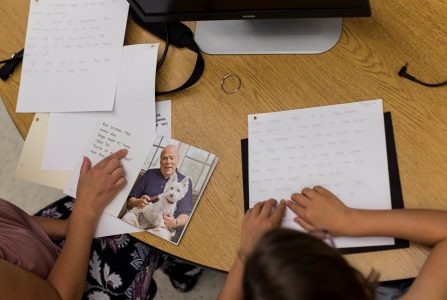
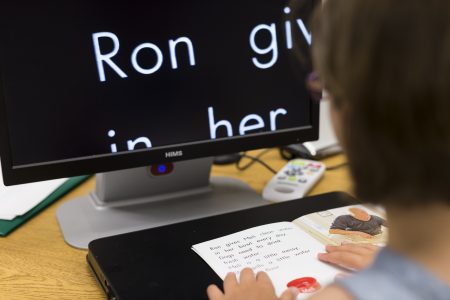
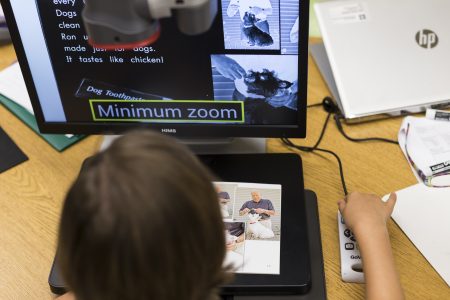
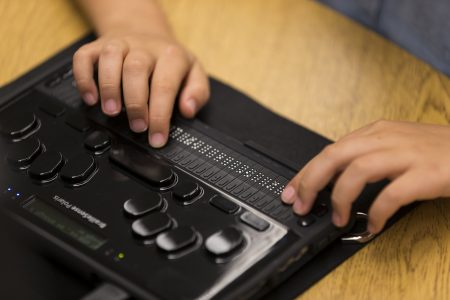
Teal even had her graduate degree completely paid for as part of a unique statewide partnership with Future in Sight and UMass Boston.
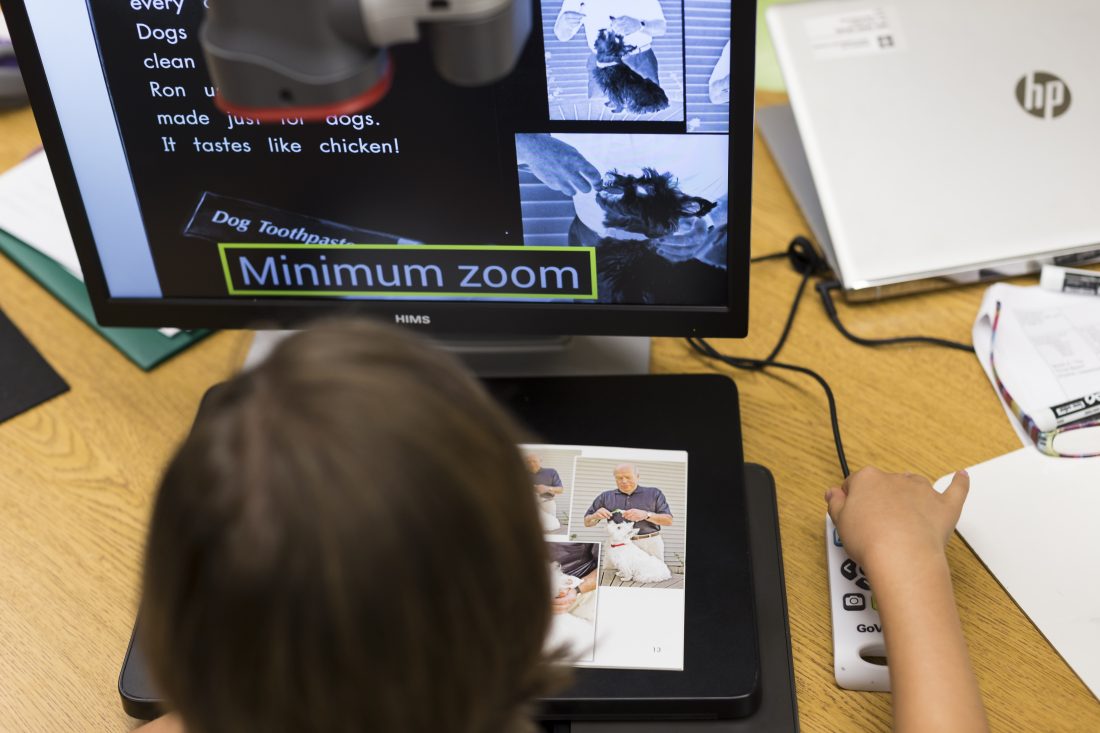
Teal said that even with the pandemic, many students with visual impairment were able to adapt and learn via technology.
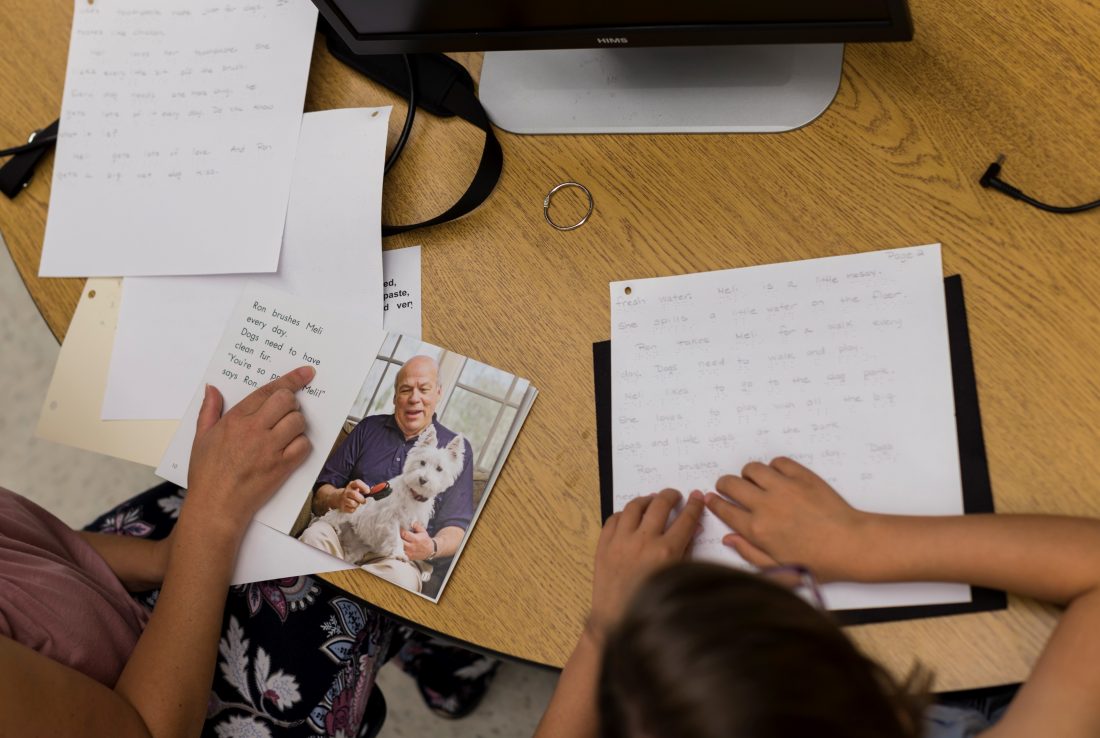
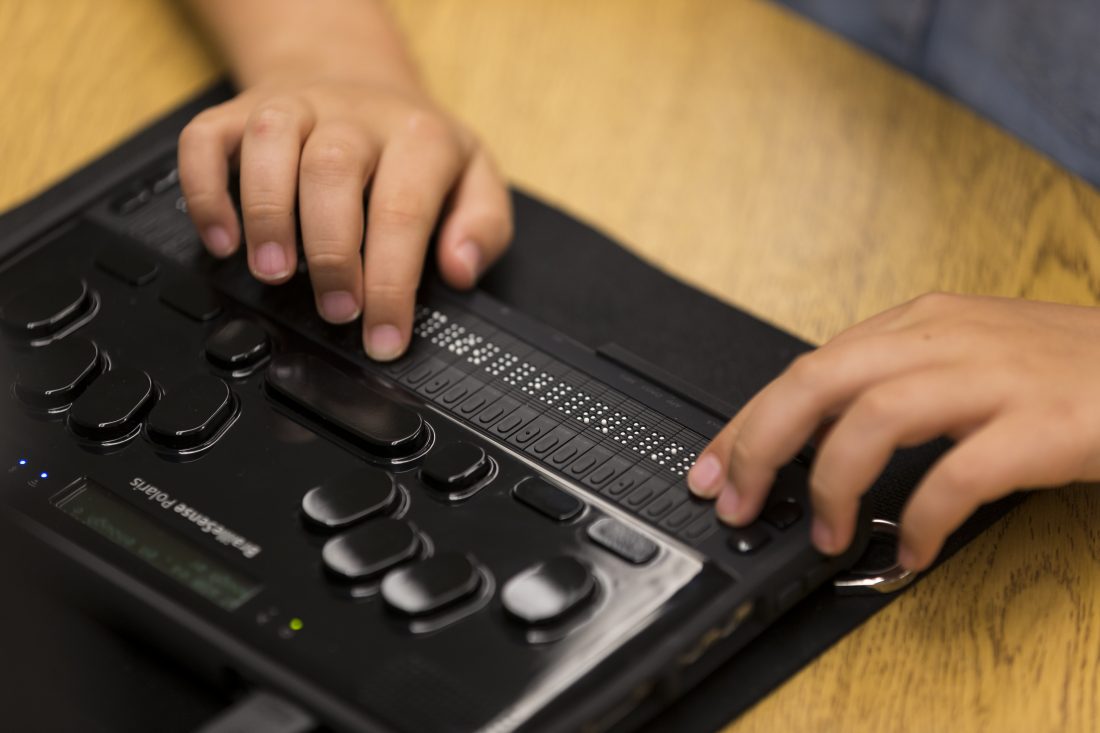
“It depended on the student,” she said. “I have a lot of Braille readers who are very big tech users. So we were able to do things over Zoom and with screen sharing or with my older students, they could take pictures of things with their phones and send them to me.”
For other students, Teal said they had to suspend or alter services. With many of her tech students, she said it was a matter of creative tech problem-solving.
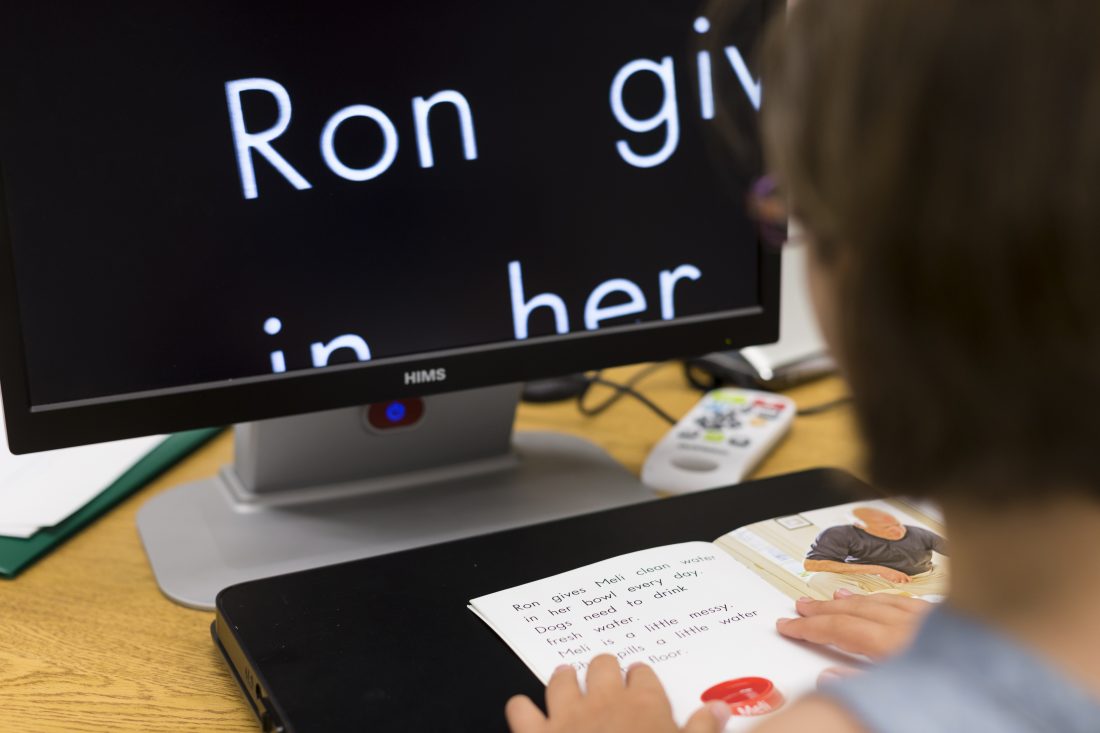
“There are some students that we teach online with parental assistance,” she noted. “It varied.”
FIS president and CEO David Morgan said the pandemic created a “double whammy.”
“COVID did a number of things,” he explained. “It really made life confusing in schools and for teachers – actually for everyone, of course. The idea that on very short notice, that you’re pivoting to an online world with kids that need you to be present and far too often, require tactile reinforcement.”
For instance, if there is a child learning Braille, and within a few days, that student must pivot to an online video conferencing environment which might sound technically possible, but Morgan said it’s highly inefficient.
“Now, what would have happened in person with that teacher really connecting with a child in an appropriate way to help them navigate materials is now happening remotely with all the distractions in a home place,” he said. “We’re more fortunate than most in New Hampshire because the schools and the governor really made an effort to keep schools open.”
Much of that is heightened anxiety and uncertainty, not knowing what form materials are going to take and whether as a student, you’re going to be in school or at home.
Morgan praised Teal and a dozen other teachers on their team for the work that they do.
“They have just been so resilient in navigating that continuum,” he said. “Moving in and out of classrooms, Zoom environments, sending digital materials. They’re incredible in the work they do.”
One of the biggest issues facing Future In Sight is the need for educators, and the great many teachers who have never identified that teaching the visually impaired could be the right educational career choice for them.
“Absolutely,” Teal said. “I am certainly doing my best to spread the word about it. I had mentioned in another conversation that I feel that the biggest obstacle to getting people into my field in particular is that people don’t know that the field is an option.”
Teal has many friends who are in special education and she frequently discusses what she does and how rewarding her job is to her.
“I haven’t shepherded in anyone yet,” she said. “But it is nice to see that people are engaged and people are really receptive when I do talk about it. And yes, that lack of awareness is one of the big obstacles.”
Morgan said few non-profits go to the effort of outreach and marketing and public relations.
“We’re thankful to have a great partnership with Teak Media,” he said. “Erika is a teacher for students with visual impairments, or a TVI. When they enter the program, they’re entering a program where there is a critical shortage of teachers. And because of that, they can get all kinds of grant money from UMass and we make up the difference. We’re a non-profit subsidizing to the tune of about $5,000 a year.”
Teachers who go into the master’s program, Morgan noted, are getting a free education.
That is a potential attraction for many of the special needs teachers and paraprofessionals in the state.
As an aide, Teal said that this field was never even on her radar.
“Not at all,” she said. “Oh no – I didn’t even know that this kind of job was an option. And that’s why I think lack of awareness is such a huge thing. I might have started sooner if I even knew.”
Teal was paired with a student at the time who had a visual impairment. She said she enjoyed working with the student’s technology tools and for making her work accessible.
“I worked with one of her other specialists, who did her orientation and mobility, like navigation skills, and she said, ‘Yes, you can just be a teacher and this can be what you teach.’ And I said, ‘Really?’ It was really random and I fell in love right away.”
If more people were aware, Teal said they might make the jump that she did.
Zoom has enhanced students’ experiences. With some students, Teal does a fair amount of consult work, where she isn’t necessarily working directly with a student.
“I can have a lot more meetings and talk to teams a lot more about processes they need to take for making work accessible,” she said, “or giving recommendations for assessments or technology tools, and that’s all stuff that I can do over Zoom.”
That, Teal added, has broadened what she has been able to do.
Morgan, who is based in Concord, lived in Nashua and is a graduate of Nashua High. FIS began as the New Hampshire Association for the Blind, and is now entering its 108th year.
“We’re the only private non-profit serving the full range of age groups for anyone who is blind or visually impaired,” he said. “That would include helping infants and toddlers, there are school aged kids and adults and seniors.”
Most of the hours are helping hundreds of children with their needs.
“It could be helping them learning orientational mobility,” Morgan explained. “Which is really just a fancy way of saying helping them learn how to navigate their world with vision loss.”
Morgan added that their work could be about helping them convert materials from hard copy into digital format, so that they are fully accessible.
“In some cases, we’re helping classroom teachers,” he said. “But it’s really all about getting them to understand their full range of needs and getting them the tools they need.”
Teal is itinerant and works between different schools in different districts.
“I kind of like the variety,” she said. “I like working with different teams and different specialists. I may work with a speech pathologist in one school and in a different school, they may have a completely different approach.”
As for continuing to find her job challenging, Teal said she learns more and more about the field every day.
“Constantly,” she said. “I learn different things all the time, including the fact that it’s such a developing field and so much more awareness is coming so there is a lot more professional development. And the technology is just leaping like crazy. There’s a lot of new tech coming through and there’s always something new to discover.”