Author discusses St. Paul’s sexual abuse in new book
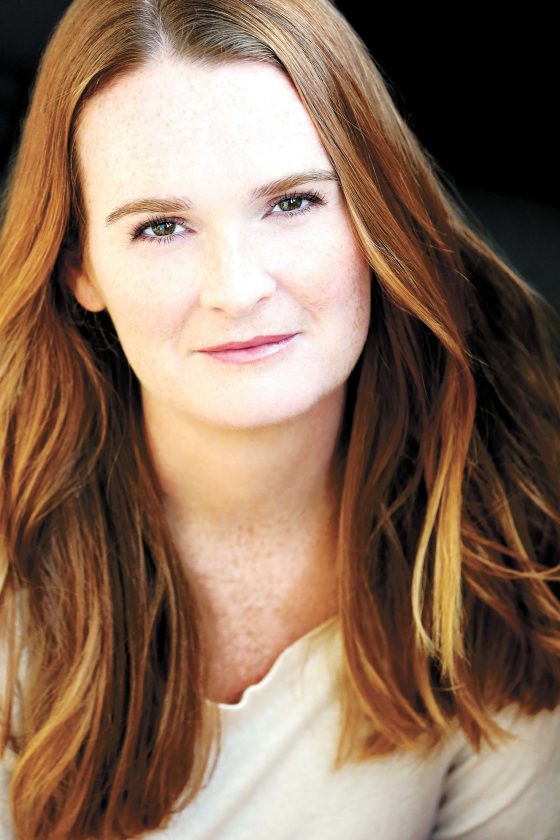
SAN DIEGO – Speaking from her home in Southern California, author Lacy Crawford, who suffered sexual abuse at the hands of two male students in 1991 at the prestigious St. Paul’s School in Concord, is now married and a busy mom of three boys.
Active with her three sons during “Zoom school,” she took a break to catch her breath and talk about her new memoir, “Notes on a Silencing” (Little Brown). And on Sept. 1, she’ll speak during a live Zoom event, sponsored by Toadstool Bookshop in Nashua.
Crawford said that writing the book wasn’t meant as a cathartic process.
“I didn’t sit down with a straight-forward desire,” she said. “I would never had written this book if I had not joined the state investigation into this school in 2017.”
During which, Crawford worked with Concord police, pulling a file from ’91, which was when her pediatrician had originally reported the incident to authorities.
“They opened a new case file and interviewed me and my parents and teachers,” she explained. “They sought to corroborate the account. They also interviewed the two boys who assaulted me.”
In the course of that investigation, police found in her student file, which at that point was 25 years old, the documented evidence of how the administration had made a plan to silence her.
“As a woman then, in my early 40’s, I was a woman looking back on this experience that had shattered me for more than a decade,” she stated. “I had put this behind me. But seeing with adult eyes, that everything that I thought was true, was true.”
Crawford called that, “kind of a vindication” and also, “a kind of rage.”
“For the longest time, I had sort of concluded, ‘Well, I guess it wasn’t the way I thought it was, because wouldn’t somebody have stopped them? Wouldn’t things have happened differently?’ But in fact, no, not at all.”
With that new authority, Crawford said she was incredibly lucky, because she had seen the documents that proved that the experience that she had remembered was real.
“In fact, it was so much worse,” she said. “If only every one of us who has been assaulted in one way and has been manipulated could see her or his file, could see that we weren’t wrong.
The system did exactly what it is designed to do, which is make sure we go away.”
Crawford believed that the particulars of her experience might be illuminating as to how this happens at institutions everywhere.
“I wanted to depict something that we don’t often get to see,” she said.
Beyond that, Crawford said since the book has come out, she looks forward to putting this behind her, but in the right-now, she is busy reading emails and notes and messages from alumni, who more than one third as well, report their own assaults on campus.
“There are renewed calls for change,” she shared. “So I find myself in the position, for better or worse, possibly having a voice in that. And I did not write this book to change St. Paul’s. I did not write this as a letter to St. Paul’s. I’m not sending my kids to St. Paul’s, so it’s not my problem. But, if I am in the position because so many people are sharing their stories with me, to try to help the school understand exactly how bad it was and what they need to do, then it seems that I’m obligated to do that.”
Crawford said she is sort of “drowning in other people’s heartache.”
“There is enormous frustration, that this elite, lauded, incredibly wealthy school has been a place where so many people have been hurt for so long,” she said.
There was no changing of the guard there, per se, but Crawford said the new rector, Kathy Giles, is the “only clear difference” to her.
“She chose not to approach me as a threat,” Crawford said. “Litigious or otherwise. She chose to meet me halfway in conversation and that has made all the difference.”
Crawford said there is a big jump from that to institutional change and Giles said that as well.
“The fact that they issued an apology, that is as thorough and as clear and unequivocal as it is, suggests that the grey ship might be turning a bit,” Crawford said.
Life now for Crawford is different, but she still has many reservations about how institutes of learning treat their students.
“I’m deeply concerned about the way institutions fail people,” she said. “All kinds of institutions. That’s not just about gender and that’s not just about assault. I think I am as frightened as all of my friends are, about how to make this world a better, safer place for our kids.”
Under COVID-19, Crawford said that she and her family have stayed put and not traveled. She has, however, remained busy with book press and publicity. She said there are several creative things that she is looking forward to but simply doesn’t have the time.
“To turn my attention to them, would be to receive all these stories that I’m receiving, and then not act,” she said. “That’s not something that I anticipated, by the way. I pretty much thought my situation was the worst, and it’s not. The fact that I have a voice and am in a position to use it is a privilege.”
Crawford wants to help those who have come forward and those children who will follow.
“I don’t consider myself a change agent,” she said. “I consider myself a writer. But a voice is a voice.”
Writing, she said, will have to wait, until at least school is reopened.
“I feel like I’ve done justice to the people whose stories I have been given,” she said.
Crawford hopes there are many takeaways from the book, even for those who have never had to endure what she has.
“What I tried to depict in the book is that it isn’t just about a bad kid, or two bad kids, and a good person who has been victimized,” she said. “That’s over simplified and that doesn’t help us. I think it’s about communities that are set up with hierarchies of race and gender and class and power and allow great cruelty to continue.”
The story is not unique to boarding school, nor schools in general.
“I think it’s about how entire communities are implicated in the ways we fail to keep each other safe,” she commented. “I think a lot of people have had experiences that maybe they didn’t identify as abuse, which they know were painful.”
People are ignored, overlooked, dismissed and scorned. Crawford said this is what she was trying to understand.
Attending Princeton University, Crawford said there was a lot of emotion that followed her from St. Paul’s.
“Those communities overlap significantly,” she said. “The gossip didn’t stop. It was very painful. I felt claustrophobic but I didn’t feel scared or frightened.”
Life now, being a mom and a wife, suits Crawford perfectly.
“I have a great family,” she said. “I’m very lucky. My husband and I are very happy together and we have these three guys and I’m luckier than I thought I would be. That’s for sure.”
For information about Crawford’s free online Zoom event on Sept. 1, where she will discuss her new book, “Notes on a Silencing,” visit www.toadbook.com or call 603-673-1734. Toadstool Bookshop is located at 375 Amherst St., in Nashua.