Comic Dreesen talks Sinatra in new book
LOS ANGELES – Stand-up comedian Tom Dreesen is a comic’s comic. The humorist is matter-of-fact when he talks about his list of show biz accomplishments, in particular, the many musical acts that he’s opened for over the years. That list includes Sammy Davis, Jr., Smokey Robinson and Gladys Knight and the Pips, to name three. But there’s one name that defines Dreesen’s gift for comedy and ability to know what to say, and when and how to say it, especially when you’re talking to the Chairman himself: Frank Sinatra.
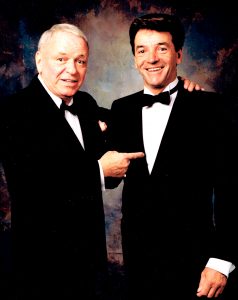
In his new book, “Still Standing: My Journey from Streets and Saloons to Stage and Sinatra,” co-written by Dreesen, and Darren Grubb and Johnny Russo (Simon & Schuster), Dreesen doesn’t shatter any myths, but he’s candid and comfortable when talking about Sinatra and the road that Dreesen travelled to become “Ol’ Blue Eyes” one and only opening act for 13 years.
——————–
Dreesen to talk about his new book on Aug. 6
Toadstool Books and the Nashua Public Library will host comedian Tom Dreesen for a virtual event at 7 p.m. Aug. 6.
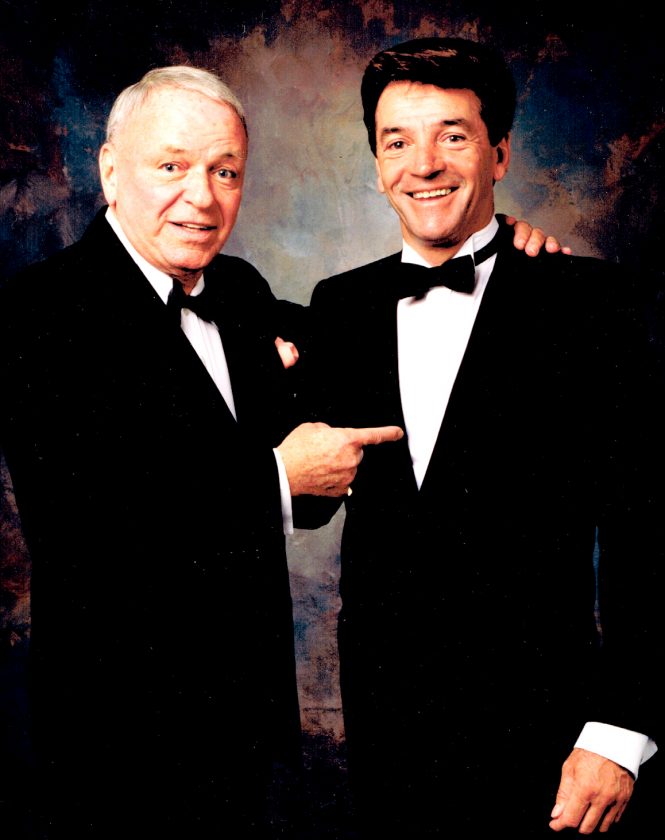
Dreesen has made more than 500 appearances on national television as a stand-up comedian, including more than 60 appearances on “The Tonight Show.” He was a favorite guest of David Letterman and frequently hosted the show in Letterman’s absence. For 13 years, he toured cross-country and opened for Frank Sinatra and has appeared countless times in Las Vegas, Tahoe, Reno and Atlantic City with artists like Smokey Robinson, Liza Minnelli, Natalie Cole and Sammy Davis Jr.
He has acted in numerous television shows – from “Columbo” to “Murder She Wrote” – and appeared in motion pictures including “Man on the Moon” and “Spaceballs.”
Join him as he talks about his new book, “Still Standing: My Journey from Streets and Saloons to the Stage, and Sinatra.” Registration is required to receive information about connecting to the virtual event. Register at tinyurl.com/npllectures.
——————–
The book is a revealing peak inside the life of one of Frank’s favorite people.
And on that note, Dreesen is also a favorite of David Letterman, often appearing on that host’s late night show. (Letterman writes a very funny forward in Dreesen’s book.)
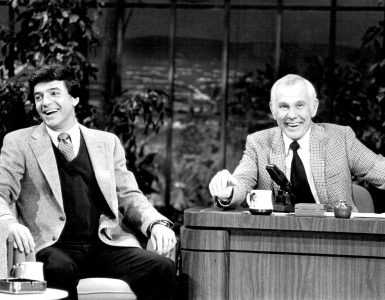
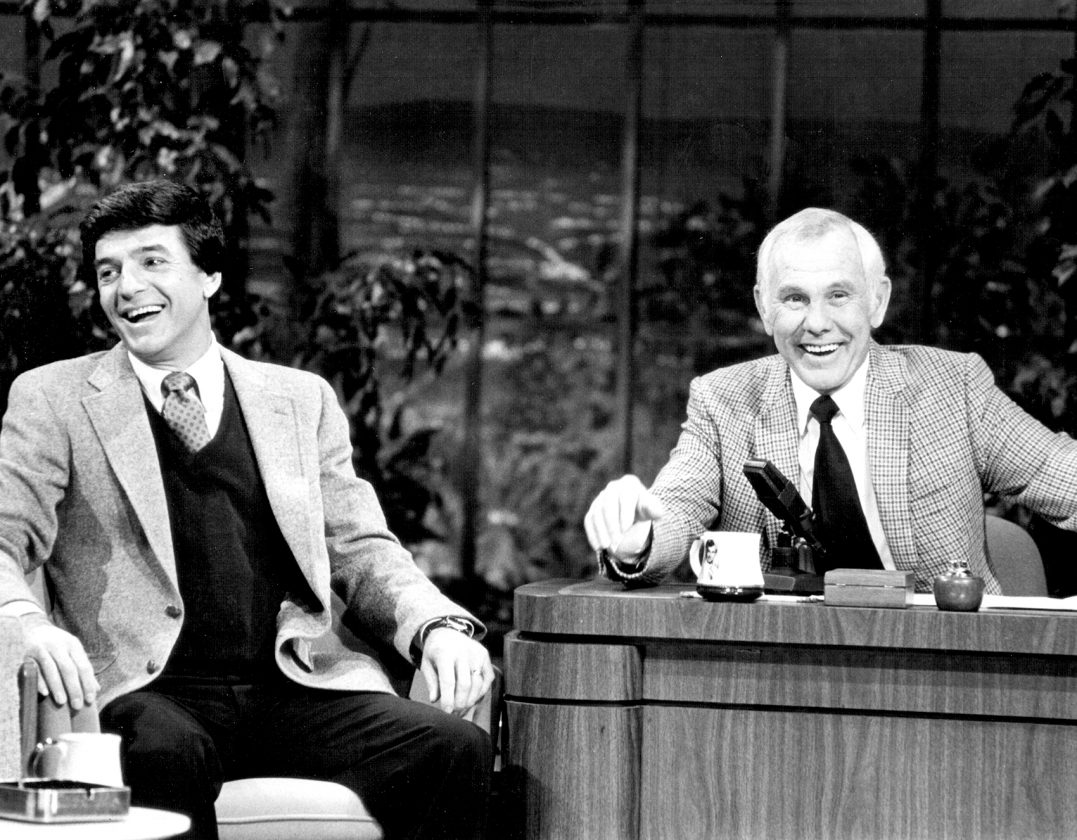
Tom Dreesen appeared on “The Tonight Show starring Johnny Carson,” many times over the years. (Sixty-one to be exact.) Carson’s show established the modern format of the late-night talk show.
“In those days, and we’re talking 1975 or so, wherever you went in America, people would ask, “What do you do for a living?'” he said. “I’d say, ‘I’m a stand-up comedian.’ The next question out of their mouth was, ‘Oh yeah? Have you ever been on Johnny Carson?'”
In the eyes of America, if you hadn’t been on “The Tonight Show,” you weren’t a legitimate stand-up comedian. Dreesen explained the business side of being a stand-up comedian.
“We’re in show business and that’s two words, ‘show’ and ‘business,'” he said. “So, I had to get on ‘The Tonight Show,’ and in those days, there was just NBC, ABC and CBS. Television was smaller, but 26 million people watched ‘The Tonight Show starring Johnny Carson.'”
One appearance on “The Tonight Show,” got Freddie Prinze a TV show; Dreesen appeared next to Johnny, and CBS signed him to a development deal the next day.
“I was on my rear-end, broke,” Dreesen said. “I had a wife and three kids. But after that appearance on ‘The Tonight Show,’ in 1975, I never stopped working.”
If you had the right material, you could make an entire family laugh which is why Dreesen mostly performed “clean.” He said he never got a learned degree but has “a doctorate from the streets.”
“I can do a stag roast with the best of them,” he stated. “But it wasn’t a good business move in those days. When you’re writing all this clean material, other performers wanted me to work for them. They had family audiences, so I was conditioned to write that kind of material.”
Dreesen said that Sinatra was a street guy like him, and the two often traded stories and quips after the shows. But never on stage.
“One night, after touring with Frank for four years, there was a heckler in the audience,” he said. “He wasn’t a bad heckler but he was just a guy who wanted to disrupt the act. And I always gave hecklers just enough rope to hang themselves.”
At one point, the heckler said something, and Dreesen replied, “No shit.” Later, Sinatra told Dreesen that the bit was funny, but he didn’t have to swear to be funny.
“That’s the kind of comedian that he wanted,” Dreesen said of Sinatra. “He also wanted a comedian who could change his material, because we did the same cities every year.”
From reading the book, you can clearly see that Dreesen and Sinatra were kindred spirits. The two grew up on the streets – Sinatra in Hoboken, New Jersey, Dreesen in Harvey, Illinois. Dreesen said that when they started working together, Sinatra was the boss.
“Sinatra was in charge and you better know your job, because he knew your job,” Dreesen said. “You could mess around all you want, but every night was a command performance. That’s what Frank believed.”
As time went by, the two became buddies, often staying up all night talking and maybe throwing a couple back.
“Toward the end of his life, he became more of a father to me,” Dreesen admitted. “He gave me some real good advice.”
There were times when the two were riding around in the car in the dessert and there were times when they were just two street guys, talking about where they came from. And there was an undeniable connection.
“It was great for me but for other people, they were envious,” Dreesen said. “When you’re around somebody of Frank’s magnitude, he is the king of that castle. And all the loyal subjects want to be close to the king. And there’s a lot of bitterness when you see that the king likes someone more than someone else and is comfortable with them.”
Dreesen and Sinatra were both half Sicilian and both spent much of their upbringing singing or performing for a couple of coins. One time a reporter from the New York Times asked Sinatra, why he kept Dreesen as his opening act.
“Frank said, ”If I’m a saloon singer, which I am, then Tom is a saloon comedian,” Dreesen shared. “By that, we were just a couple of neighborhood guys. That’s the connection we had.”
By the time Tom Dreesen began working with Sinatra, he was a veteran of the circuit, having performed on “The Tonight Show” many times and he had toured extensively with major acts.
“The only thing that was different was those people that I worked with, the most Sammy Davis, Jr. would bring in was 2,500 people in the round,” Dreesen explained. “But when I was opening for Frank, there were 20,000 people.”
Dreesen has the ability to teach younger comics a thing or two, such as microphone technique stage presence and even joke writing. But he said you can’t teach timing.
“You either have it or you don’t,” he said. “It’s hard to describe. I use a graphic description to try to explain what I’m saying. Let’s say you have a pond of water in front of you and you threw a rock high into the air and on the way down, it hits the pond and ripples across the pond. If that’s laughter, you never move on your next line, you never step on that laughter on its way up. You step all over that laugh if you do.”
After all the majesty of performing, the thousands of fans, when both performers “killed,” Tom and Frank both would be sitting around at 4:00 a.m., they’d talk about everything but the show itself.
“It’s like the Judy Collins lyric,” Dreesen said. “‘And now it’s just another show, you leave them laughing when you go.'”
Sinatra did not take compliments easily, and Dreesen picked up on that quickly: Frank did not need another fan.
“Frank Sinatra never knew how much in awe I was of him,” he said. “I never let him see that side, because he had enough fans. What he needed was a pal or a friend.”