Remembering Nashua native ‘Tom’ Messier
Bedford, Virginia transplant helped found the National D-Day Memorial
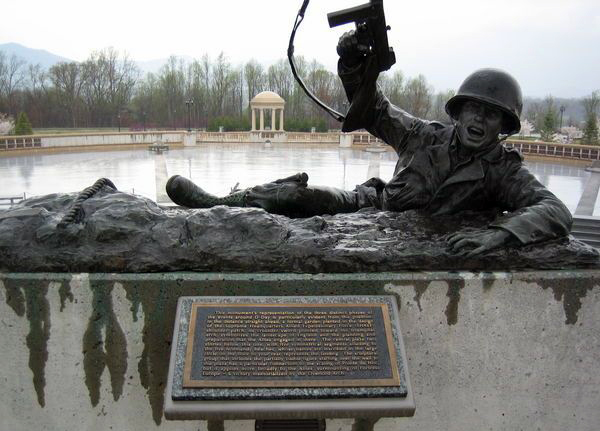
Courtesy of National D-Day Memorial An elaborate display depicting a soldier during the Normandy invasion is one of many that are part of the National D-Day Memorial in Bedford, Va.
-
- Courtesy of National D-Day Memorial An elaborate display depicting a soldier during the Normandy invasion is one of many that are part of the National D-Day Memorial in Bedford, Va.
-
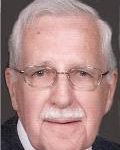
- COURTESY PHOTO Nashua native Earle T. Messier, who moved to Bedford, Va. in the 1970s and became involved in numerous civic causes, was among the leaders who helped found the town’s National D-Day Memorial.
-
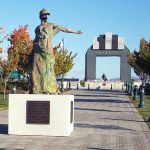
- Courtesy of National D-Day Memorial A sculpture greets visitors to this entrance to the National D-Day Memorial in Bedford, Virginia. In the background is the monument referred to as the “Overlord.”
-
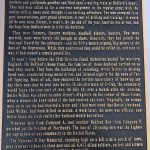
- COURTESY PHOTO One of the several plaques at the National D-Day Memorial in Bedford, Va., tells the story of the famed “Bedford Boys,” the 20 soldiers all from Bedford who were killed during the D-Day invasion 75 years ago next week. This plaque was dedicated in memory of Nashua native Earle T. Messier for his “tireless work and devotion to his community.”
-
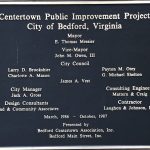
- COURTESY PHOTO One of two plaques honoring the leadership of the Centertown Public Improvement Project in Bedford, Va., which was involved in the creation of the D-Day Memorial that is expected to draw tens of thousands of visitors next weekend for the observance of the invasion’s 75th anniversary.
-
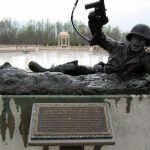
- Courtesy of National D-Day Memorial An elaborate display depicting a soldier during the Normandy invasion is one of many that are part of the National D-Day Memorial in Bedford, Va.
But when a proverbial business offer he couldn’t refuse came around, Messier to gathered his growing family and relocated several hundred miles south, where they settled into a small Virginia town of a few thousand people halfway between Roanoke and Lynchburg.
That was 45 years ago, and although Earle Thomas Messier, who preferred “Tom,” passed in 2016, his legacy of community leadership and civic commitment lives proudly on among the folks of his adopted hometown of Bedford, Virginia.
Whether the Messiers knew about little Bedford’s connection to D-Day, the World War II allied invasion of German-occupied France, before they left Nashua for Bedford in 1974 isn’t clear.
But what is crystal clear is the key role Tom Messier and his family would come to play in the creation of the sweeping, 50-acre interactive memorial that pays tribute to the more than 160,000 allied troops who took part in the invasion – code-named Operation Neptune – and honors the memory of its 4,400 casualties.
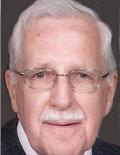
COURTESY PHOTO Nashua native Earle T. Messier, who moved to Bedford, Va. in the 1970s and became involved in numerous civic causes, was among the leaders who helped found the town's National D-Day Memorial.
Built over several years, the National D-Day Memorial, sited on a hill overlooking Bedford and the Blue Ridge foothills, was first envisioned about 30 years ago by Bedford resident Bob Slaughter, a World War II veteran who was among the third wave of troops to hit Omaha Beach.
But why such keen interest in Bedford, a town of fewer than 7,000 residents, in undertaking such a huge project?
Because on June 6, 1944 – 75 years ago next week – Bedford, with just 3,200 residents at the time, lost 20 of the 32 hometown soldiers it sent to war – all of them on the beaches of Normandy.
The profound loss gave Bedford the unfortunate distinction of losing the most soldiers per capita of any American city, town or village.
Over time, however, little Bedford proved its resiliency, as grief gave rise to solemn pride and, as the memorial’s Website states, “a deep commitment to ensuring the story of D-Day and its costs and consequences were not lost on future generations.”
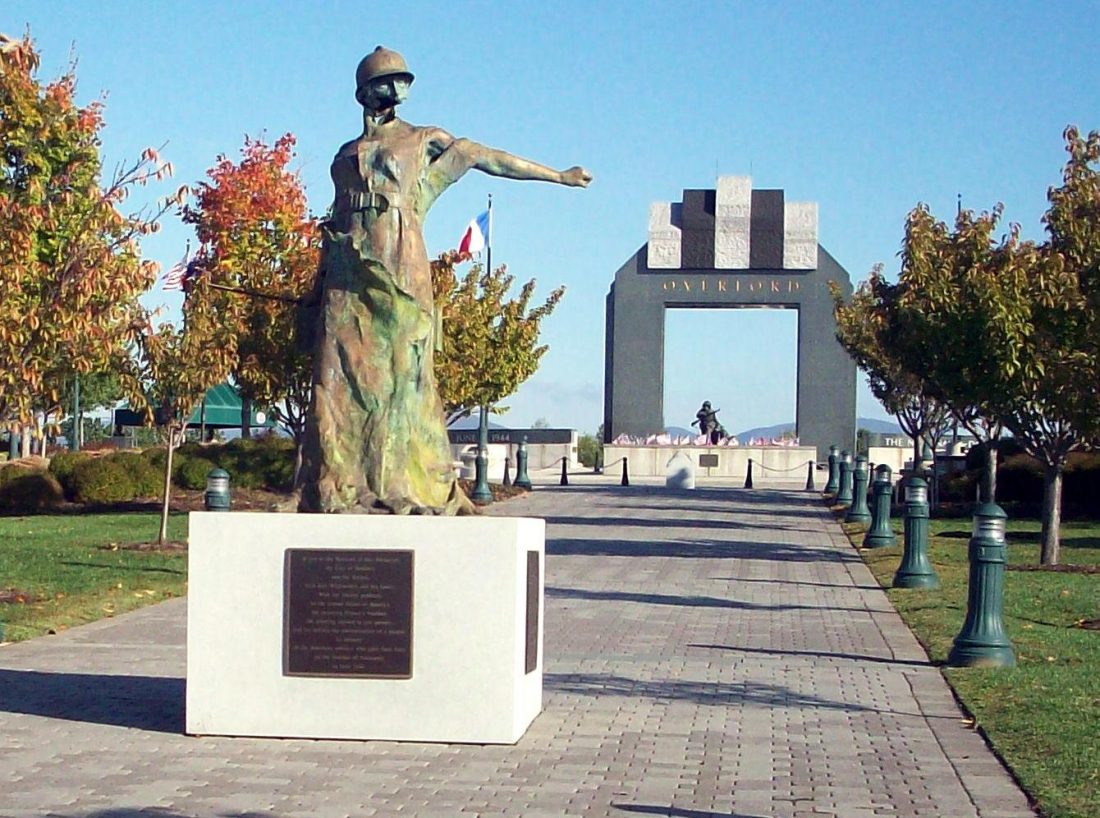
Courtesy of National D-Day Memorial A sculpture greets visitors to this entrance to the National D-Day Memorial in Bedford, Virginia. In the background is the monument referred to as the "Overlord."
“Oh, yes, it was a real big undertaking,” Connie Messier, like her late husband a Nashua native, told me the other day by phone from her Bedford home.
The town has been gearing up for some time now for the June 6 observance, Messier said. “We’re expecting something like 20,000 people here.”
She said Vice President Mike Pence is on the program as the day’s keynote speaker.
Messier said she sometimes helps out at the memorial, by staffing the gift shop. Her daughter-in-law, April Cheek-Messier, is carrying on her father-in-law’s work in her capacity as president of the National D-Day Memorial Foundation, spearheading fundraising and expansion initiatives.
Since visitors almost always tour the entire memorial before stopping in at the gift shop, many a compelling moment has unfolded there.
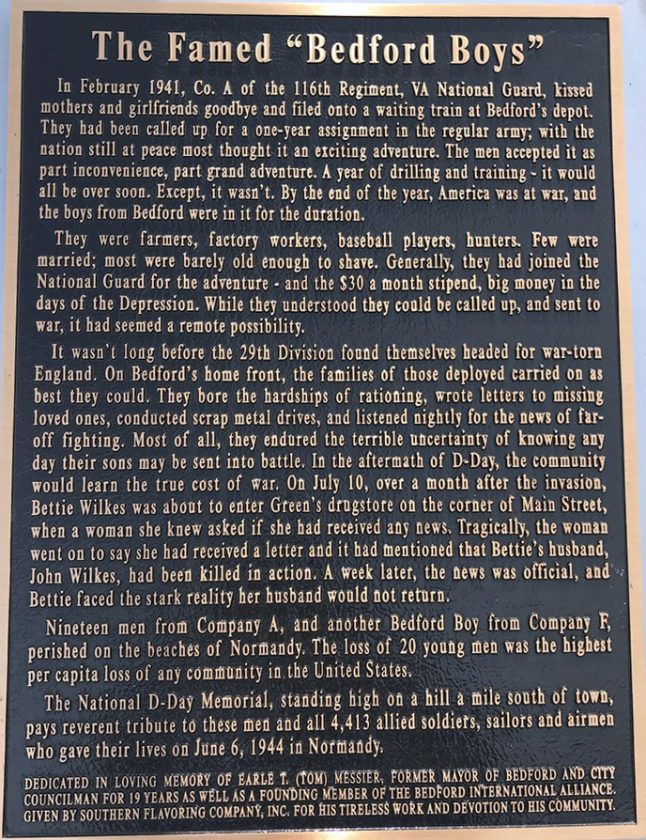
COURTESY PHOTO One of the several plaques at the National D-Day Memorial in Bedford, Va., tells the story of the famed "Bedford Boys," the 20 soldiers all from Bedford who were killed during the D-Day invasion 75 years ago next week. This plaque was dedicated in memory of Nashua native Earle T. Messier for his "tireless work and devotion to his community."
“So many (war veterans) just don’t want to talk about it,” she said, referring to their wartime experiences. “But when they come in the gift shop with their children, grandchildren, after seeing the memorial, they start opening up,” she said.
Longtime area resident Ron Cote, a friend and co-worker of Tom Messier’s when they were salesmen at Doehla’s, stayed in touch when Messier moved to Bedford.
Not only did Messier serve nearly 20 years on the Bedford City Council, he was elected mayor for several terms, according to his obituary.
But among Messier’s proudest initiatives was as a founding member of the Bedford International Alliance, the chief purpose of which was to “give credit to the ‘Bedford Boys.'”
All the work by who knows how many Bedford residents came to fruition on June 6, 2001, when then-President George W. Bush came to town to help dedicate the memorial and its motto, “Commemorating Their Valor, Fidelity, and Sacrifice.”
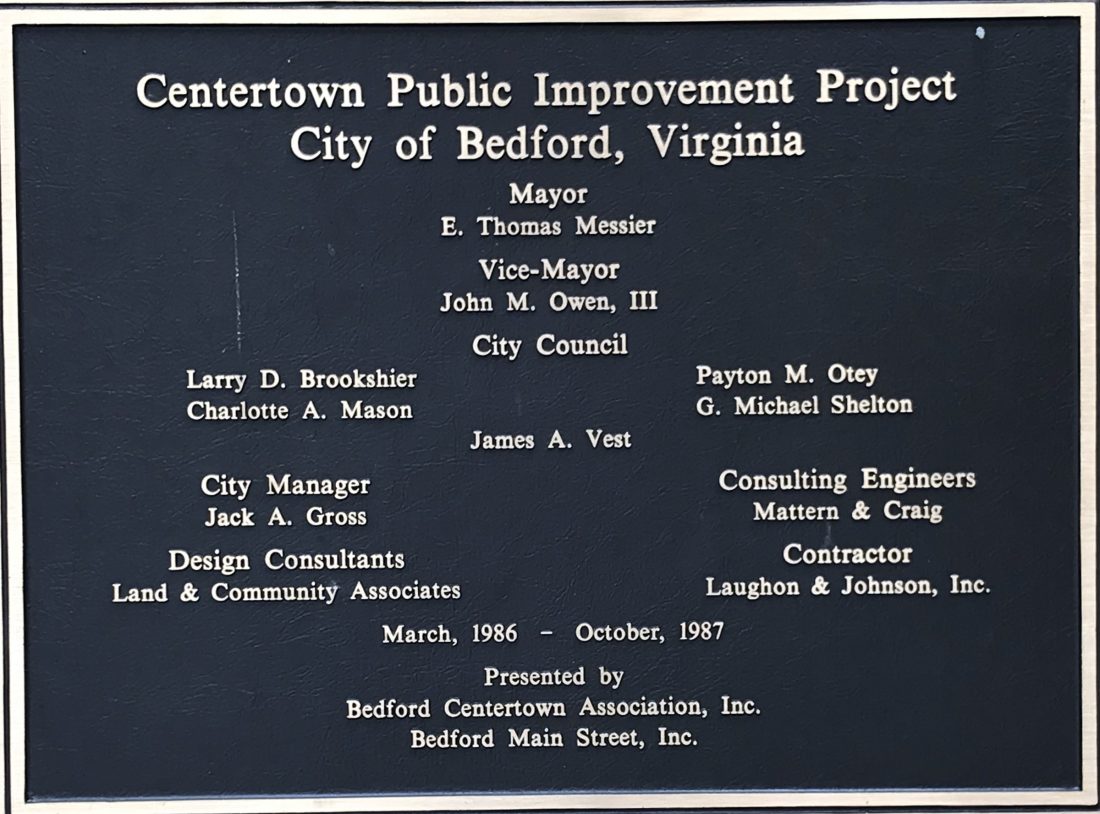
COURTESY PHOTO One of two plaques honoring the leadership of the Centertown Public Improvement Project in Bedford, Va., which was involved in the creation of the D-Day Memorial that is expected to draw tens of thousands of visitors next weekend for the observance of the invasion's 75th anniversary.
According to the memorial’s Website, the theme of next week’s 75th anniversary observance is “The Final Salute,” which “combines the best of the memorial with the best of the D-Day story: A gathering of veterans and the general public at the nation’s memorial to the invasion of Normandy for reflection and remembrance – the story of ordinary people in extraordinary moments.”

Courtesy of National D-Day Memorial An elaborate display depicting a soldier during the Normandy invasion is one of many that are part of the National D-Day Memorial in Bedford, Va.