Workers honored at PLUS Co., Gateways Community Services event in Nashua
NASHUA – Carrie Bergeron Desai graduated high school, went on to study early childhood education, got her degree as a teaching assistant, met a man and married him, learned taekowndo and earned a black belt, embarked on a national speaking tour, has been featured in Time magazine and the TV show “20/20,” and, at 38, works every day toward her life goal of self-advocacy and being independent.
Bergeron Desai, whose father, Tim Bergeron, is a Nashua native, was the fourth of the Bergerons’ four children, born in 1976 with “a floppy head, a big tongue and a hole in my heart.”
Bergeron Desai was that matter-of-fact Tuesday evening when she shared details of her life with Down syndrome with more than 100 people at the annual meeting of the PLUS Co. and Gateways Community Services.
Today, Bergeron Desai, who was this year’s keynote speaker, lives in upstate New York with her husband of eight years, Sujeet Desai, who also has Down syndrome.
Bergeron Desai’s presentation, spiced with humor, facts and figures, and stories of triumph and challenge, capped a program in which leaders of both agencies bestowed gratitude and praise upon the network of employees and volunteers who advocate tirelessly for individuals with disabilities and singled out three for special honors as the recipients of the two Moving Mountains Awards and the Sandy Garrity Award.
Janet Boisvert, a 20-plus year Gateways employee whom CEO Sandy Pelletier called “a three-man show” and is known for her attention to detail, received Gateways’ Moving Mountains Award.
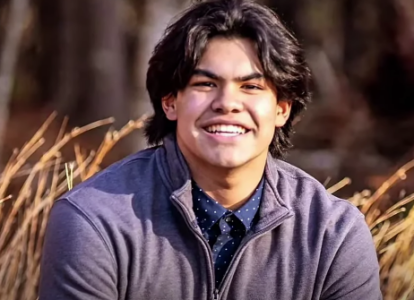
The PLUS Company’s version of the award went to Juan Cruz for his “dedication, perseverance, commitment and overall positive attitude,” said CEO Kim Shottes, who called Cruz the agency’s “go-to person.”
The coveted Garrity Award, launched shortly after the 2007 death of the Nashua woman who was the lead plaintiff in Garrity v. Gallen, the landmark 1980s case that closed the Laconia State School and signalled the start of community-based mental health services, was presented to Donald Shumway, the former state Health and Human Services commissioner considered the architect of community-based services system.
Pelletier, who praised Shumway at length for pioneering the system originally named “Action for Independence,” called him an “unassuming man” whose work has “affected more than 13,000 lives right here in New Hampshire.”
Shumway, who took his advocacy to the national level as a leader for several years of the Robert Wood Johnson Foundation, the nation’s largest philanthropy focused solely on health, is best known in New Hampshire for serving and advocating for individuals with disabilities and their families.
He was a longtime state Department of Health and Human Services commissioner before assuming his current post as president of Crotched Mountain Foundation in Greenfield.
He has also directed the New Hampshire Developmental Disabilities Council.
Bergeron Desai, meanwhile, drew a standing ovation for her interpretive dance to the words of the song “True Colors,” the highlight of an eloquent speech in which she recalled how “it bothered me that I couldn’t keep up with my classmates” in school.
That led to teasing, Bergeron Desai said. She approached her parents.
“They told me I have two choices: ignore them or educate them about disabilities.
“I chose to educate them,” she said, scanning the room and adding, “just like you all do.”
When she wondered why she was having trouble learning, and why people treated her differently, Bergeron Dasai said, her father told her a story about a tomato.
It was 1976 – the year she was born – when her father, harvesting his crop of beefsteak tomatoes, noticed a differently shaped tomato, she related.
“It had a large, smooth, bright-red enlarged side that made my dad want to pick it up and study the bump because it was so unique and looked appetizing,” she told the group.
“At supper, that tomato was just as juicy as the others,” she said with a grin.
Just like that tomato, Bergeron Desai continued, “even though I’m different, as a person with Down syndrome, my family and friends love me even more and want to help me when I need it.”
Dean Shalhoup can be reached at 594-6443 or dshalhoup@nashuatelegraph.com. Also, follow Shalhoup on Twitter (@Telegraph_DeanS).