Cedarcrest offers support, guidance during pandemic
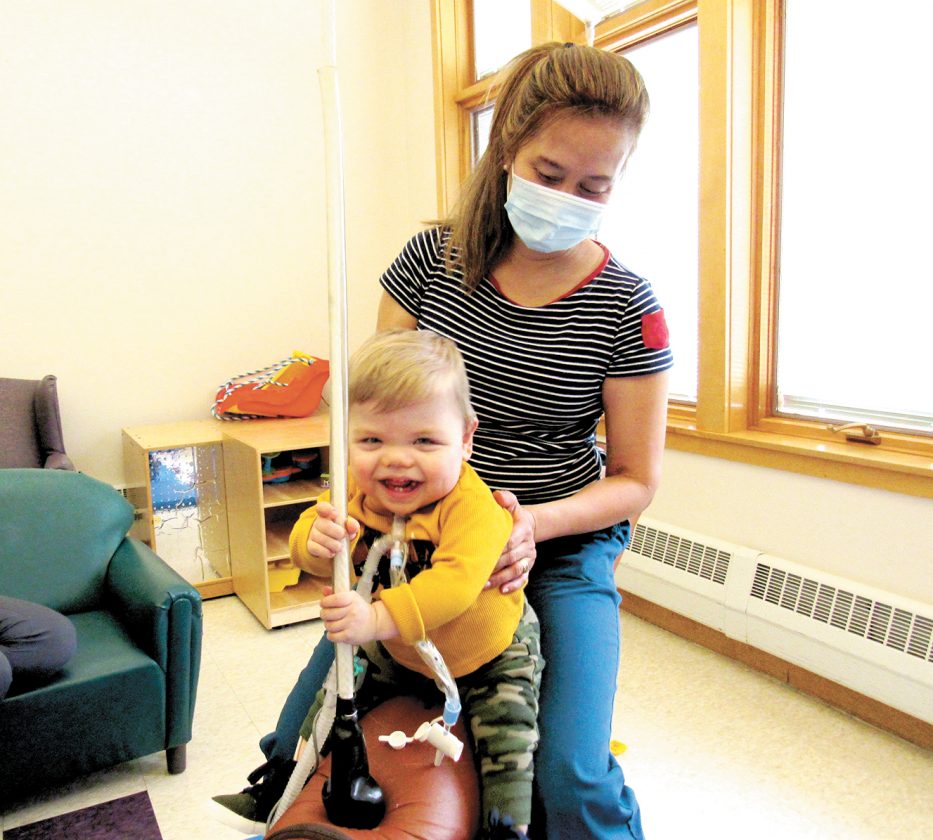
KEENE – Cedarcrest Center for Children with Disabilities continues to provide essential support through a comprehensive program of medical, special education and therapy services for children.
Cedarcrest director of development and communications Patty Farmer said that the center relies on the community for support, and has continued to prioritize Cedarcrest and the many endeavors and challenges it faces on a day-to-day basis.
“We rely on the community for financial support, as well as volunteers,” she said. “Unfortunately, we haven’t been able to have volunteers in the building. But that hasn’t dissuaded people from supporting us.”
With the pandemic, Cedarcrest has been unable to schedule any live events and has relied on its online presence for meetings and especially its Facebook page to inform parents and families of children of updates and news of the organization.
“We emphasized a lot more communication,” Farmer said. “Unfortunately, parents have been impacted as children who are residents have been unable to see their parents and family members in person.”
Farmer stressed that they have adapted, which includes utilizing an outdoor, ventilated building that parents can visit their children in, but must be outfitted with complete personal protective equipment.
“We’ve had a lot of changes,” she said. “You’d think that we’d feel isolated, but you can be isolated and still feel very supported.”
Typically, Cedarcrest would have 20-26 residents, but through the pandemic, that number has been closer to 20.
Farmer said there have not been many admissions in the last year and all have been evaluated on a case-by-case basis.
“Right now, our limit for the age bracket is 21,” she said. “And we have had children who turned 21 and have transitioned to community providers. But we haven’t been able to allow short-term stays, which has historically been of huge interest to parents and families.”
Prior to the pandemic, Cedarcrest has had as many as 50 visits a year for families interested in having their children receive therapy and support on weekends or post-op.
“That has been curtailed for almost 12 months now,” Farmer shared. “That’s been a big impact on us – both in terms of our desire to serve families with children with special needs but also from a revenue standpoint.”
Staffing has not been affected during the pandemic, according to Farmer.
“In fact, not only have we not reduced staffing, but we’ve done well, I would say, in terms of people who were interested in joining our staff,” she explained. “We’ve had some changes in positions, we’ve had some staff achieve their nursing degrees so we’ve had some LNAs become nurses during the pandemic, but we’ve also had staff joining us.”
Farmer said Cedarcrest’s retention during COVID-19 has been even higher than originally estimated.
“That’s been an area of improvement,” she noted.
Cedarcrest has not experienced any positive cases of children in residential care throughout the pandemic.
“We have a few day education students who have tested negative as well,” Farmer added. “We’ve done many rounds of testing over the past year for a variety of reasons.”
As for staff positivity cases, Farmer said there has been but a handful. She said there were no indications of any staff-to-staff transmissions.
“Because of our infection control measures with masks and goggles and handwashing and sanitization and screening at the beginning of shifts and partway through the day, we feel that protocol has greatly reduced the potential, or mitigated the potential for transmission,” she said.
As for housing and caring for residential children who have high tech medical needs, Farmer said the community has answered their pleas for assistance.
“There are a number of children who require the use of outside oxygen, such as ventilators,” she said. “Because the virus is a respiratory virus, I think people are much more aware of the acuteness of our children’s conditions and therefore, it shined a spotlight on the fact that we’re the only care provider of our kind in New Hampshire. It’s brought more attention to the type of program that we are.”
At the onset of the pandemic, masks were hard to come by, but Farmer said the community rallied with financial contributions, as well as mask and glove donations.
“Since then, New Hampshire state emergency operations has been phenomenal in terms of getting us protective equipment that we need,” she said. “I can’t speak highly enough about that department and the National Guard.
Through state and local support, Farmer said “thousands and thousands of N-95 masks and surgical gloves” were made available to Cedarcrest Center.
While the pandemic marched on, it appears that the children who receive services at Cedarcrest didn’t necessarily notice anything going wrong, with the exception of being able to see their families and loved ones.
“We do use Zoom and Facetime, so the children can interact in that capacity,” Farmer said.
Farmer said that as for the majority of the children’s cognitive disabilities, every effort has been made to keep the children’s days’ status quo.
“That has been our goal,” she said. “We want their routines to go along as if nothing is different. Everyone is the same and their routine is the same and their goals and IPE are continuing at the level, as if there were no pandemic outside our facilities.”
To make a donation to Cedarcrest, visit cedarcrest4kids.org.