Say what? markets confused
I told you the Dow would quickly return to 15,000.
What?
Oh, I said 14,000. I meant 15. It must have been a typo.
I’m officially raising the white flag on a market correction. There appears to be no force great enough to cause the equity markets to turn down.
The chatter this week was all about how the markets misunderstood the Federal Reserve. I love it. All of Wall Street – theoretically a collection of the country’s best and brightest – couldn’t comprehend the English language as spoken by Ben Bernanke. Once things were clarified, the gravy train resumed its roll.
I’m a little fuzzy on exactly who clarified things and how it was done. I assume it was the Federal Open Market Committee members who spoke publicly after Mr. Bernanke’s press conference. I also assume that the key to the clarification was an explanation that tapering did not constitute tightening but rather diminished loosening.
It’s like Washington telling us that they cut spending when what they actually did what cut the growth in spending. Thus spending is still increasing but at a reduced rate. That’s Washington’s idea of fiscal responsibility.
In the case of the Fed they plan to cut back on bond buying, which means they would be injecting less liquidity into the system. Worst case, they would stop injecting liquidity, but they wouldn’t be removing liquidity – or more importantly – raising interest rates.
Maybe I’m too stupid to have been confused in the first place, but I understood the implications of the Fed’s potential strategy. Oh well, it’s all good now. The only question is whether last week’s rally was end-of-quarter window dressing or a genuine resumption of the bull. I’m not even going to hazard a guess.
In news that wasn’t misunderstood, consumer spending rose 0.3 percent in May reversing a 0.3 percent decline in April. Even better news is that personal incomes rose 0.5 percent which means that consumers not only increased spending, but also savings.
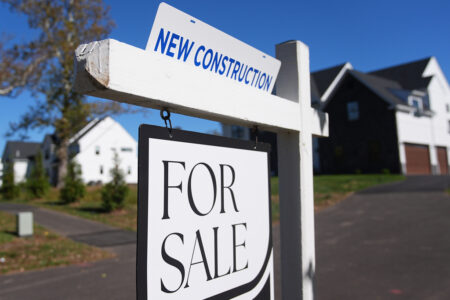
In addition to the rise in consumers spending, new home sales increased to levels not seen in nearly five years. Separately, the Standard & Poor’s Case-Shiller Index showed that home prices in the 20 metropolitan areas it tracks jumped 12.1 percent in April compared to a year earlier. It also marked the largest monthly gain since the index’s inception.
As you would imagine, the largest increases occurred in the most depressed areas including Las Vegas, Los Angeles, Phoenix, and San Francisco. The Boston area posted an annual increase of 8.1 percent, but that was near the bottom of the pack.
Before getting too giddy over the numbers, Robert Shiller, of Case and Shiller, warned on CNBC that a not inconsequential portion of the rise may be due to speculation. He went on to say that another bubble is potentially forming in the formerly hardest hits areas. However, note that Shiller has been bearish on housing prices since 2011. Hopefully, Mr. Shiller’s prognostications will continue to be incorrect.
On the existing home front, the National Association of Realtors reported that sales of previously owned homes rose 4.2 percent in May and now stand at the highest levels since 2009. Better yet, median prices surged 15 percent on the year.
Despite the Commerce Department lowering its estimate of first-quarter GDP from 2.4 percent to 1.8 percent the recovery remains on track. Employment is making steady if not substantial gains, consumers continue to spend, and housing continues to heal. And in a rare moment of rationality, the stock markets viewed this good news as good news. I guess someone clarified it for them.
The potential flies in the ointment include one old fly in China and one new fly in rising mortgage rates.
The data coming out of China hasn’t been good so we know its economic activity has slowed. What we don’t know is how much. Watch commodity prices and Brazil as they may serve as the best surrogate for what’s happening in China.
As for mortgage rates, the bond market also must have misunderstood the Fed because bonds sold off causing yields to jump. I guess tapering actually means tapering to bond traders. Personally, I think they need some tutoring in the English language.
Although the 10-year Treasury has come off its recent high of 2.63 percent, it is still trading in the 2.47 percent range. That is well above the sub-2 percent level of the last year. The recent spike in bond yields has also meant a spike in mortgage rates.
Last week the 30-year mortgage experienced its largest weekly increase since 1987. For the week fixed rates went from an average of 3.93 percent to an average of 4.46 percent. A year ago the average rate was 3.66 percent.
Higher rates may hamper refinancing activity but it isn’t a given that it will appreciably impact housing demand. In fact, an argument can be made that moderately rising rates could boost demand. Besides, if rising mortgage rates do begin to hurt the housing market I’m sure someone on Wall Street will clarify things for home buyers so they understand that rising rates don’t actually mean their mortgages will be more expensive. Right.
Author, professor, entrepreneur, radio and TV commentator Tony Paradiso can be reached at
tparadiso@tds.net.