Hurley first amputee to be crowned Ms. North America
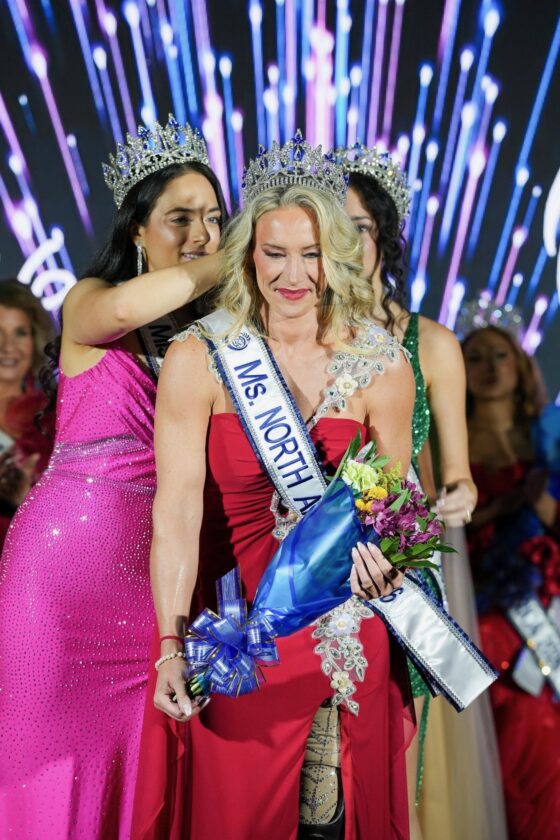
Christina Hurley, founder of Less Leg More Heart, was recently crowned Ms. North America becoming the first amputee to receive that honor. Courtesy photo
NASHUA — Christina Hurley, founder of Less Leg More Heart, was recently crowned Ms. North America becoming the first amputee to receive that honor.
Prior to being named Ms. North America, Hurley held the title of Ms. New Hampshire North America and represented the Granite State at the International Ms. North America Pageant in Orlando, Fla. earlier this month.
Hurley said she will use her new title to launch a much greater conversation about healthcare for amputees.
“My story isn’t really about winning a pageant,” she said. “It’s about what happens after someone leaves the hospital. We have one of the most advanced healthcare systems in the world, yet too many people go home wondering, ‘now what?’ My hope is that this platform helps us rethink recovery not just as physical healing, but as rebuilding confidence, connection, purpose and belonging.”
Hurley’s life changed forever 10 years ago when she was diagnosed with Popliteal Artery Entrapment Syndrome.
According to the University of Maryland Medical Center, “Popliteal Artery Entrapment Syndrome occurs when the popliteal artery, the main artery for the lower body, is compressed by muscles behind the knee, restricting blood flow through the legs.”
It is estimated that the disease affects less than one percent of the American population.
Despite having more than a dozen surgeries, everyday tasks remained impossible. The only option was to amputate Hurley’s left leg below the knee.
During her recovery, Hurley discovered that there was no one to help amputees with the process of rebuilding their lives after leaving the hospital.
This disconnect led her to establish Leg Less More Heart in 2019. The nonprofit organization now assists with closing the gaps in insurance coverage, emergency recovery and the cost of prosthetic limbs, which can be up to $100,000.
“Healthcare restores bodies,” said Hurley. “Community restores lives.”
She also called attention to the adjustments made by a patients’ family.
“Recovery doesn’t end when the incision heals or when someone is discharged,” said Hurley. “Recovery continues in living rooms, workplaces, schools and communities. The question isn’t simply whether someone survives a life-changing event. It’s whether they have the support they
need to build a meaningful life afterward.”