Massachusetts activist files First Amendment lawsuit against city
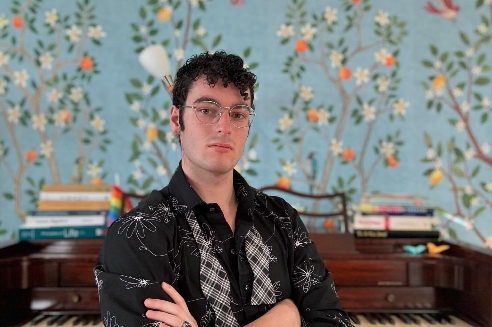
Political activist Simon Amaya Price of Massachusetts recently filed a lawsuit against the city after not being permitted to speak at the Feb. 10 Board of Aldermen meeting. Courtesy photo
NASHUA — Political activist Simon Amaya Price of Massachusetts has filed a lawsuit against the city and Board of Aldermen President Lori Wilshire claiming a violation of his constitutional rights under the First Amendment.
Attorney Roy McCandless, counsel for Amaya Price, said his client rose during the public comment period of the Feb. 10 Aldermen meeting. His intention was to urge officials not to approve Ordinance O-26-001, which “sought to close all four of the city hall flag poles to private speech” and “allow the city to continue to fly flags expressing ideological and political positions.” The board ultimately voted to adopt the ordinance.
As Amaya Price began to speak, Wilshire interrupted him and asked for his home or business address. However, he said he had been advised to keep his address private as his political advocacy has caused him to receive death threats in the past. Although Wilshire initially allowed Amaya Price to continue, Corporation Counsel Stephen Bolton intervened saying speakers are required by city ordinance to provide their address. Wilshire then repeated the requirement and Amaya Price forfeited his time.
“Nashua’s address requirement is unconstitutional. It serves no purpose, because Nashua does not impose a residency requirement or any other rule that turns on where a speaker lives or works,” said McCandless. “The address requirement disproportionately deters speakers who want to address controversial topics or take unpopular positions. The government cannot demand that speakers give up their First Amendment rights or else risk harassment, reprisal and threats to their safety.”
McCandless said six other individuals had signed up for public comment during the Feb. 10 meeting.
“With the exception of Amaya Price, all the commenters were permitted to speak for up to their full three minutes without interruption,” said McCandless, adding that two of the other speakers did not provide a home or business address. “One speaker only identified which ward he lived in. Another commenter did not state his address or his ward. Had it been an option, Amaya Price would have been comfortable telling the board publicly that he resides in Massachusetts.”
In addition, McCandless said Amaya Price is a distinguished desister, which makes him particularly vulnerable.
“As applied to the plaintiff, the address requirement has a significantly greater chilling effect than it would upon an ordinary person who is not a public figure,” he said.
Therefore, McCandless is asking the court to rule that the address requirement is unconstitutional and for Amaya Price to be awarded “nominal damages to vindicate his constitutional rights.”