Nashua bar sued for copyright infringement
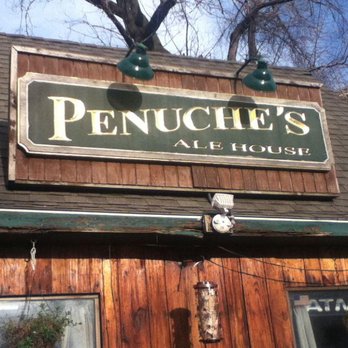
Penuche's Ale House has been accused of copyright infringement and is now being sued for $150,000. Courtesy photo
NASHUA – Music publishers Abilene Music and Warner/Chappell Music have filed a $150,000 lawsuit against Penuche’s Ale House and its owner, Todd Tousley, claiming that copyrighted songs were performed without a license.
In his Oct. 14 Complaint, Attorney Griffin Kmon, counsel for Abilene and Warner/Chappell, said that on July 13, Penuche’s allowed the unauthorized performances of three songs. They included “Creep” by Radiohead, “I’m Gonna Be (500 Miles)” by The Proclaimers and “What A Wonderful World” by Robert Thiele and George Weiss.
Warner/Chappell owns the rights to “Creep” and “I’m Gonna Be (500 Miles)” while Abilene owns the rights to “What A Wonderful World.”
“The plaintiffs are all members of the American Society of Composers, Authors and Publishers, a membership association that represents, licenses and protects public performance rights,” said Kmon.
Since November 2023, the ASCAP has made “numerous attempts” to offer a license to Penuche’s, which would cost an average of $2 per day. Approximately 90 percent of licensing fees are paid out as royalties to songwriters, composers and music publishers.
“Each ASCAP member grants ASCAP a non-exclusive right to license the performing rights in that member’s copyrighted musical compositions,” said Kmon. “The defendants jointly had, and still have, the right and ability to supervise and control the activities that take place at the Ale House, including the right and ability to supervise and control the public performance of musical compositions at the establishment.”
Penuche’s was also warned that performing songs without an ASCAP license would be a violation of copyright law.
“The defendants have refused all of ASCAP’s license offers,” said Kmon.
Although Penuche’s benefits financially from these performances, Abilene and Warner/Chappell have not been compensated at all.
“The defendants threaten to continue such infringing performances,” said Kmon. “The defendants knowingly and intentionally violated the plaintiffs’ rights.”
In addition to this action, similar lawsuits are pending against establishments in eight other states.
“We want every business that uses music to prosper, including bars and restaurants,” said ASCAP President Paul Williams. “As songwriters and composers, we must earn our livelihoods through our creative work and music is how we put food on the table and send our kids to school. Most businesses know that an ASCAP blanket license allows them to offer music legally, efficiently and at a reasonable price – while compensating music creators fairly.”