Ayotte signs bill prohibiting hidden ambulance bills
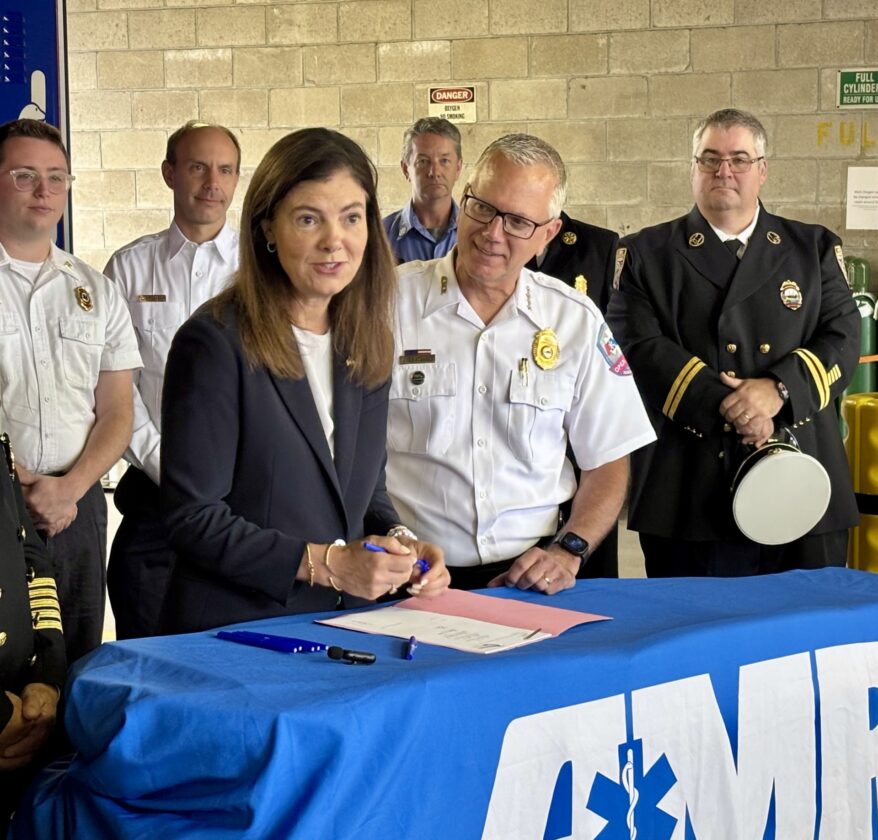
Gov. Kelly Ayotte signs Senate Bill 245 into law on July 31. The new legislation will shield residents from surprise ambulance bills and control the reimbursement of medical transportation expenses. Telegraph photo by CHRISTOPHER ROBERSON
NASHUA – Gov. Kelly Ayotte recently joined first responders at the American Medical Response building to sign Senate Bill 245 into law, which will shield residents from surprise ambulance bills and control the reimbursement of medical transportation expenses.
New Hampshire is the 17th state in the country and the first in New England to have such a law.
Sponsored by State Sen. Suzanne Prentiss (D-Lebanon), the bipartisan legislation requires insurance companies to cover the cost of ambulance services and limit patient copays to $100.
Patients will now be protected from balance billing should a disagreement arise between their insurance company and the ambulance provider.
The law also calls for a temporary reimbursement rate for ambulance providers that is at least 3.25 times the Medicare rate. The rate will be in effect from Jan. 1, 2026 to Dec. 31, 2027. A cost-based rate schedule will then take effect on Jan. 1, 2028.
In addition, a commission will be established to “review and reform the financing and delivery system of ground ambulance services, with a focus on creating a uniform, cost-based reimbursement schedule that includes Medicare, Medicaid and commercial payers.”
“This couldn’t be a more important bill,” Ayotte said during the July 31 event. “In addition to prohibiting surprise billing to protect patients, we’re ensuring our EMS providers and fire departments receive fair reimbursement for their vital services.”
Chief Michael Sitar of the Tilton-Northfield Fire Department said that for years, local fire departments have been forced to settle for reimbursement rates that did not fully cover the true cost of emergency services.
“This legislation not only protects the public from devastating unforeseen costs but helps guarantee that firefighters and emergency medical personnel have the means to keep providing life-saving care,” he said.
Christopher Stawasz, AMR’s Northeast regional director of government affairs, said the law will take the “uncertainty out of ambulance bills.”
“New Hampshire EMS providers can now focus on what they do best, providing pre-hospital healthcare, knowing there will be reimbursement predictability and hopefully additional financial stability,” he said.