
Design Entry Doors: First Impressions Matter-Style Options for Every Home
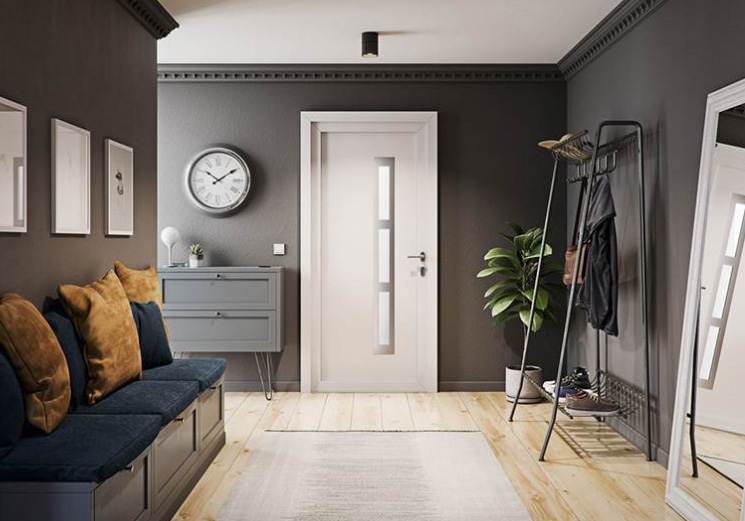
The front door is a home’s calling card. Long before (and while) guests cross the threshold, the entry door sets the look and feel. In this article we discuss material innovations in uPVC entry doors, examine how durability and design go hand-in-hand, and look closely at energy efficiency, thermal insulation, and the ways uPVC doors can help protect the climate.
Beyond technical performance, design and personal customization play a decisive role. An unlimited palette of colors, surface finishes, and glass variations lets homeowners express individual taste-and all of it can be paired with security technology such as multi-point locking and anti-burglary hardware.
Alongside technology and design, sustainably produced products are more relevant than ever. Recyclability and other ecological factors show respect for future generations without compromising product quality or manufacturing. uPVC doors made responsibly are still custom built and can be produced in special sizes that fit any architectural concept.
Material Innovations in uPVC Entry Doors: Durability Meets Design
Whether you choose a basic plastic door or a premium model (see oknoplast.us), recent advances in uPVC materials benefit every price point. Key breakthroughs include:
1. Reinforced uPVC – Thicker, more resilient uPVC delivers greater stability and a longer service life.
2. Multi-chamber profiles – Internal chambers improve thermal insulation, boosting energy efficiency and lowering heating costs.
3. UV-resistant surfaces – Special layers prevent color fading from sunlight, preserving appearance and extending longevity.
4. Scratch-resistant coatings – Added durability keeps the door looking new, further lengthening its usable life.
5. Recyclable components – Using fully recyclable materials supports sustainability and allows environmentally friendly disposal or reuse.
Energy Efficiency & Thermal Insulation: uPVC Doors as Climate Protectors
Cutting energy consumption is essential both for climate action and for shielding homeowners from volatile utility prices. That’s why today’s doors feature long-lasting EPDM weather seals and are made with CFC-free (chlorofluorocarbon-free) uPVC-U compounds. Core climate-friendly measures–and their homeowner benefits–include:
• Tight multi-chamber frames that slash heat loss
• Low-emissivity glazing options that steady indoor temperatures year-round
• Durable, air- and water-tight gaskets that stand up to decades of use
Customization: Colors, Finishes, and Glass Choices
Homeowners can select:
• Bold or subtle color tones
• 3-D foil laminates that mimic wood or stone
• Matte, satin, or high-gloss surfaces
• Clear, frosted, or patterned glass
• Sand-blasted motifs or custom glass engraving
• Creative mixes of color and glazing to suit any style
Security Technology: Multi-Point Locking and Burglary Protection
Safety concerns have grown in recent years, and door technology has kept pace. Today’s options include:
• Multi-point locking mechanisms
• Reinforced door slabs
• High-security cylinders with drill protection
• Hinge-side reinforcements
• Impact-resistant safety glazing-from basic laminated glass up to extremely robust security glass
Smart-home solutions add another layer: alarm-ready hardware, electronic access control, video door stations, silent alerts, automated lighting, and more.
Sustainable Production: Recyclability & Ecological Gains
The chief sustainability topic for plastic doors is recyclability. Modern uPVC can be recycled with virtually no loss in quality and reused up to seven Times-extending its life cycle to many decades, assuming a door is replaced roughly every 25-30 years. Additional steps include energy-efficient manufacturing processes that cut CO₂ footprints and the use of renewable energy at production sites.
Custom Builds & Special Sizes: uPVC Doors for Any Architectural Concept
uPVC doors remain popular partly because they are easy to fabricate to exact dimensions and to customize (see oknoplast.us). Even with high quality and bespoke design, prices stay reasonable. Options range from low-threshold systems for barrier-free access to heritage-style packages that match historic façades, and even ultra-efficient solutions for passive houses thanks to advanced glazing and high-performance multi-chamber frames. As a base material, uPVC suits nearly every application and rivals other materials in quality-often surpassing them with its unique advantages.