Merrimack resident survives stroke by remembering FAST test

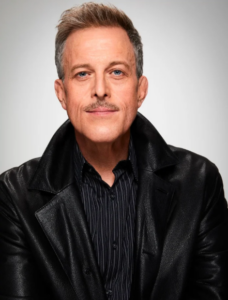
Merrimack resident David Johnson used the FAST test last year to determine that he was having a stroke. Courtesy photo
MERRIMACK – At 64 years old, Merrimack resident David Johnson had a busy life between business trips, powerlifting at the gym as well as spending time with his children and grandchildren — then, last year, a stroke brought everything to a screeching halt.
According to the Stroke Awareness Foundation, a stroke happens when a “blood vessel becomes blocked and a portion of the brain becomes deprived of oxygen.” Once it begins, a stroke can kill up to 32,000 brain cells per second. In the U.S., a stroke happens every 40 seconds and every three minutes, one of those strokes proves to be fatal.
Johnson had returned home from a sales trip in Las Vegas just in time for the weekend.
“My kids and grandkids had come over for a cookout and I remember telling my daughter how tired I was,” he said. “I also was talking with my daughter and son and their spouses telling them that when I passed away that I didn’t want them to fight over anything. I mentioned some things and told them what I wanted each one of them to have. That’s definitely not like me, but we all chalked it up to fatigue.”
That Monday evening, Johnson went to bed at his typical time of 9:30 p.m. He would not go to bed again in his own house for the next month — he just did not know it yet.
Johnson woke up three-and-a-half hours later with his arm “hanging off the bed completely numb.”
“I went to roll over and my arm wouldn’t move with my body motion,” he said. “I stood up and my left leg was numb and I could barely move it. I walked across the hall to see if I could shake it off and nothing on my left side moved.”
To make matters worse, Johnson was single and lived by himself.
Drawing on knowledge he retained from annual first aid training that his company provided, Johnson used the FAST test to quickly determine that he was probably having a stroke. Because of the FAST test, Johnson was able to call for help before his life was in danger.
“I called the ambulance and dragged myself down the stairs backwards, holding on with one hand and put on sweatpants and flip flops,” he said. “I grabbed my insurance card and sent a text to my kids that I was in an ambulance so they would know in the morning.”
Developed in the U.K. 26 years ago, the FAST test represents a common stroke scenario: “Face drooping, Arm weakness, Speech difficulty and Time to call 911.”
“They got me started on medicine; however, they left my blood pressure high at 200/120. I was blessed because my daughter, who is a cardiac nurse, got me started in rehab in the hospital and at a rehab center immediately,” said Johnson. “I had speech, occupational and physical therapy for the next three to four months. I had to learn to use a fork and a cup, how to walk, how to write with a pencil and many other tasks. They originally said that I needed to lose a few pounds and surmised that I had high blood pressure.”
Four weeks after his stroke, Johnson was finally able to go home.
“I got up on Saturday morning and my heart rate went from 48 to 145,” he said. “The neurologist kept looking at my brain scans shaking his head saying that he couldn’t understand why I had a stroke. I had no blockage anywhere. Then he turned to me and said the cause was in my heart. He said that I either had a hole in my heart or an electrical impulse issue.”
It ultimately turned out that Johnson’s stroke was caused by an electrical impulse issue in the lower part of his heart.
“I am now on a heart impulse modification drug, low doses of a statin and blood pressure medicine, as well as a blood thinner as preventative measures,” said Johnson. “I have fully recovered and my doctors are amazed — calling it a miracle. I have been cleared by all my specialists and now just see them annually.”
Johnson said he now walks 15 miles per week, no longer consumes alcohol, has cut back on caffeine and lifts weights five days a week.
“I have lost 25 pounds and now use a CPAP machine for sleep apnea. I also had quite a few virtual counseling sessions to deal with my anxiety and worry about another stroke,” said Johnson. “I am grateful to the professionals that helped to heal me. I was so fortunate to be treated by a wonderful heart care team and a great cardiac rehab program.”