Asphalt plant proponents will not go quietly
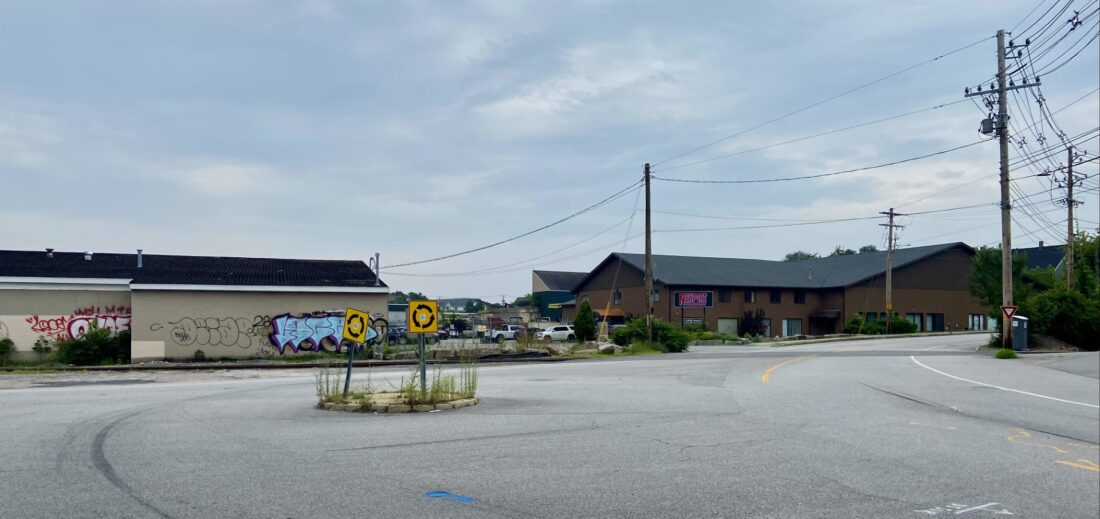
The four-acre site of the proposed asphalt manufacturing plant at 145-149 Temple St. Telegraph photo by Christopher Roberson
NASHUA – Greenridge, LLC has brought a lawsuit against the city after its proposal for an asphalt manufacturing plant was denied by the Planning Board last month.
Following the board’s unanimous vote on June 15, Planning Manager Samuel Durfee issued a denial letter saying that the site plan was not consistent with Nashua’s Master Plan, that an asphalt plant would generate excessive traffic and that such a facility could not coexist with the surrounding industrial uses.
In response, Attorney Thomas Hildreth, counsel for Greenridge, filed an Appeal of Administrative Decision on July 17 at Hillsborough County Superior Court South.
“The decision rests upon multiple errors of law and fact,” he said, emphasizing that the four-acre parcel at 145-149 Temple St. is zoned for General Industrial use. “Asphalt manufacturing is a use expressly permitted by right.”
In the Appeal, Hildreth said the site plan was originally sent to the board in December 2021 with public hearings beginning six months later.
During that time, Community Development Director Matthew Sullivan advised the board that an asphalt plant was an allowable use. However, Hildreth claimed that Sullivan’s words fell on deaf ears.
“The board ignored the law and advice of its staff,” he said. “Asphalt production remains a permitted use in the GI zone. Not a single residential use is permitted in the GI zone.”
Hildreth also called attention to a letter from John DeFelice, a principal of Greenridge. In the letter, DeFelice expressed concerns that Mayor James Donchess was pressuring the board to deny the site plan.
“The site plan process was unfairly and inappropriately tainted by improper and undue influence from the Office of the Mayor,” said Hildreth, adding that taxpayer dollars were used to conduct “opposition research.” “Site plan review is not intended to be a process where expressly permitted uses go to die.”
He also said Greenridge spent several months requesting a set of draft operating conditions from the city. Those documents were not provided until June 9 of this year.
“The draft conditions were never reviewed or discussed by the board before the board made its final decision to deny the application,” said Hildreth.
In addition, he maintained that the board exaggerated the function of the city’s Master Plan to make it appear that the goals listed in the document would be disrupted by an asphalt plant.
“The decision does not cite a single specific section of the Master Plan with which the plant would be inconsistent,” said Hildreth. “A Master Plan is not a regulation or ordinance and cannot be used by a Planning Board to regulate development.”
Regarding traffic volume, Hildreth said the four traffic studies, conducted by Vanasse Hangen Brustlin, determined that the number of vehicles going in and out of the facility would not be excessive.
He also said the board took part in ad hoc “planning and decision making” to change the meaning of a site plan as it pertains to excessive traffic volume.
“The board does not have the authority to change the language of its regulations on the fly to achieve a particular result in a given case,” said Hildreth.
In addition to the board’s decision being overturned, Greenridge is also requesting that the matter be reviewed by the city’s Zoning Board of Adjustment.