
Greater Nashua Flashback
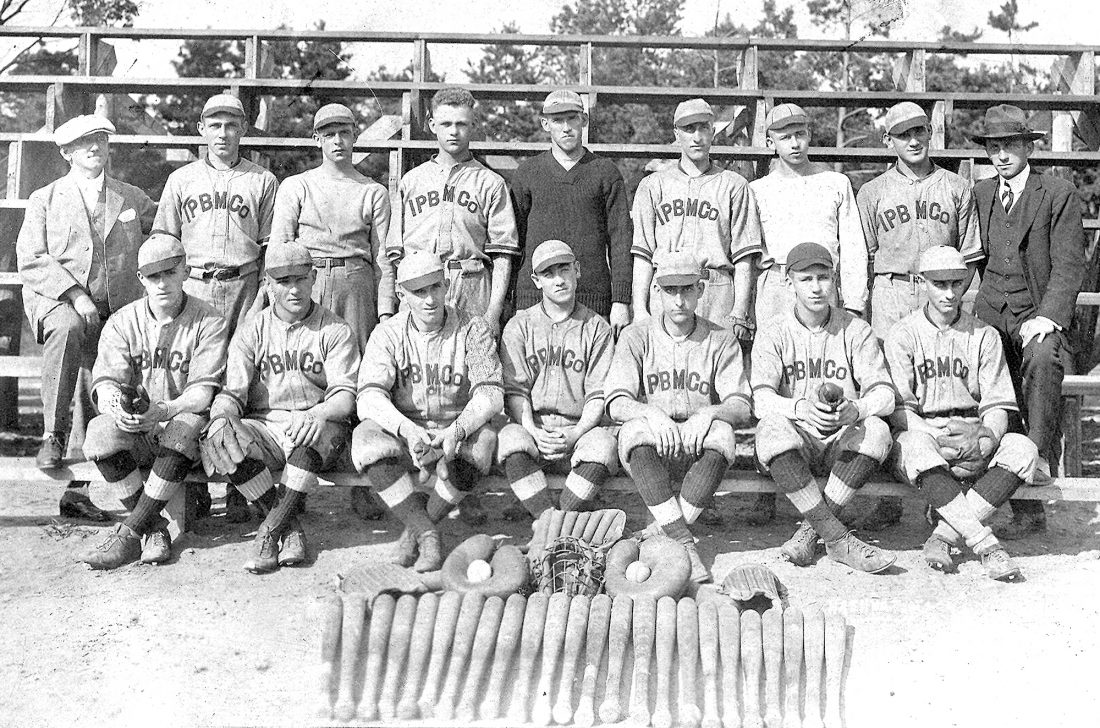
It's true that this is the time of year when our collective focus is on football, basketball and hockey rather than the beloved American pasttime of baseball, but since the weather has been pretty nice so far this fall with somewhat higher-than-normal temperatures, it seems OK to squeeze in one more historic baseball photo before the really cold temps realize they're behind schedule. These young men are members of the International Paper Box Machine Company baseball team, which played in the so-called "Industrial Baseball League" that was quite popular in the post World War II years. IPBMCO was among eight or ten Nashua firms that sponsored teams in the league, which played its games in the evenings, starting around 6 p.m., which usually allowed them to get in 7 innings before darkness set in. Regarding the two men in suits, the one on the right is believed to be Win Labombarde, the second-generation owner of IPBMCO that was founded around the turn of the 20th century by Elie Labombarde. The man at left and the players aren't identified. (From The Telegraph files)
It’s true that this is the time of year when our collective focus is on football, basketball and hockey rather than the beloved American pasttime of baseball, but since the weather has been pretty nice so far this fall with somewhat higher-than-normal temperatures, it seems OK to squeeze in one more historic baseball photo before the really cold temps realize they’re behind schedule. These young men are members of the International Paper Box Machine Company baseball team, which played in the so-called ‘Industrial Baseball League’ that was quite popular in the post World War II years. IPBMCO was among eight or ten Nashua firms that sponsored teams in the league, which played its games in the evenings, starting around 6 p.m., which usually allowed them to get in 7 innings before darkness set in. Regarding the two men in suits, the one on the right is believed to be Win Labombarde, the second-generation owner of IPBMCO that was founded around the turn of the 20th century by Elie Labombarde. The man at left and the players aren’t identified.
Health, Lifestyles & History
Horoscopes by Holiday for Feb. 8
With people close to us, trust is built moment by moment. We see them under pressure, in joy and boredom, in ...
Today in History: February 8, the Orangeburg Massacre
A fantasy that raises questions
Dear Annie: My husband and I have been married for 21 years, and our intimate life has always been great. Lately, ...