This Week in History for Sept. 6
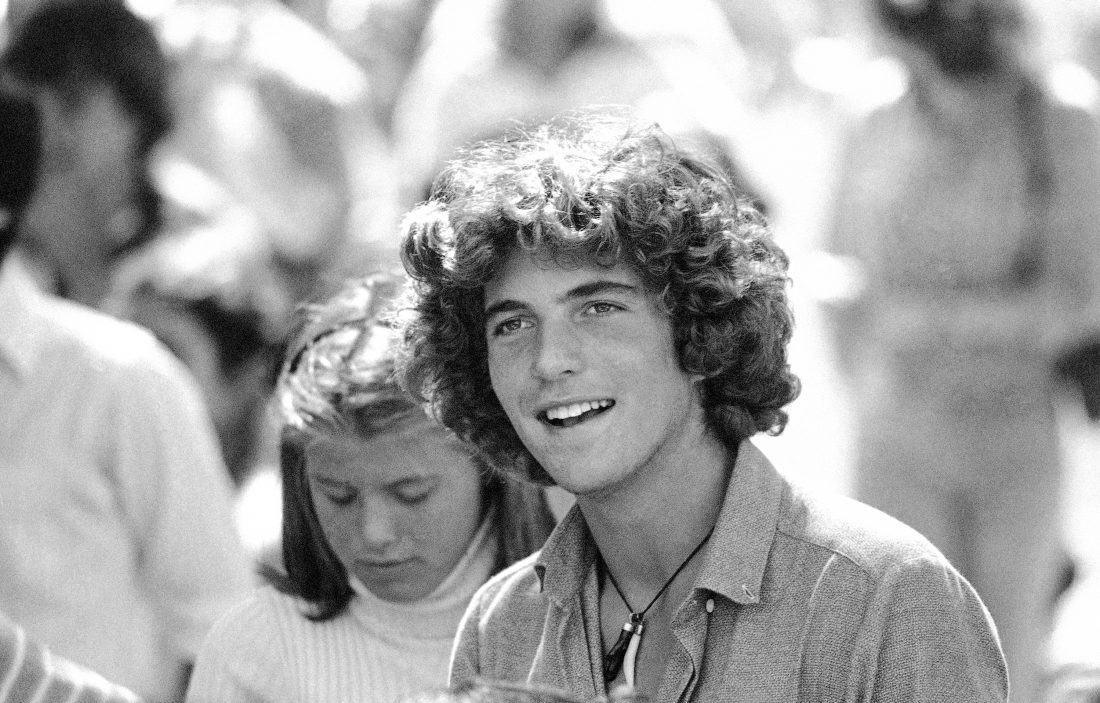
John Kennedy Jr. waits in registration line at Brown University in Providence, Rhode Island on Sept. 10, 1979 to register for his first year of college. Kennedy was dropped off at school by his mother Jacqueline Kennedy Onassis at his dorm room on the Brown campus. (AP Photo/Constance Brown)
Today is Sunday, Sept. 6, the 250th day of 2020. There are 116 days left in the year.
—
Today’s Highlights in History
On Sept. 6, 1997, a public funeral was held for Princess Diana at Westminster Abbey in London, six days after her death in a car crash in Paris. In Calcutta, India, weeping masses gathered to pay homage to Mother Teresa, who had died the day before at age 87.
—
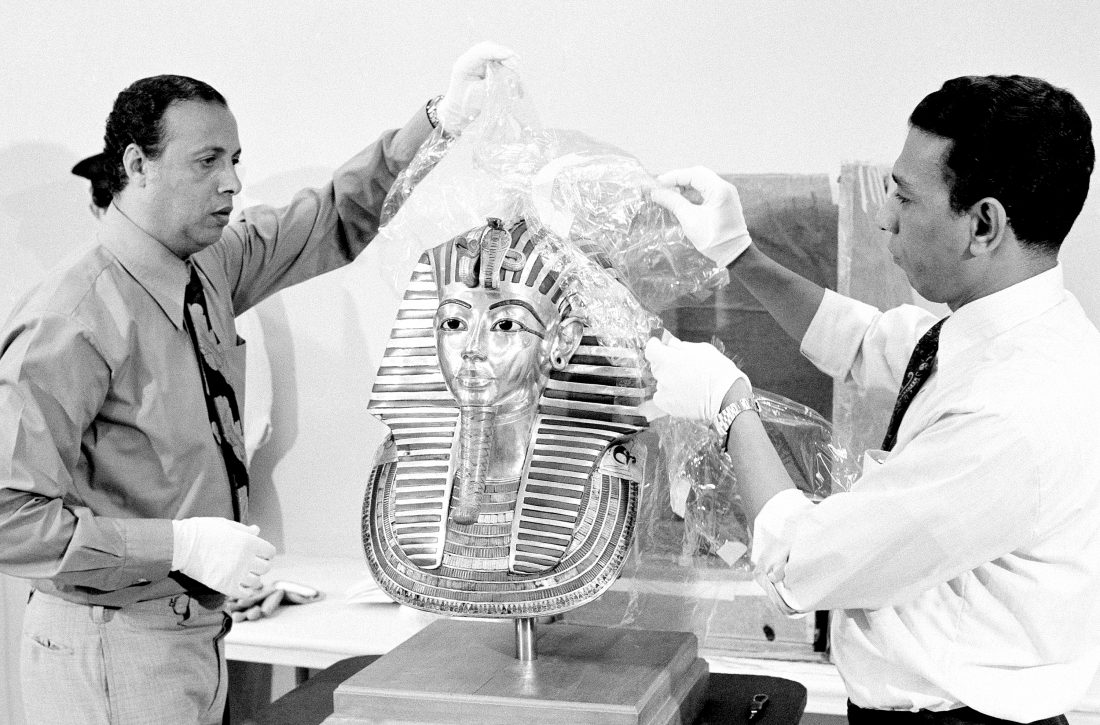
Protective plastic wrapping is removed from the gold mask of Tutankhamun, boy-king of Egypt (1334-1325 BC), by two workers at the National Gallery of Art in Washington, D.C., Sept. 8, 1976. The mask, along with 55 treasures from Tutankhamun's tomb are in the U.S. for a six city tour. Tutankhamun's mask is inlaid with carneliam, lapis lazuli, colored glass and quartz. (AP Photo/Charles Bennett))
On this date
In 1888, diplomat and financier Joseph P. Kennedy, Sr. was born in Boston.
In 1901, President William McKinley was shot and mortally wounded by anarchist Leon Czolgosz (CHAWL’-gawsh) at the Pan-American Exposition in Buffalo, New York. (McKinley died eight days later; Czolgosz was executed on Oct. 29.)
In 1909, American explorer Robert Peary sent a telegram from Indian Harbor, Labrador, announcing that he had reached the North Pole five months earlier.
In 1916, the first self-serve grocery store, Piggly Wiggly, was opened in Memphis, Tennessee, by Clarence Saunders.
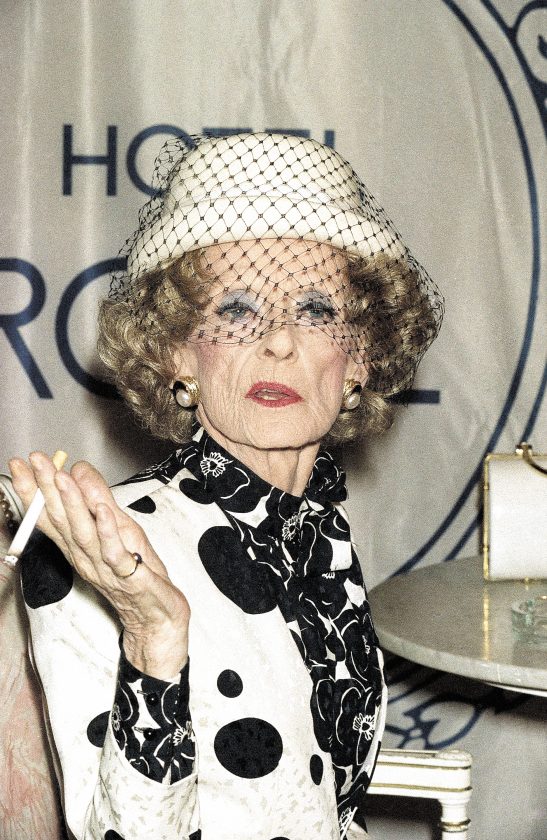
American movie star Bette Davis smokes a cigarette before facing newsmen at a press conference during the American Film Festival of Deauville in this western France coastal city, Sept. 6, 1987. Bette Davis attends the festival where some of her films will be screened and she will be awarded the “Legion d’Honneur” order. (AP Photo/Laurent Rebours)
In 1943, 79 people were killed when a New York-bound Pennsylvania Railroad train derailed and crashed in Philadelphia.
In 1972, the Summer Olympics resumed in Munich, West Germany, a day after the deadly hostage crisis that claimed the lives of eleven Israelis and five Arab abductors.
In 1985, all 31 people aboard a Midwest Express Airlines DC-9 were killed when the Atlanta-bound jetliner crashed just after takeoff from Milwaukee’s Mitchell Field.
In 1995, Baltimore Orioles shortstop Cal Ripken broke Lou Gehrig’s record by playing his two-thousand-131st consecutive game.
In 2002, meeting outside Washington, D.C. for only the second time since 1800, Congress convened in New York to pay homage to the victims and heroes of September 11.
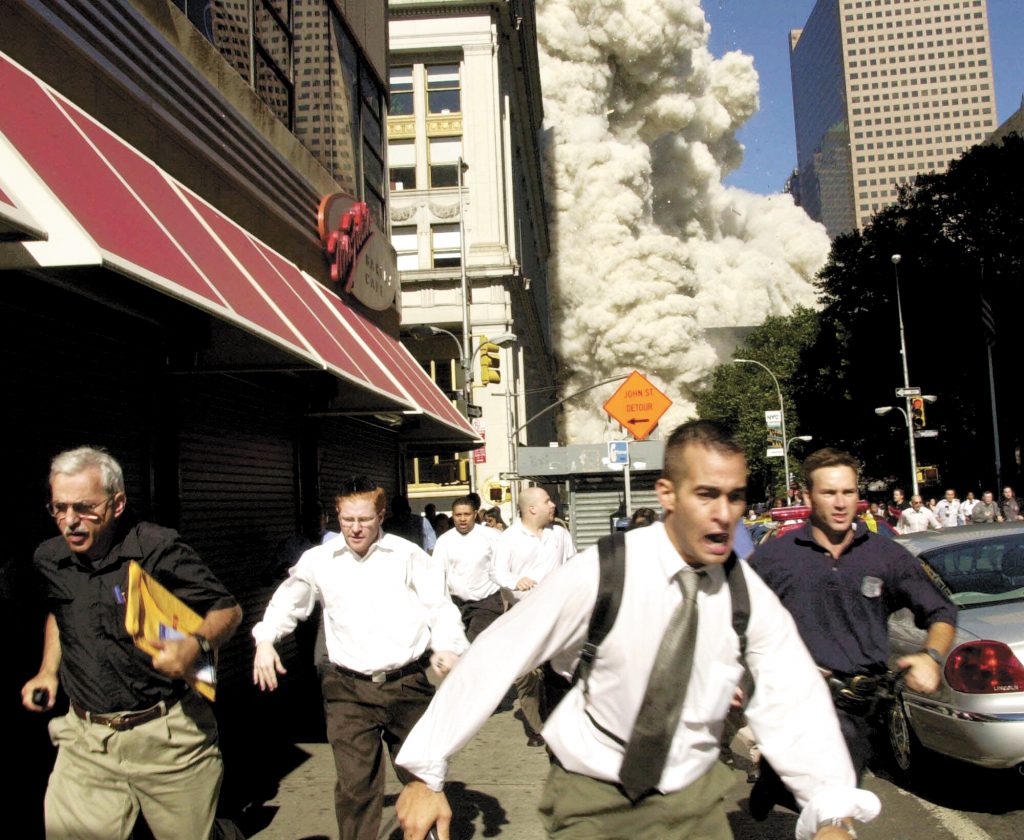
** FOR USE AS DESIRED WITH SEPT. 11 ANNIVERSARY STORIES--FILE **People run from the collapse of World Trade Center Tower in this Sept. 11, 2001, file photo, in New York. Charlie Ross is seen fourth from the left. This year will mark the fifth anniversary of the attacks. (AP Photo/Suzanne Plunkett/FILE)
In 2003, Justine Henin-Hardenne (EH’-nihn ahr-DEHN’) won the all-Belgian women’s singles final at the U.S. Open, beating countrywoman Kim Clijsters (KLY’-sturz), 7-5, 6-1.
In 2006, President George W. Bush acknowledged for the first time that the CIA was running secret prisons overseas and said tough interrogation had forced terrorist leaders to reveal plots to attack the United States and its allies.
In 2007, opera star Luciano Pavarotti died in Modena, Italy, at the age of 71.
Ten years ago: President Barack Obama rolled out a long-term jobs program that would have exceeded $50 billion to rebuild roads, railways and runways, and coupled it with a blunt campaign-season assault accusing Republicans of causing Americans’ hard economic times. (The proposal ended up being blocked by Senate Republicans.)
Five years ago: Guatemala held its general election; with no presidential candidate winning more than 50 percent of the vote, there was a runoff the following month that was won by former TV comedian Jimmy Morales.
One year ago: Zimbabwe’s president announced that Robert Mugabe, the country’s former leader who was forced to resign after a 37-year rule, had died at the age of 95; he had taken power after white minority rule ended in 1980. A weakened Hurricane Dorian flooded homes on North Carolina’s Outer Banks, forcing people to climb to their attics. Hundreds of desperate hurricane survivors gathered at the port on the Bahamian island of Grand Abaco in hopes of getting off the devastated island. U.S. health officials again urged people to stop vaping until officials figured out why some were coming down with serious breathing illnesses.
—
SEPTEMBER 7
On September 7, 1940, Nazi Germany began its eight-month blitz of Britain during World War II with the first air attack on London.
n 1892, James J. Corbett knocked out John L. Sullivan to win the world heavyweight crown in New Orleans in a fight conducted under the Marquess of Queensberry rules.
In 1907, the British liner RMS Lusitania set out from Liverpool, England, on its maiden voyage, arriving six days later in New York.
In 1963, the National Professional Football Hall of Fame was dedicated in Canton, Ohio.
—
SEPTEMBER 8
On Sept. 8, 1974, President Gerald R. Ford granted a “full, free, and absolute pardon” to former President Richard Nixon covering his entire term in office.
In 1761, Britain’s King George III married Princess Charlotte of Mecklenburg-Strelitz a few hours after meeting her for the first time.
In 1892, an early version of “The Pledge of Allegiance,” written by Francis Bellamy, appeared in “The Youth’s Companion.” It went: “I pledge allegiance to my Flag and the Republic for which it stands, one nation, indivisible, with liberty and justice for all.”
In 1986, “The Oprah Winfrey Show” began the first of 25 seasons in national syndication.
—
SEPTEMBER 9
On Sept. 9, 1776, the second Continental Congress made the term “United States” official, replacing “United Colonies.”
In 1543, Mary Stuart was crowned Queen of Scots at Stirling Castle, nine months after she was born.
In 1850, California became the 31st state of the union.
In 1956, Elvis Presley made the first of three appearances on “The Ed Sullivan Show.”
—
SEPTEMBER 10
On Sept. 10, 1962, the U.S. Supreme Court ordered the University of Mississippi to admit James Meredith, a Black student.
In 1919, New York City welcomed home Gen. John J. Pershing and 25,000 soldiers who’d served in the U.S. First Division during World War I.
In 1935, Sen. Huey P. Long died in Baton Rouge two days after being shot in the Louisiana state Capitol, allegedly by Dr. Carl Weiss.
—
SEPTEMBER 11
On September 11, 2001, nearly 3,000 people were killed as 19 al-Qaida hijackers seized control of four jetliners, sending two of the planes into New York’s World Trade Center, one into the Pentagon and the fourth into a field in western Pennsylvania.
In 1777, during the American Revolution, forces under Gen. George Washington were defeated by the British in the Battle of Brandywine.
In 1941, groundbreaking took place for the Pentagon. In a speech that drew accusations of anti-Semitism, Charles A. Lindbergh told an America First rally in Des Moines, Iowa, that “the British, the Jewish and the Roosevelt administration” were pushing the United States toward war.
—
SEPTEMBER 12
On Sept. 12, 1962, in a speech at Rice University in Houston, President John F. Kennedy reaffirmed his support for the manned space program, declaring: “We choose to go to the moon in this decade and do the other things, not because they are easy, but because they are hard.”
In 1913, Olympic legend Jesse Owens was born in Oakville, Ala.
In 1942, during World War II, a German U-boat off West Africa torpedoed the RMS Laconia, which was carrying Italian prisoners of war, British soldiers and civilians; it’s estimated more than 1,600 people died while some 1,100 survived after the ship sank. The German crew, joined by other U-boats, began rescue operations. (On September 16, the rescue effort came to an abrupt halt when the Germans were attacked by a U.S. Army bomber; as a result, U-boat commanders were ordered to no longer rescue civilian survivors of submarine attacks.)
-
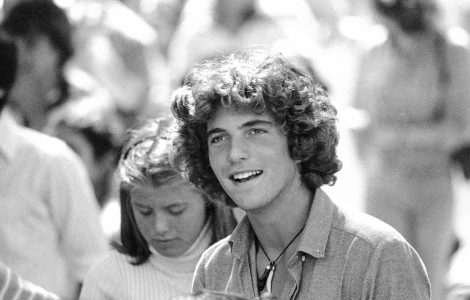
- John Kennedy Jr. waits in registration line at Brown University in Providence, Rhode Island on Sept. 10, 1979 to register for his first year of college. Kennedy was dropped off at school by his mother Jacqueline Kennedy Onassis at his dorm room on the Brown campus. (AP Photo/Constance Brown)
-
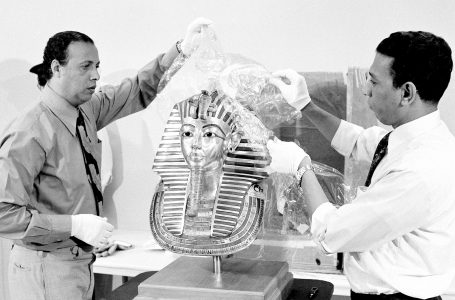
- Protective plastic wrapping is removed from the gold mask of Tutankhamun, boy-king of Egypt (1334-1325 BC), by two workers at the National Gallery of Art in Washington, D.C., Sept. 8, 1976. The mask, along with 55 treasures from Tutankhamun’s tomb are in the U.S. for a six city tour. Tutankhamun’s mask is inlaid with carneliam, lapis lazuli, colored glass and quartz. (AP Photo/Charles Bennett))
-
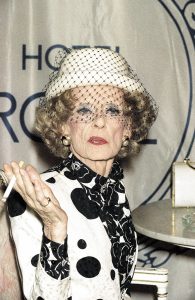
- American movie star Bette Davis smokes a cigarette before facing newsmen at a press conference during the American Film Festival of Deauville in this western France coastal city, Sept. 6, 1987. Bette Davis attends the festival where some of her films will be screened and she will be awarded the “Legion d’Honneur” order. (AP Photo/Laurent Rebours)
-
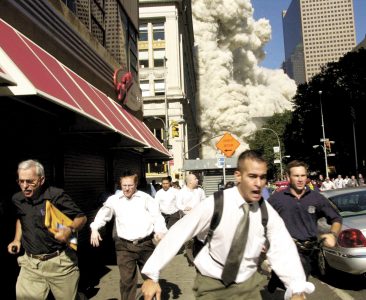
- ** FOR USE AS DESIRED WITH SEPT. 11 ANNIVERSARY STORIES–FILE **People run from the collapse of World Trade Center Tower in this Sept. 11, 2001, file photo, in New York. Charlie Ross is seen fourth from the left. This year will mark the fifth anniversary of the attacks. (AP Photo/Suzanne Plunkett/FILE)
Health, Lifestyles & History
Let them eat cake!
Dear Heloise: In regard to Jim R.'s office birthday system, I worked at a place that only had 12 employees. On the ...
Cellphone etiquette in public
Dear Annie: I'm starting to wonder if headphones have gone out of style. Last week, I was sitting in a doctor's ...