Hollis, Brookline forum discusses drug epidemic
BROOKLINE – Hundreds gathered at the the Brookline Event Center on Thursday, where community leaders from Brookline and Hollis gathered with residents hoping to come to grips with an opioid addiction epidemic that has taken the state by storm.
In 2015 alone, more than 400 Granite State residents lost their lives due to drug overdose – more than were killed in traffic accidents in the same span of time. While the causes of addiction are many and the disease widespread among different demographics, a solution to the problem seems hard to find.
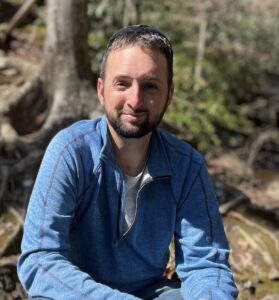
Vahrij Manoukian, the owner of Hollis Pharmacy, said that for those like his son, who died of an overdose in 2004, it is already too late.
"Every time people hear about this topic, it seems like everybody runs away," he said. "Nobody wants to attend it, nobody wants to face the circumstances of this bad, bad disease that is killing the future of a generation."
Manoukian said that he didn’t know what tragedy really meant, until he lost his son.
"Do you know what it means to lose a son, when he is your first and only son?" he said. "The drug overpowered him, and on Aug. 24, he died in my hands in the hospital."
Manoukian said that the state legislature, which moves "at a snail’s pace," hasn’t done enough to combat the issue.
William Quigley, Brookline chief of police, said the opioid problem is the worst he has seen in 40 years of policing and that law enforcement doesn’t necessarily have the tools required to stop it.
"We do have a problem in Brookline," he said. "We know we have opioid abusers in Brookline. We know we have addicts in Brookline. Believe me, if I knew how to combat it on a local level, I would be playing the numbers. We don’t know how to win this battle."
Quigley said that, in his town, the real problem isn’t opioid-related deaths but the crimes that go along with addiction.
"Our problem is not the overdoses; we deal with it with what I call the peripheral effect," he said. "We deal with it with our thefts, because the addicts need to support their high. We deal with it with assaults, because if people don’t give them money, they’re going to get beaten to get it. We deal with these on a regular basis … How do we combat this? We don’t know."
Quigley said he thinks it’s an important problem to tackle and that his department is staffed by qualified, able officers, but that the problem is a bigger one than policing alone will solve.
"It’s important that, collaboratively, as communities together, we can work on these problems and try to come up with a solution," he said. "Because believe me, we don’t have the answers. People seek us out for answers, and boy, I wish we had them, but we don’t have them. This is beyond our control. Every time we think we are getting a step ahead, two more jumps are taken backward."
According to the Centers for Disease Control, opioids were involved in 28,647 deaths in 2014, quadrupling since 2000. New Hampshire joins West Virginia, New Mexico, Kentucky and Ohio at the top of the list for opioid related deaths. For more information, visit www.cdc.gov/drugoverdose/data/statedeaths.html.
Matthew Medsger can be reached at 594-6531, mmedsger@nashua
telegraph.com or @Telegraph_MattM.