Hollis man to hold barn raising for solar panels
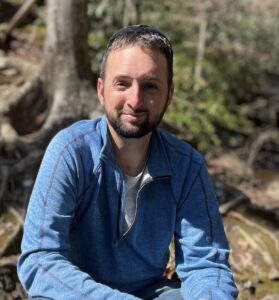
On Sunday, a group of friends will gather in Hollis to help Eric Ryherd put 7.5 kilowatts of solar panels on his roof, a sort of photovoltaic barn raising that harkens back to alternative energy’s early days.
But in an era in which solar panels have become so routine that, as Ryherd described it "you walk through the mall, there’s a guy hawking them," is such an event necessary?
Absolutely, says Ryherd, an engineer who serves as secretary of a Hillsborough County solar-advocacy group called HAREI.
"I talk to my neighbors and it’s like: ‘Solar what? … I don’t understand,’ " he said. "When one person in a neighborhood gets solar, it has a very strong tendency to propagate through that neighborhood. That’s what we’re trying to do."
HAREI stands for Hillsborough Area Renewable Energy Initiative, one of several non-profits in the state that helps individuals or groups plan for and set up solar power.
"We are solar ambassadors, who advocate for people switching over to solar," said Ryherd.
Years ago, such advocacy was the main way that people heard about solar power, but these days a number of private companies – local, regional and national – design, sell and install solar systems for individuals.
It’s part of a huge expansion of the field, fueled by the sharp drop in the cost of panels. Even New Hampshire, a regional laggard in solar power, is catching up, although solar sill produces far less than 1 percent of the state’s electricity.
The solar companies includes SolarCity, a California firm that entered the New Hampshire market this year. Its most notable attribute is different financing. It offers leases and "power purchase agreements" that allow solar systems to be installed with little or no cash paid up front, while SolarCity profits from the electricity and various supports for solar power. This allows homeowners to avoid the high initial cost that has long been an obstacle for adoption of solar power.
Ryherd is buying his panels outright, which until recently was the only way to get them.
That purchase is made easier by the fact that HAREI got a discounted rate because it bought enough panels for five projects. Among the discounts, he said, are free shipping.
"Shipping is a significant cost: the panels show up on a pallet, on trucks, are installed on rails 17 feet long," said Ryherd.
He’ll also save by not having to pay for installation, thanks to the "solar raiser" event.
The net result, he said, is that he’ll pay roughly $15,000 up front, and get about a third back in government and utility rebates and tax credits, leaving him $10,000 out of pocket. He calculates that the electricity means he’ll cover that cost is less than 31/2 years.
The system will be so large – 5 kilowatts is more usual for a home system – that on sunny days it will generate far too much electricity for him to use. He is entering a "group metering" project with his neighbor, who can use the excess.
It was an advantage for Ryherd to live in Hollis, a town that has seen homeowners installing solar panels for many years and therefore is familiar with the licensing and building inspection needs.
"That wasn’t an issue for Hollis, but each town is different. Some towns want to see an engineered plan; others say, ‘You can give me the details on a napkin,’ " he said.
Eventually, Ryherd plans to switch his home heating, hot water and his car to electricity – he plans to get a plug-in hybrid car, and wired a 50-amp circuit into his garage in preparation – so he’ll use all the output of his solar panels and much less fuel oil or gasoline.
As for his "solar raiser," it starts at 7 a.m. at his home, 150 Witches Spring Road. The panels should be up by 10 a.m. – "it gets on hot on the roof this time of year," he noted – with a noon "switch throwing" ceremony to start the electrons flowing.
David Brooks can be reached at 594-6531, dbrooks@nashua telegraph.com or @GraniteGeek